Hungary’s New Superauthority Targets Central Bank Billions
Magyar’s superauthority targets the foundation network used to move public funds during the Orbán era.
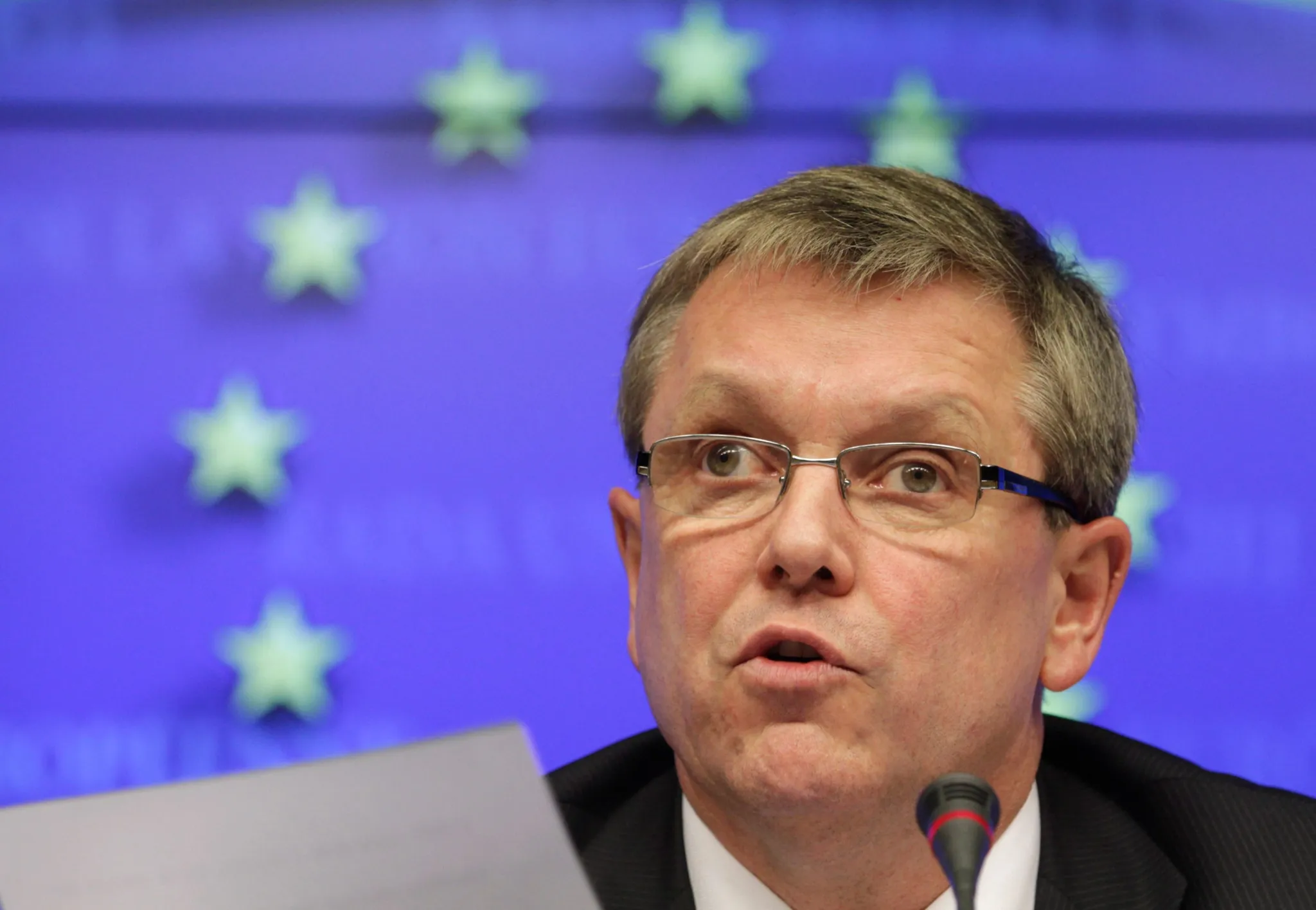
BUDAPEST — Hungary’s newly empowered asset recovery office has moved against one of the most lucrative financial structures built during Viktor Orbán’s 15-year rule, detaining former central bank governor György Matolcsy on suspicion of economic fraud and document forgery, according to his lawyer.
The arrest signals that Prime Minister Péter Magyar’s administration is targeting the institutional architecture used to channel public money into opaque foundations, rather than pursuing isolated corruption complaints. Magyar confirmed the detention in a Facebook post Wednesday.
Matolcsy’s lawyer, Pál Bátki, told Hungarian news outlet Telex that the former governor was detained on suspicion of economic fraud that caused significant financial damage and using a forged private document. The Central Prosecutor’s Office said earlier Wednesday it was “carrying out coordinated investigative actions” in several locations related to criminal misappropriation of funds at the central bank, without naming Matolcsy directly.


The legal mechanism enabling the sweep is the National Asset Recovery and Protection Office. Launched in July, the body holds combined investigative and prosecutorial powers. Magyar described it to The Associated Press on Tuesday as a “superauthority” capable of enlisting police, prosecutors and the national tax authority simultaneously to prevent complex corruption cases from dragging on for years.
For investors and European Union officials monitoring Budapest, the immediate question is whether the probe will trace funds back to EU subsidies. Magyar told the AP that “certain members of the previous government as well as oligarchs, businessmen and family members connected to them committed serious crimes, typically corruption crimes, both with national funding and EU funding.”
Brussels froze billions of euros in cohesion funds destined for Hungary over systemic rule-of-law concerns during the Orbán era. A successful domestic prosecution involving misused EU capital could influence negotiations over releasing those frozen tranches under Magyar’s government.
The financial footprint under scrutiny dates back to 2013. Matolcsy, who served as Orbán’s minister of economy from 2010 to 2013 before leading the central bank until 2025, oversaw the creation of foundations endowed with hundreds of billions of forints — equivalent to hundreds of millions of dollars — in public funds. These endowments drew persistent accusations of corruption throughout his tenure. Matolcsy has denied any wrongdoing.
A criminal complaint filed last month alleged embezzlement, negligence, fraud and abuse of office during his time as governor. That filing followed an internal central bank audit which found past real estate investments had been purchased at inflated prices, causing significant financial damage. It remains unclear whether Wednesday’s coordinated raids stem from the foundation endowments or the real estate purchases.