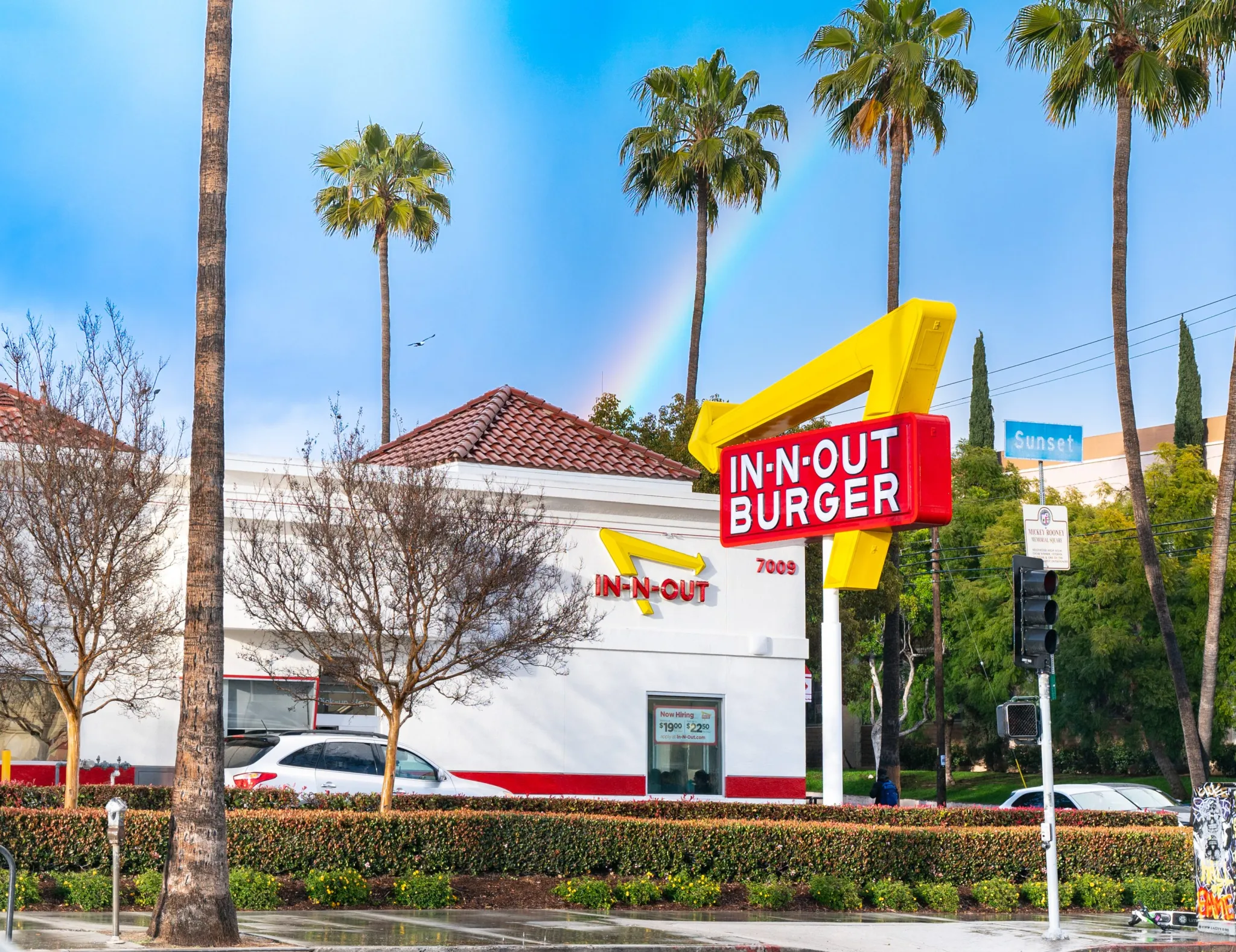
In-N-Out bans delivery. A $20 gray market filled the void.
Independent contractors charge $20 to $30 per run as the privately held chain records a 10% sales increase without a delivery app.
Joe Alfaro was running DoorDash deliveries in Oxnard when a relative asked him to pick up In-N-Out for a group of coworkers. They offered to pay him directly. Three similar calls came in that same week. Alfaro posted an ad, doubled his fee from $10 to $20 as requests stretched toward Santa Paula and Ojai — drives pushing 45 minutes to an hour — and now averages six orders a day, according to Fortune.
He is one node in an unregulated logistics network operating entirely outside the control of a privately held company generating billions in annual revenue. In-N-Out’s U.S. sales rose approximately 10% in 2025, The Wall Street Journal reported in June. Yet the chain refuses to integrate with third-party delivery platforms or build its own mobile ordering infrastructure, creating a vacuum that independent contractors are monetizing through Taskrabbit errands and Facebook Marketplace listings across Southern California.
The scale of this shadow economy is measurable. Approximately half of all fast-food pickup requests on Taskrabbit across Los Angeles and Orange County are specifically for In-N-Out, according to the platform. More than half — 58% — of those requests are booked for same-day fulfillment, Fortune reported. The orders frequently exceed standard consumer volumes. A Hollywood customer recently used the platform to coordinate the transport of 150 cheeseburgers, which a local worker accepted and completed.


Event planners have identified the workaround as a budget mechanism. A San Diego couple hired a Taskrabbit worker through the platform’s Errands category to deliver 50 cheeseburgers to their 2022 wedding as a late-night snack for roughly 100 guests. The task cost $68.47 plus the price of the food, which the groom reimbursed at the venue. He told Fortune the total expense undercut the cost of hiring a dedicated food truck or late-night catering vendor. The couple had called the restaurant ahead to confirm it could handle the volume.
This freelance delivery infrastructure operates in direct tension with corporate policy. Owner Lynsi Snyder-Ellingson explicitly rejected mobile ordering during an appearance at Pepperdine University this year, citing the loss of in-person interaction and the degradation of food quality during transit, according to ABC7. The company maintains strict operational controls to enforce that standard, building new restaurants near its own patty-making facilities and keeping ownership private with no plans to franchise or go public. “It’s about the quality, the friendliness, and the cleanliness. We keep it simple,” Snyder told CBS in 2015.
The platforms facilitating these transactions occupy different legal postures. Taskrabbit confirmed to Fortune that In-N-Out pickups fall under its permitted Errands category and noted it has not received any communication from the burger chain regarding the practice. Meta’s rules prohibit offering services, including food delivery, on Facebook Marketplace, where sellers are advertising flat fees ranging from $20 to $30 for runs into the deep Inland Empire. Meta removes those listings upon discovery and advises users against paying in advance for unreceived items.
Harry and Esther Snyder opened the first In-N-Out stand in Baldwin Park in 1948. Seventy-eight years later, the brand’s refusal to adapt its distribution model has effectively outsourced last-mile delivery to gig workers charging flat rates to navigate Southern California traffic. Aaron David, a Hollywood resident who posted a Marketplace listing to test demand, told Fortune he received multiple inquiries within days. His website was live when he spoke with the outlet, though he had not yet completed a delivery.
In-N-Out did not respond to a request for comment.