Your Smart Ring Can Now Estimate VO₂ Max — No Lab Required
Lab-grade fitness metrics arrive on your finger — no treadmill test required
For decades, measuring VO₂ max — the gold standard for cardiovascular fitness — meant a treadmill, a mask, and a lab technician. Oura just put a version of that test on your finger.
The company announced Tuesday that its Gen3 and newer rings can now estimate VO₂ max passively during GPS-enabled outdoor workouts. No six-minute walk test. No maximal effort. Just run, bike, or hike as usual.
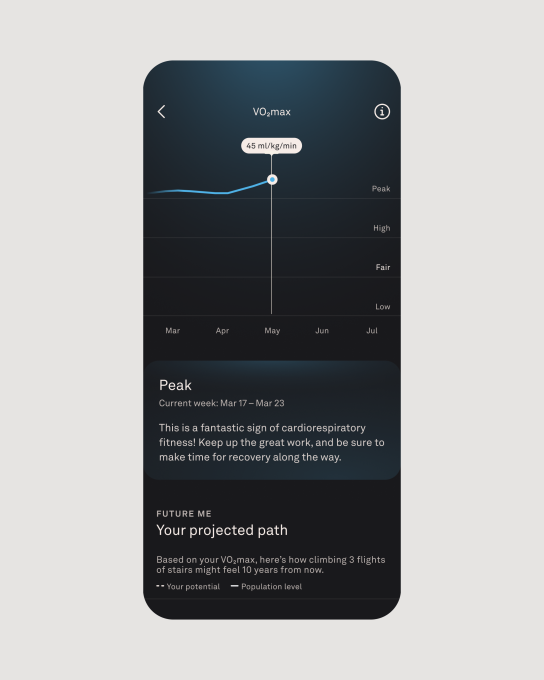


After five qualifying activities, users see an initial estimate in ml/kg/min inside the My Health Heart Hub, along with a fitness category — Low, Fair, High, or Peak — and a trend line showing change over time. The feature lives in Oura Labs, the company’s experimental channel for members.
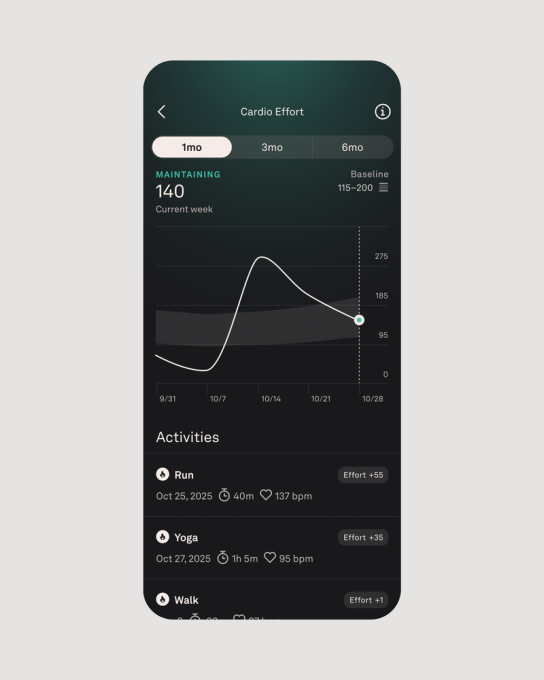
Paired with that rollout is Cardio Effort, a new weekly score that aggregates workout intensity and duration against your personal baseline. Oura says the goal is to shift the question from “How many minutes did I move?” to “Am I maintaining, building, or overdoing it?”
The math relies on elevated heart rate relative to your long-term resting average, not estimated max heart rate. Weekly totals fall into five bands: Light, Fair, Maintaining, Building, or Reaching. A short, hard interval session can score similarly to a long, easy jog.
Both features work only on Gen3 hardware or later. Oura positions them as complementary: Cardio Effort shows daily strain; VO₂ max shows whether that strain is translating into fitness gains over weeks and months.
The move reflects a broader shift in wearables — from counting steps to interpreting physiology. Rivals like RingConn and Ultrahuman are pushing similar territory, but Oura’s bet is that longitudinal, personalized baselines beat one-off snapshots.
When you purchase through links in our articles, we may earn a small commission. This doesn’t affect our editorial independence.