U.S. Marines Deploy New Missile Systems 68 Miles From Taiwan
First-time deployment of NMESIS and MADIS to Yonaguni highlights a shift toward distributed island warfare as domestic opposition grows on Okinawa.
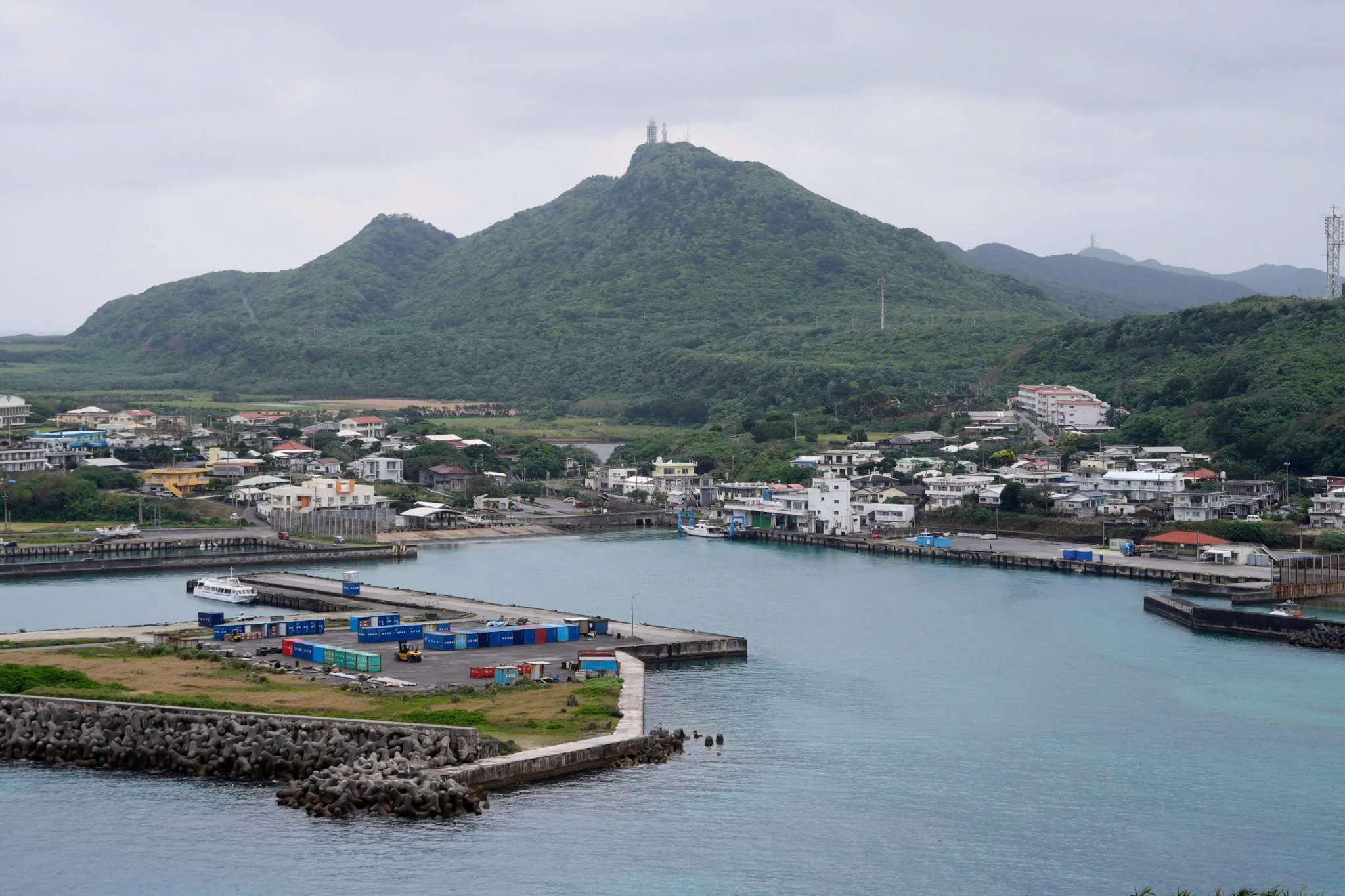
The U.S. military has positioned ground-based anti-ship and air defense missile systems on Yonaguni, Japan’s westernmost inhabited island located just 110 kilometers (68 miles) east of Taiwan, for the first time. The deployment is part of Keen Sword 27, a joint exercise involving roughly 57,000 American and Japanese service members running through Oct. 29.
NMESIS, a mobile offensive anti-ship platform, and MADIS, a short-range surface-to-air system, are now operating out of Yonaguni, according to Japan’s Joint Staff. A HIMARS mobile rocket launcher was moved to Ishigaki, a larger island nearby. Japan’s Self-Defense Force also transported its new Type-25 land-to-ship missile to Yonaguni during the drill. The weapon carries a range of approximately 1,000 kilometers (620 miles), putting mainland China within striking distance, though officials said no test-firing is planned.
These hardware movements reflect a broader shift in Pacific defense strategy. Rather than relying solely on naval vessels and aircraft carriers to project power, both militaries are dispersing lethal capabilities across small, remote islands. This approach complicates targeting calculations for any adversary attempting to control sea lanes near Taiwan or the Ryukyu chain.

Japan has spent recent years fortifying its southwestern region with longer-range missiles and interceptors. Tokyo considers China’s expanding military activities in and around the country, including operations in the Pacific Ocean, a direct threat.
About 45,000 Japanese troops and 12,000 American personnel are participating in the biennial exercise. Seven other nations from the Indo-Pacific region and Europe joined specific elements. France, Germany, the Netherlands, New Zealand and the Philippines took part for the first time, Japan’s Joint Staff said.
Drills span amphibious landings, mine sweeping, intelligence gathering, logistics, casualty evacuation and air defense across several remote locations, including Tanegashima. Live fire exercises were scheduled Monday at a firing range on Oki-Daito, an uninhabited island roughly 500 kilometers (310 miles) southeast of Okinawa.
Gen. Hiroaki Uchikura, Chief of Staff of the Joint Staff, denied that the exercises target a specific country. Maritime Self-Defense Force Adm. Tateki Tawara told an opening ceremony on Ishigaki that the objective is defending “the peaceful lives of the people,” adding that cooperation with allies is essential “to prevent the crisis,” according to Japan’s Joint Staff.
The military buildup coincides with severe diplomatic friction between Tokyo and Beijing. Prime Minister Sanae Takaichi stated a year ago that Chinese military action against Taiwan could justify Japanese involvement. The remarks triggered economic fallout and heightened tensions over China’s gradual escalation of military activity near remote Japanese islands.
Domestic political constraints complicate these maneuvers. Weeks before the drills began, police arrested a U.S. Marine in connection with the murder and robbery of a Japanese woman on Okinawa. The arrest reignited long-standing local opposition to the American military presence. Roughly 50,000 U.S. troops are stationed in Japan under a bilateral security pact, with the majority based on Okinawa. Residents have repeatedly protested noise, pollution and crime linked to the installations.
When the aircraft carrier USS Theodore Roosevelt made a brief port call at the U.S. Navy base in Yokosuka last week before joining the exercise, local mayor Katsuaki Kamiji asked Japan’s Foreign Ministry to remind the U.S. military that crew members must comply with Japanese rules.