

US Bombers Leave UK Base After Iran-Linked Terror Plot
Strategic aircraft return to U.S. as naval carriers surge to offset reduced European strike capability
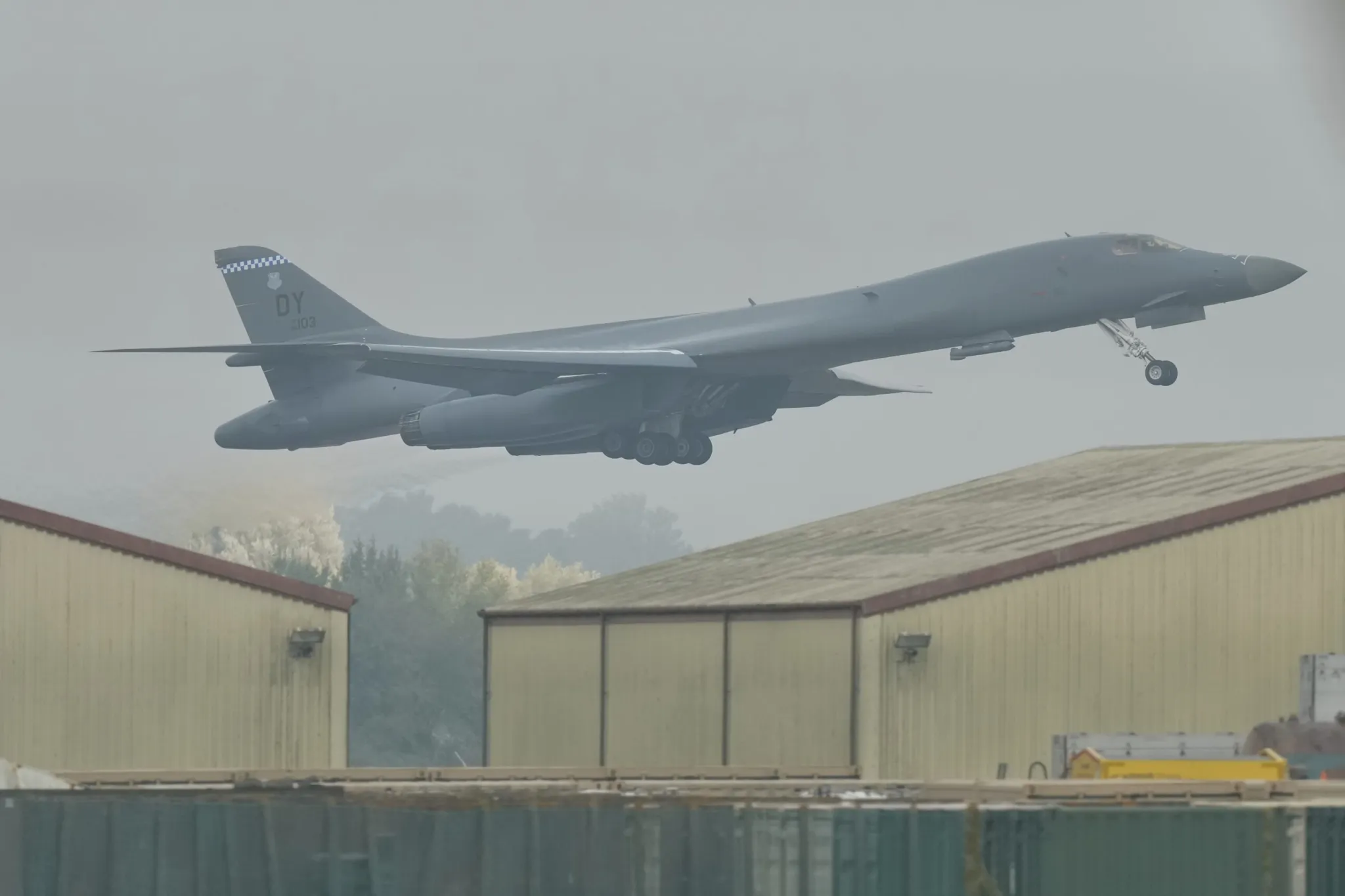
The U.S. Air Force has withdrawn its strategic bomber fleet from RAF Fairford in England following a security investigation into a suspected terror plot linked to Tehran, temporarily removing a key strike platform as the conflict with Iran enters a new phase. A Pentagon official confirmed Sunday that B-52 and B-1 Lancer aircraft have been redeployed to home bases in the United States, a move verified by independent aviation trackers who observed multiple heavy bombers departing the Gloucestershire airfield throughout the weekend.
The withdrawal marks a significant operational pause for forward-deployed U.S. airpower in Europe. RAF Fairford serves as the primary forward operating location for American bombers in the European theater, offering critical proximity to Middle Eastern targets that continental U.S. bases cannot match. The base’s infrastructure includes specialized fuel storage, munitions handling facilities, and hardened shelters designed specifically for strategic aircraft, making it difficult to replicate its capabilities elsewhere in the region on short notice.
British counterterrorism police arrested a dual British-Iranian national in central London last week on suspicion of planning an attack against the installation. The arrest followed a separate security incident at the base in late September that triggered the broader investigation. Six individuals have been taken into custody and subsequently released on bail as authorities examine potential connections between the suspects and Iranian intelligence networks.


U.K. officials have publicly attributed the threat to Tehran, citing a pattern of proxy activity across Britain and Europe. Intelligence assessments indicate that Iranian-linked operatives have conducted arson attacks and other disruptive operations targeting Jewish communities and Western military assets, aiming to create domestic pressure against continued support for strikes on Iranian territory. While Iran denies direct involvement in the Fairford plot, Tehran has previously declared any facility used to launch attacks against its soil a legitimate military target.
President Donald Trump addressed the evolving campaign Saturday, stating that Iran has been “decimated” while signaling that further military action remains under consideration. His remarks suggest the administration is weighing whether to escalate pressure or pursue diplomatic off-ramps, despite earlier assurances that hostilities would be brief. The temporary loss of the Fairford staging point complicates immediate strike options, potentially shifting reliance toward naval assets and longer-range sorties from Diego Garcia or continental U.S. bases.
Naval forces are simultaneously repositioning to maintain regional deterrence. The USS Theodore Roosevelt carrier strike group and the USS Makin Island amphibious readiness group are currently en route to the Middle East, carrying more than 7,000 sailors and 2,000 Marines. Defense officials indicated these deployments could result in three carrier strike groups operating in the region by late October, providing substantial maritime firepower to offset the reduced land-based bomber presence.
RAF Fairford has functioned as a cornerstone of U.S. power projection since the Cold War, hosting B-52s during Operation Desert Storm and serving as a launch point for strikes in Iraq, Libya, and Syria. Its current status as an active crime scene rather than an operational airbase underscores how asymmetric threats can disrupt conventional military logistics even within allied NATO territory. British and American security services continue to coordinate on base protection measures as investigators determine whether the plotted attack represented an isolated cell or part of a wider network.









