U.S. Doctoral Admissions Drop 15% as Scientists Flee Abroad
Billions in frozen federal grants are shrinking graduate pipelines and accelerating an unprecedented departure of researchers to Europe and Asia.
Major American research universities accepted 15% fewer applicants for fall 2026 doctoral programs compared to last year, according to admissions data collected by the Association of American Universities. The contraction follows a wave of departures by established scientists and an exodus of foreign-born researchers who previously anchored U.S. laboratories.
The Trump administration has cut or frozen up to $174 billion in federal grants since the president’s second term began, according to a tracking tool released by the States United Democracy Center and the organization Grant Witness. That financial squeeze is now hitting graduate pipelines directly.
Physics Ph.D. graduates left the U.S. at the highest rate in 30 years in 2025, according to the American Institute of Physics. An April report from the Business for Federal Research Funding Coalition found that more than half of American states have lost scientists to recruitment programs in other countries.


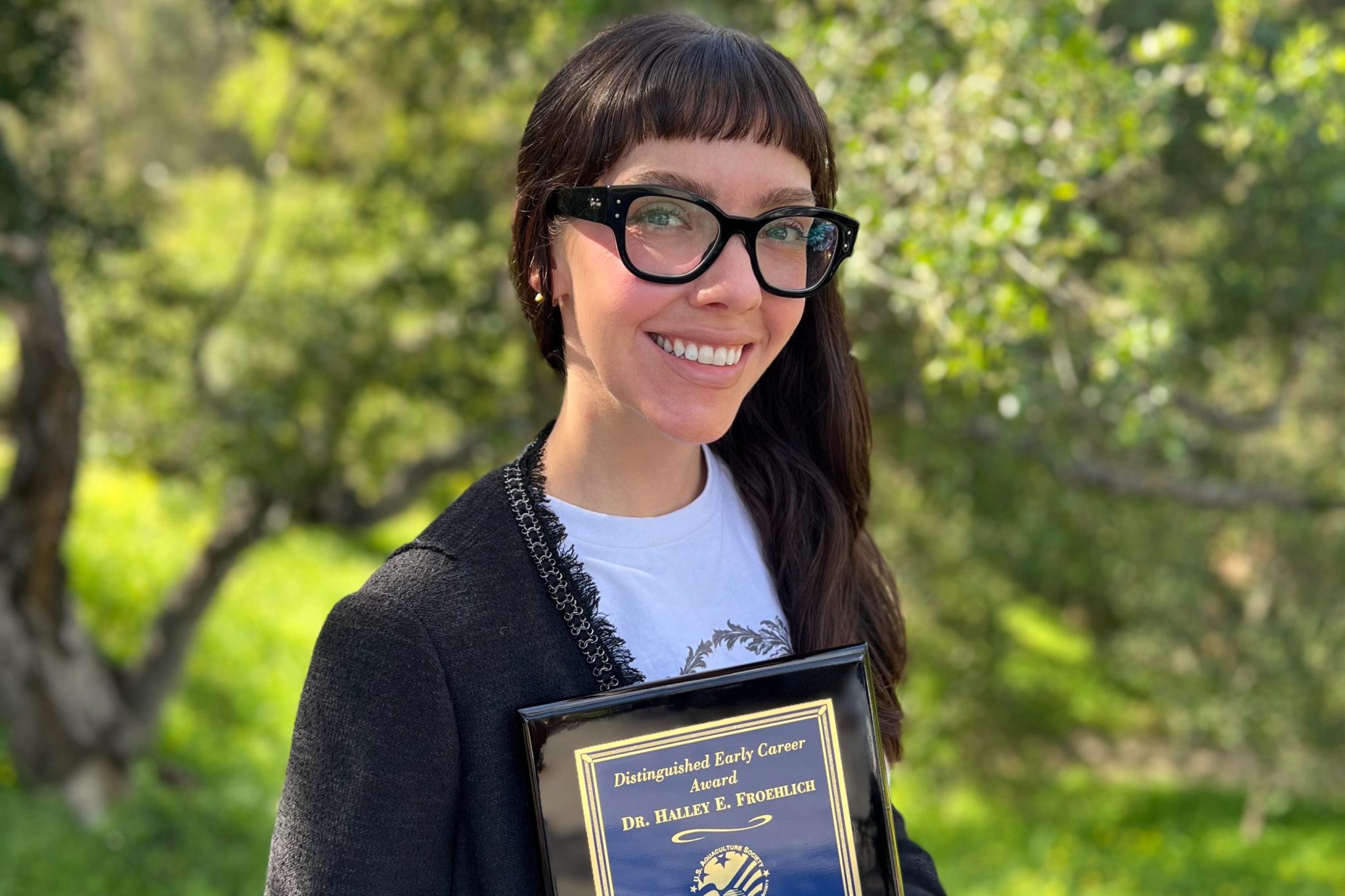
Foreign governments moved quickly to exploit the disruption. Canada, France, Belgium and Finland launched targeted initiatives to absorb displaced American talent. Halley Froehlich, a marine researcher formerly at the University of California, Santa Barbara, relocated to the University of Helsinki after the Research Council of Finland offered her five years of guaranteed funding totaling about $3 million to study how climate change affects fish, shellfish and seaweed.
Christine Stawitz resigned from the U.S. National Oceanic and Atmospheric Administration last year. She told reporters she was asked to strip agency websites of references to climate change and diversity, equity and inclusion topics before taking a position as a research software engineer at the University of Birmingham in England.
James Letts and Maria Maldonado, married biologists originally from Canada and Argentina, abandoned posts at the University of California, Davis for Australia’s Monash University. Letts said stalled funding forced them to lay off a staff scientist before they decided to leave.
Immigrants have won 40% of U.S. science Nobel Prizes. Omar Yaghi, who won the 2025 Nobel Prize in chemistry, departed the University of California, Berkeley this year to direct an artificial intelligence lab at China’s Tsinghua University.
White House spokesperson Liz Huston said President Donald Trump is “ending waste” and remains “committed to keeping America the world leader in scientific innovation, and that means funding real science.”
Tobin Smith, senior vice president of government relations and public policy for the Association of American Universities, said nearly every university vice president for research can name one or two top faculty members they have recently lost.
A proposed rule from the Office of Management and Budget would give political appointees greater control over which future projects receive funding. Congress passed a resolution delaying a final decision on the rule until December.
Early-career biomedical scientists surveyed last March were roughly 20 percentage points less likely to say they would stay in the U.S. compared to how they recalled feeling six months earlier.
Smith said he recently advised a rejected doctoral applicant to look to Canada next year.