BRICS Creator: India, Not China, Is the Next 20-Year Growth Engine
Demographics give New Delhi a sustained growth advantage as Brazil and Russia slide back to 2001 output levels.

India holds a 15-to-20-year window to sustain 7% to 8% annual economic growth, according to Jim O’Neill, the former Goldman Sachs economist who coined the BRIC acronym in 2001. That projection, driven by demographics rather than policy, places New Delhi ahead of Beijing as the primary engine for emerging-market expansion over the next two decades.
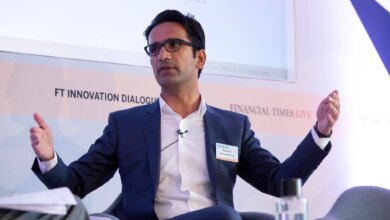
“This is India’s moment in the sun because of its demographics,” O’Neill said during an interview in London. He added that if the government accelerates structural reforms, annual output gains could reach 10%. Data compiled by Fulcrum Asset Management shows India’s cumulative per capita growth since 2000 hit 246%, while China recorded 554%. Over the same period, the U.S., Europe and the U.K. posted 45%, 30% and 29%, respectively.
The original forecast—laid out in Goldman Sachs Economics Paper No. 66—grouped Brazil, Russia, India and China into a single investment thesis. Twenty-five years later, the grouping has fractured economically. O’Neill noted that Brazil and Russia have seen their shares of global GDP revert to 2001 levels following a decade of political instability and conflict. The bloc now relies entirely on the “ICs” for its macroeconomic weight.


O’Neill, who led Goldman’s asset management division overseeing $800 billion before departing in 2013, recently launched a think tank called BRICS+ Thinking. The organization aims to structure dialogue between the Global South and industrialized nations—a channel he argues Western capitals abandoned after the 2008 financial crisis. While the G20 temporarily elevated emerging economies during the crash, institutions like the G7 never permanently integrated China or India into their core decision-making structures.
European governments drew his sharpest criticism. O’Neill accused France, Italy and Germany of clinging to individual seats at international tables despite lacking the economic scale to justify them independently, effectively blocking representation for larger developing nations. He also pointed to protectionism within the European Union’s single market, specifically regarding services, arguing it undermines Brussels’ moral authority when criticizing U.S. tariffs under Donald Trump.
Washington’s trade posture rests on what O’Neill called an evidence-free narrative that America is having “its breakfast, dinner and lunch eaten by China.” Beijing’s response, he said, involved tightening control over its private sector and leaning into nationalism to prioritize Communist Party preservation over freewheeling enterprise.
Gavyn Davies, former chief economist of Goldman Sachs global research, previously described the 2001 paper as one of the most influential documents ever produced by an investment bank’s economics department. The refusal of Western institutions to adapt to the realities that paper outlined remains the central friction point in global capital markets today.