Meta Releases 800B-Parameter Muse Spark Open AI Model
The open-weight architecture runs locally on paired M5 Ultra Mac Studios, bypassing cloud API costs for enterprise AI workloads.
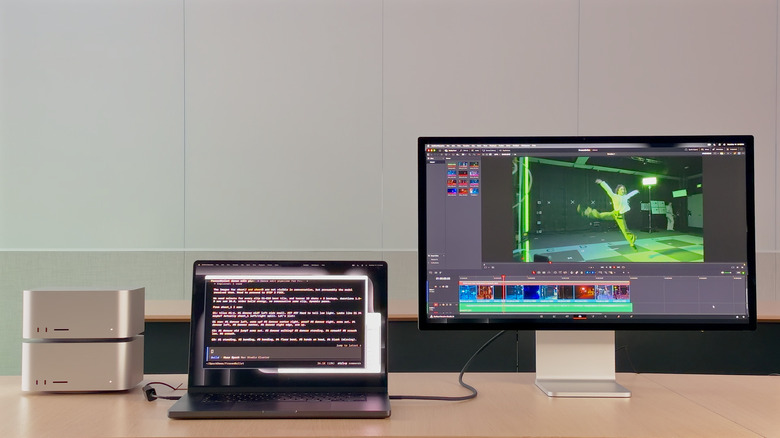
Meta released Muse Spark Open, an 800-billion-parameter open-weight artificial intelligence model engineered to run locally across paired Apple Silicon workstations rather than relying on cloud-based inference clusters. The model is available for download now through Hugging Face.
Unlike most frontier-scale models that require enterprise-grade data center infrastructure or expensive API subscriptions, Meta designed this release specifically around the unified memory architecture of Apple’s M5 Ultra chip. Because integrated GPUs share system RAM directly with the CPU, two Mac Studio machines configured with 512GB of memory each can load the entire model into a single terabyte of unified memory. Alternatively, developers can distribute the workload across four 256GB M5 Ultra units.
Running a model of this scale locally fundamentally changes the economics and security posture for organizations processing sensitive data. Cloud API costs for high-volume agentic workflows frequently reach tens of thousands of dollars monthly, while local execution eliminates per-token billing entirely after the initial hardware purchase. It also keeps proprietary prompts and generated outputs off third-party servers, addressing compliance requirements in healthcare, finance, and legal sectors where data residency laws restrict cross-border transfers.


The hardware investment remains substantial. A four-machine configuration using 256GB M5 Ultra Mac Studios carries an estimated cost of roughly $38,000. Apple has not yet published final pricing or an exact shipping date for the 512GB Mac Studio variant, confirming only a “late October” availability window. While individual developers and hobbyists are priced out of this tier of local compute, mid-sized enterprises and research labs facing escalating token budgets may find the capital expenditure competitive with long-term cloud contracts.
Muse Spark Open arrives amid intensifying competition between U.S. and Chinese AI laboratories over open-source dominance. Meta positioned the release as a direct countermeasure to foreign-developed alternatives, asserting that American companies should control the trajectory of open-weight systems. Internal benchmarks published by Meta indicate the model surpasses China’s GLM 5.3 and Kimi K3 on visual reasoning and agentic task evaluations—workflows where autonomous software agents plan, execute, and verify multi-step operations without human intervention.
At 800 billion parameters, the model sits among the largest open-weight architectures ever publicly distributed. For comparison, Meta’s previous Llama 3.1 flagship topped out at 405 billion parameters, while many community-favored models operate in the 70-billion to 100-billion range to remain viable on consumer hardware. Scaling to 800 billion parameters dramatically increases the model’s capacity for complex reasoning, long-context retention, and nuanced instruction following, but it simultaneously raises the barrier to entry for local deployment.
The term “open-weight” carries specific implications distinct from fully open-source software. While the trained neural network weights are freely downloadable and usable, open-weight releases sometimes carry licensing restrictions on commercial applications, acceptable use policies, or derivative training limitations. Developers integrating Muse Spark Open into production pipelines must review Meta’s accompanying license agreement on Hugging Face before deployment.
Apple’s M5 Ultra architecture serves as the critical enabler for this release. Traditional discrete GPUs, such as those manufactured by Nvidia, possess dedicated VRAM that rarely exceeds 192GB even on top-tier enterprise cards like the H200, making single-node hosting of massive models difficult without complex tensor parallelism across multiple servers. Apple’s approach of pooling system memory for graphical compute bypasses the VRAM bottleneck, allowing workstation-class hardware to tackle tasks previously reserved for server racks.
Muse Spark Open is currently indexed and ready for download on the Hugging Face model hub.