

Jeff Bezos Linked to $69.5M Golden Beach Oceanfront Deal, Expanding South Florida Portfolio
Record $69.5M purchase gives Amazon founder rare Atlantic frontage as South Florida wealth migration accelerates
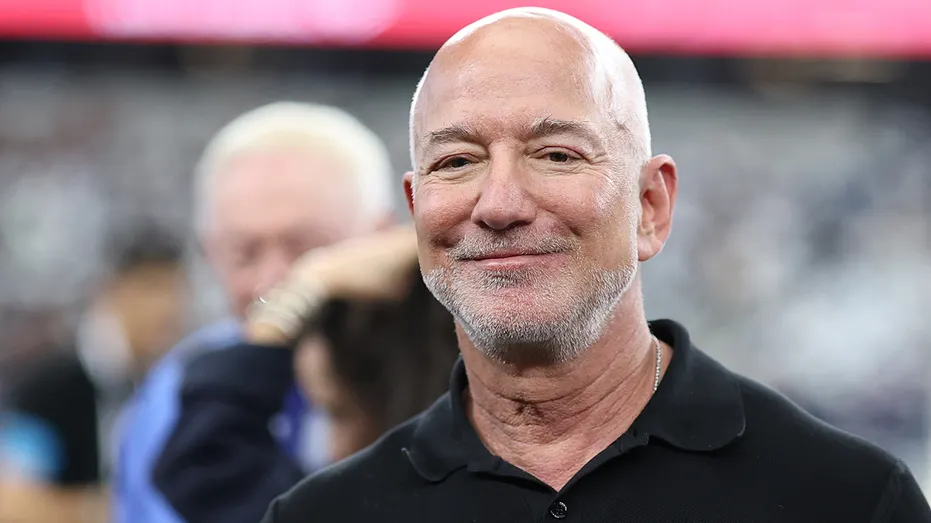
A Delaware limited liability company tied to Amazon founder Jeff Bezos has purchased a 17,500-square-foot oceanfront estate in Golden Beach for $69.5 million, setting a new sales record for the exclusive Miami-Dade County enclave, according to property records and sources familiar with the transaction.
The September sale of 255 Ocean Boulevard, brokered by Douglas Elliman’s Dina Goldentayer for the seller and The Jills Zeder Group at Coldwell Banker for the buyer, transfers one of the last substantial single-family parcels directly on the Atlantic shoreline. The buyer, Meridian Coast LLC, shares a registered agent address with other entities used by Bezos for real estate acquisitions, according to The Real Deal, which first reported the connection.
Neither Bezos nor his family office, Bezos Expeditions, has confirmed the purchase. The property’s previous owner, a trust tied to the family of late pharmaceutical executive Phillip Frost, acquired the site in 2021 for $32 million, records show.


The acquisition would give Bezos a strategic foothold on the only stretch of Miami-Dade coastline where single-family homes sit directly on sand — a regulatory anomaly created by Golden Beach’s 1929 incorporation and strict zoning that prohibits high-rise construction. The town of roughly 900 residents maintains its own police force and building height restrictions capped at three stories, effectively freezing the oceanfront supply at approximately 60 estates.
“Oceanfront single-family land in Miami-Dade is virtually extinct,” said Jordan Karp, a Douglas Elliman agent who has transacted in Golden Beach. “Buyers are paying a scarcity premium for irreplaceable land, and that inventory is shrinking further as buyers assemble adjacent lots into compounds.”
For Bezos, the Golden Beach property serves a different function than his existing $234 million portfolio on Indian Creek Island, the man-made barrier island known as the “Billionaire Bunker” where he has spent the past two years assembling contiguous parcels. Indian Creek offers deep-water dockage for superyachts and a 13-member police force for 35 homes, but its properties front Biscayne Bay, not the open Atlantic.
“There’s a significant difference between owning a waterfront estate on Biscayne Bay and having direct frontage on the Atlantic Ocean,” said Devin Kay of The Exclusive Group at Douglas Elliman. “Golden Beach offers something increasingly difficult to replicate in South Florida.”
The purchase aligns with a broader pattern among ultra-high-net-worth buyers who treat South Florida real estate as a portfolio allocation rather than a primary residence decision. Florida’s lack of state income tax, combined with homestead protections that shield primary residences from creditors, creates a structural incentive for wealthy individuals to establish legal domicile in the state while maintaining multiple properties for distinct uses — tax domicile, entertainment, staff housing, and recreational access.
At the $70 million level, transactions bear little resemblance to traditional residential sales. Deals are negotiated through family offices and specialized attorneys under non-disclosure agreements that often prevent listing agents from attending final walkthroughs. Certainty of execution, confidentiality, and the ability to structure clean title transfers frequently outweigh price negotiations.
“The broker’s role has evolved considerably,” Kay noted. “It’s not simply about finding someone who can afford the property. It’s about having access to a very specific buyer pool and managing an extremely sensitive transaction from beginning to end.”
Golden Beach’s transformation from a quiet, family-oriented community to a billionaire destination mirrors South Florida’s broader wealth migration. Since 2020, the region has added more high-net-worth residents than any other U.S. metropolitan area, driven by tax policy, climate preference, and the relocation of financial firms including Citadel and Elliott Management to Miami and West Palm Beach.
The town’s governance structure — incorporated specifically to prevent the high-rise development that characterizes Miami Beach and Sunny Isles — has inadvertently created a supply constraint that now drives nine-figure valuations. With fewer than five oceanfront parcels remaining that could accommodate estates of this scale, the $69.5 million benchmark is unlikely to hold.
Douglas Elliman’s Goldentayer declined to comment on the transaction. The Jills Zeder Group did not respond to requests for comment.









