

Social Security 2027 COLA Hits 3.6% as Trust Fund Nears 2032 Cliff
Average monthly benefits rise to $2,170 while Medicare premiums and looming 2032 insolvency complicate the financial picture for retirees.

The Social Security Administration announced Wednesday that beneficiaries will receive a 3.6% cost-of-living adjustment in 2027, the largest annual increase in four years. The boost arrives as the program’s retirement trust fund races toward a projected 2032 insolvency date, setting up an unavoidable collision between rising near-term payouts and long-term structural deficits.
The adjustment takes effect with December benefits, which are distributed in January. For the average retired worker, monthly payments will climb by roughly $75, moving from $2,095 to $2,170, according to estimates cited by AARP. Over a full year, that translates to approximately $900 in additional income for typical retirees.
September inflation data drove the calculation. The Consumer Price Index for Urban Wage Earners and Clerical Workers, known as the CPI-W, rose 3.9% year-over-year during the third quarter. By law, the SSA uses this specific metric—averaged over July, August, and September—to determine the annual adjustment. The resulting 3.6% figure marks a sharp acceleration from the 2.8% adjustment applied to 2026 payments.


Because the formula applies a flat percentage, the dollar value of the increase widens significantly at the top of the benefit scale. The Committee for a Responsible Federal Budget estimates that maximum-benefit recipients will see annual increases exceeding $2,200. High-earning couples who retired this year at normal retirement age could gain a combined $3,600 annually, pushing their total household benefits past the $100,000 threshold.
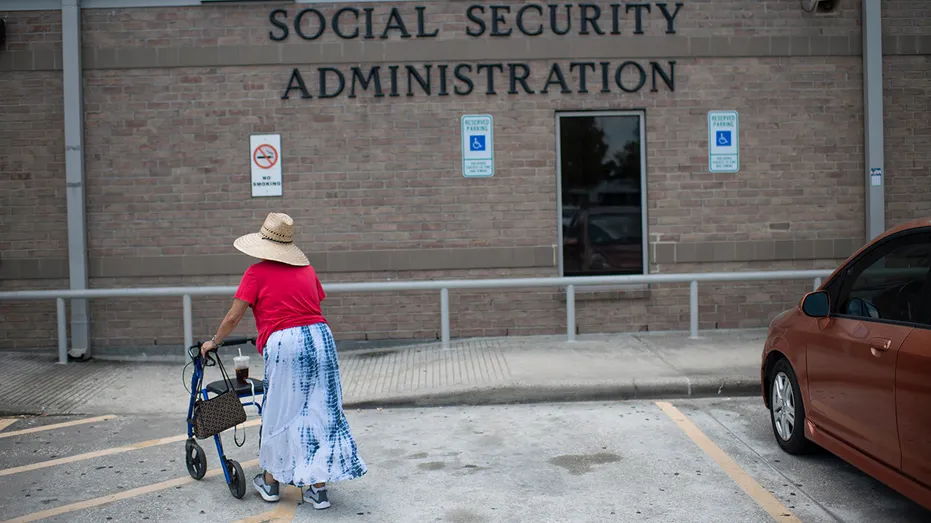
This regressive distribution dynamic fuels ongoing policy debates about how to measure inflation for federal programs. CRFB has proposed shifting the index to the Chained CPI, a metric that accounts for consumer substitution when prices rise, or imposing dollar caps on adjustments for higher-income earners. AARP opposes any reduction or cap, maintaining that current adjustments already fail to match the pace of health care, utility, and grocery costs faced by older Americans.
Those expenses continue to compound. The standard Medicare Part B premium is projected to rise by $6.60 per month in 2027, reaching $209.50. Because Medicare premiums are deducted directly from Social Security checks before they reach bank accounts, higher medical costs effectively swallow a portion of the nominal benefit increase for millions of enrollees.
The 2027 adjustment lands against a deteriorating fiscal backdrop. According to the Social Security trustees’ 2026 report, the Old-Age and Survivors Insurance trust fund faces reserve exhaustion by 2032. Unlike private pensions, Social Security cannot legally borrow money or run a deficit. Once reserves deplete, the system relies entirely on incoming payroll tax revenue, which the trustees project will cover only 78% of scheduled obligations. Without congressional intervention, that mathematical reality triggers an automatic 22% across-the-board cut to all retirement and survivor benefits.
Funding those obligations falls disproportionately on younger workers, who finance the program through a 12.4% payroll tax split between employees and employers on earnings up to the taxable maximum. The generational economic gap adds friction to the political calculus. A Federal Reserve report released in May found that just 63% of adults ages 18 to 29 reported financial stability in 2025, compared with 83% of adults 60 and older. Nearly half of adults under 30 required outside financial assistance to cover basic expenses last year.
Michael A. Peterson, CEO of the Peter G. Peterson Foundation, has repeatedly pointed to these demographic and fiscal pressures as evidence that lawmakers must pursue structural solutions rather than short-term fixes.
Congressional leaders have yet to advance comprehensive legislation addressing the 2032 shortfall, though bipartisan working groups have circulated proposals ranging from raising the payroll tax cap to gradually increasing the full retirement age. The 2026 midterm election cycle has kept formal negotiations largely dormant, leaving the timeline for legislative action increasingly compressed as the depletion date approaches.









