French Bulldog Guarded Stray Cat’s Kittens Before He Died
Five kittens matching the late dog's coloring emerged from a crawlspace a month after he died
A French Bulldog spent his final days fixated on a crawlspace beneath his owner’s home, a behavior that remained unexplained until five kittens emerged roughly a month after the dog died. The discovery revealed an unusual cross-species bond in which the dog had been monitoring a stray mother cat and her newborn litter.
The dog’s owner, identified as Jess, noticed her pet repeatedly returning to the same spot under the house during his last weeks. He never returned with scratches or signs of distress, indicating the feral mother cat permitted his proximity. Animal behaviorists note that while dogs and cats are often framed as adversaries, stable domestic dogs frequently tolerate or even protect vulnerable animals they encounter regularly, particularly when no territorial competition exists. Feral queens are notoriously defensive, making her acceptance of the French Bulldog a strong indicator of established trust.
Five kittens eventually surfaced from beneath the structure: two solid black and three black-and-brown. Observers noted their coloring closely mirrored the late dog’s coat. Jess, who described herself as a cat enthusiast before adopting the French Bulldog, is currently housing the entire litter.


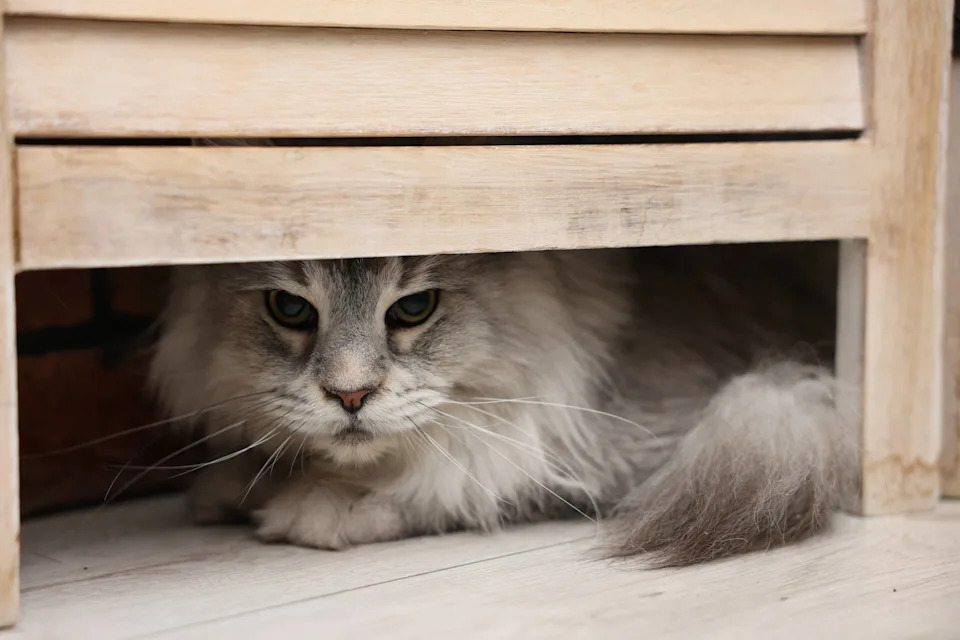
Crawlspaces, porches, and foundation gaps rank among the most common denning sites for pregnant community cats. These areas provide insulation, concealment from predators, and protection from rain and wind. Feral cats instinctively seek enclosed spaces where they can control entry points, reducing the risk of neonatal mortality during the first critical weeks of life. Even well-socialized indoor cats retain this hiding instinct, retreating under furniture or appliances when stressed or ill.
Wildlife experts and animal control agencies advise homeowners against crawling under structures to retrieve trapped or nesting animals. Disturbing a nursing feral cat can trigger abandonment or aggressive defense. Local shelters and trap-neuter-return organizations possess the equipment and behavioral training to extract litters safely without separating mothers from dependent kittens prematurely.
Community cat populations remain a persistent management challenge across U.S. municipalities. Trap-neuter-return programs have become the standard approach to stabilizing feral colonies, replacing older catch-and-euthanize models that failed to reduce long-term numbers. Kittens born to feral mothers can typically be socialized for adoption if human interaction begins before eight weeks of age, a window that applies directly to the five kittens now living indoors.
The kittens remain with Jess and continue to develop normally.