How to Make Gnocchi: Traditional Italian Techniques Explained
Expert tips on dough hydration, shaping for sauce retention, and why garlic and onion should never share the same pan.
Gnocchi dough fails for one reason more than any other: too much moisture. Home cooks routinely end up with heavy, gummy dumplings because they treat potato gnocchi like wheat pasta, adding flour until the stickiness disappears rather than managing the water content from the start.
Traditional Italian nonnas — grandmothers who anchor regional cooking practices — have long relied on tactile feedback and specific sequencing to prevent this. The techniques taught in hands-on culinary programs aboard Celebrity Cruises’ Edge-class ships, including the Celebrity Ascent, distill these generational methods into actionable steps that diverge sharply from standard American recipe instructions.
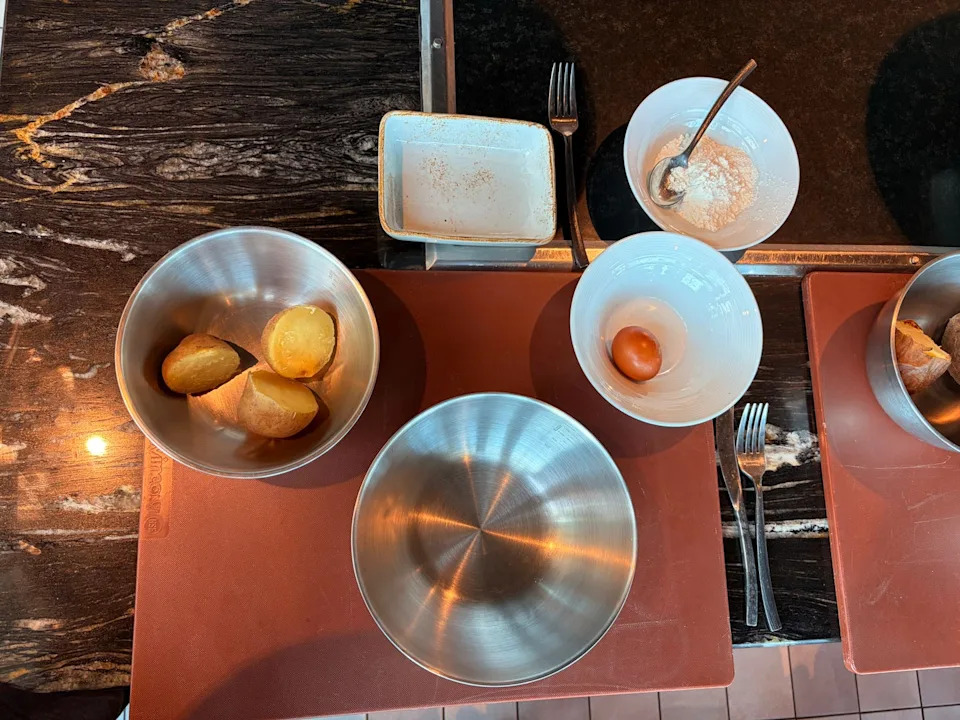
The process begins before the potatoes even hit the cutting board. Selecting starchy varieties, such as Russets, over waxy ones like Yukon Golds is critical. Waxy potatoes hold more water, demanding excessive flour to bind the dough, which inevitably produces a dense final product. Once boiled, the potatoes must be peeled immediately while still hot. Allowing them to cool traps steam inside the skin, driving moisture back into the flesh. Working quickly prevents this reabsorption.


Mixing requires abandoning measuring spoons. While some regional Italian traditions omit egg entirely to achieve a lighter texture, using a small amount acts as a reliable binder for less experienced cooks. The dough must be worked by hand. Fingers detect the exact moment the mixture transitions from sticky to pliable, signaling when to stop adding flour. Overworking develops the gluten in the flour, turning the gnocchi tough.
Generous flouring of the workspace keeps the rolled ropes from adhering to the counter. Uniform thickness ensures every piece cooks at the same rate. But shaping serves a mechanical purpose beyond aesthetics.

Rolling each piece against the tines of a fork, or pressing a thumb indentation into the center, creates ridges and hollows. Because gnocchi lacks the porous structure of extruded dried pasta, smooth surfaces allow sauces to slide off. The textured grooves physically trap liquids, anchoring the sauce to the dumpling.
Cooking provides its own built-in timer. Unlike dried pasta, which requires testing for doneness, fresh gnocchi signals completion visually. Dropped into a rolling boil, the pieces sink. The moment they float to the surface, the internal starches have gelatinized fully, and they must be removed immediately. Lingering in the water causes them to absorb liquid and disintegrate.

The accompanying tomato sauce follows equally strict traditional constraints. A foundational rule in many Italian households dictates that garlic and onion should never share the same pan. Both are alliums, but they release sulfur compounds at different rates and intensities. Combining them muddies the flavor profile rather than deepening it. A classic Neapolitan-style sauce typically relies solely on onion, olive oil, and tomatoes.
Fresh tomatoes require a brief blanch in boiling water — roughly 60 seconds — to loosen the skins for manual removal. Mashing them by hand, rather than puréeing them in a blender, preserves structural integrity. Blenders incorporate air and break down seeds, which can introduce bitterness. Leaving visible chunks maintains textural contrast against the soft gnocchi.

Basil demands specific handling to prevent oxidation. Metal blades react with the enzymes in basil leaves, causing rapid browning and a loss of volatile aromatic oils. Tearing the leaves exclusively by hand, or using ceramic tools, preserves their bright green color and sharp flavor. Only the smaller, younger leaves near the top of the stem should be used; older, larger leaves at the base tend toward bitterness.
Crucially, basil must never be cooked. It should be stirred into the sauce only after the burner is turned off. Prolonged heat destroys the delicate essential oils responsible for its distinct aroma.

These techniques reflect a broader philosophy in regional Italian cooking where restraint replaces complexity. Cruise lines operating dedicated culinary programs, such as Celebrity Cruises, increasingly use these classes to differentiate onboard experiences beyond standard dining room service. The Celebrity Ascent, which debuted in late 2023 as the fourth vessel in the Edge series, integrates these sessions into its wider programming.

For home cooks attempting gnocchi for the first time, the most practical adjustment involves the potatoes themselves. Baking or microwaving the potatoes whole instead of boiling them significantly reduces their initial water content, requiring less added flour and yielding a noticeably lighter dumpling without altering the traditional shaping or cooking steps.