
US Lifts Syria’s Caesar Sanctions: A Conditional Path to Recovery
President Trump signs defense bill repealing 2019 measures, opening new economic avenues for Damascus under strict US oversight.

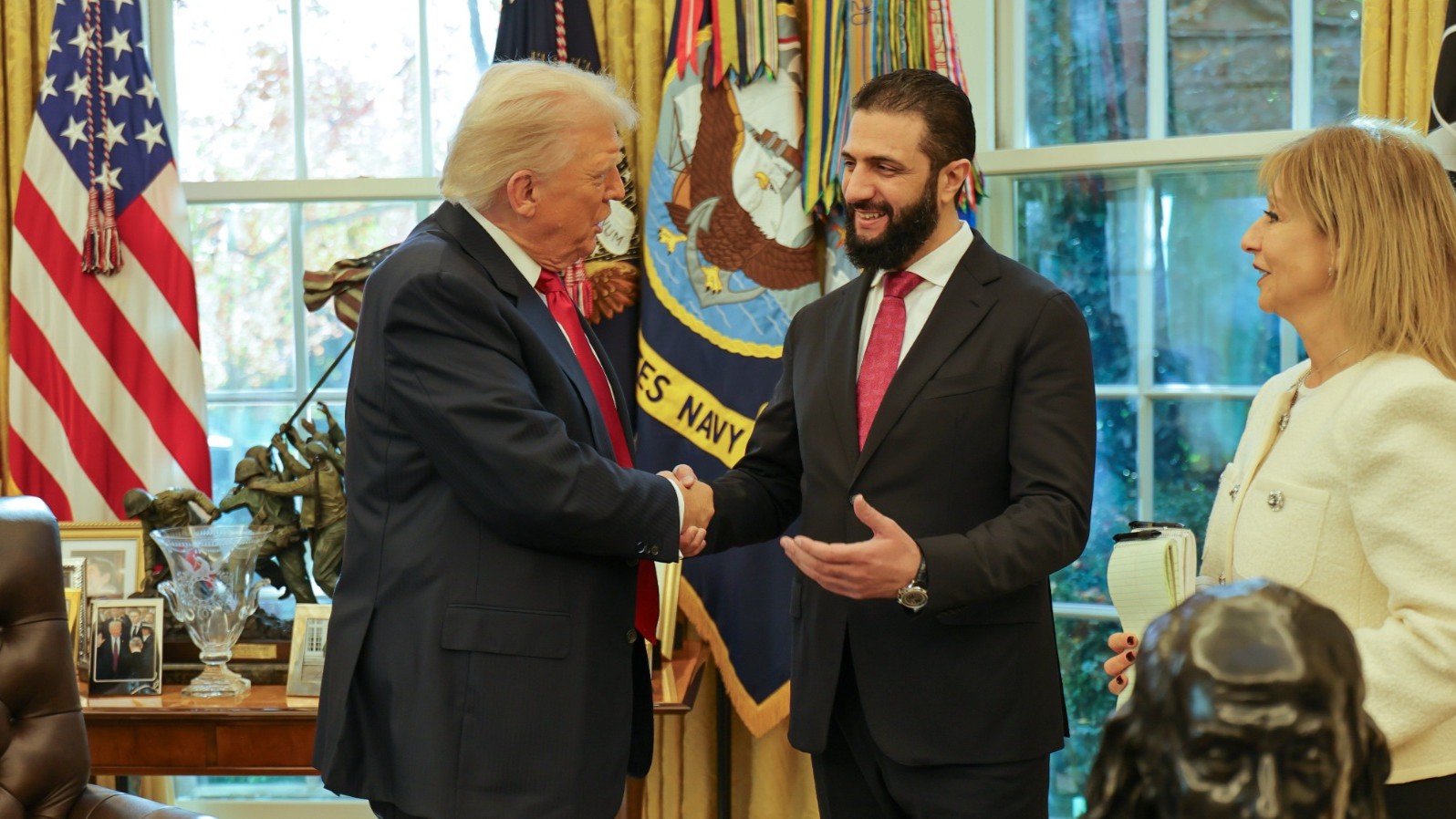
President Donald Trump signed the National Defense Authorization Act (NDAA) for fiscal year 2026 on Thursday. The $900 billion bill includes a provision to repeal the “Caesar sanctions” imposed on Syria since 2019. Congress had previously approved the legislation with strong bipartisan support. The Senate passed the bill on Wednesday with a 77-20 vote. Lawmakers stated the move aims to support Syria’s economic recovery after more than a decade of conflict.
Repealing Caesar Sanctions on Syria
The new law mandates the U.S. President, or a designated official, to submit a report to Congress every six months. This reporting requirement will last for the next four years. The reports will assess the Syrian government’s performance. They will specifically evaluate “concrete actions” taken on various issues, including eliminating the threat from “terrorist groups.”
The US Senate approved the annual defense policy bill on Wednesday. This approval included the annex specifically repealing the “Caesar sanctions” on Syria. These sanctions had significantly impacted Syria’s economy and international relations. For more background on the Caesar Act, see this detailed overview: Council on Foreign Relations – Syria
Trump and Al-Sharaa Meeting
Syrian President Ahmed Al-Sharaa visited Washington last month. A primary goal of his visit was the complete lifting of American sanctions. He met with President Trump at the White House.
The US Treasury Department announced a 180-day extension of the “Caesar Act” sanctions suspension in November. This announcement followed a closed-door meeting between Trump and Al-Sharaa. The full repeal of these sanctions remained contingent on Congressional approval.
Why Caesar Sanctions Were Imposed
Broad sanctions were imposed on Syria in 2019 under the “Caesar Act.” These measures targeted individuals, companies, and institutions. All were linked to former Syrian President Bashar al-Assad.
The “Caesar Act” stood as one of the strictest laws imposed on Damascus. It specifically prevented any country or entity from engaging with or financially or economically supporting the Syrian government.
Syrian Welcome of the US Decision
Syrian Foreign Minister Asaad Al-Shaibani expressed his country’s appreciation on Wednesday. He thanked the US Senate for its vote to repeal the “Caesar Act” sanctions on Syria.
Al-Shaibani stated on the platform “X” that his country considers this a positive development. He added that it “opens new horizons for cooperation and partnership between our country and the world.”
Saudi Arabia Supports Sanctions Repeal
The Saudi Foreign Ministry stated its appreciation for steps taken by the Syrian government. These steps aim to restore stability across all regions of the country. They also seek to create conditions necessary for rebuilding the state and its economy.
The Saudi Foreign Ministry added that the US decision to repeal the “Caesar” sanctions supports stability and development in Syria.
The Saudi Foreign Ministry also praised President Trump’s positive role in lifting the sanctions imposed on Syria.
What Repealing Caesar Sanctions Means for Syria’s Rating
Syrian Central Bank Governor Abdul Qader Al-Husri posted on his personal Facebook page. He indicated that repealing Caesar sanctions will open significant opportunities for the country. These include the possibility of obtaining a sovereign credit rating. He added that the repeal removes a fundamental legal barrier to Syria’s reintegration into the international financial system.
Al-Husri suggested pursuing an unannounced, advisory sovereign credit rating as a first step. He then proposed transitioning to a public rating when conditions permit. He noted that Syria would likely receive a low credit rating initially. This, he explained, is normal for countries emerging from conflicts.
US Conditions for Repealing “Caesar Sanctions” on Syria
Within 90 days of the law’s enactment, and every 180 days thereafter for the next four years, the President or designee must submit a non-classified report to specific Congressional committees. An unclassified report, with a classified annex if needed, will certify whether the Syrian government is taking “concrete and genuine actions.” These actions include eliminating the threat posed by ISIS and other extremist groups, such as Al-Qaeda and its affiliates, in partnership with the United States. They must also prevent the resurgence of ISIS.
The Syrian government must also remove, or take steps to remove, foreign fighters from senior positions. This applies to all levels of the Syrian government, including state and security institutions.
Respecting the rights of religious and ethnic minorities in Syria is another condition. This includes upholding freedom of worship and belief. The government must also allow fair and balanced representation in government, including in ministries and parliament.
Syria must not engage in unilateral and unjustified military action against its neighbors, including Israel. The government must also continue making progress towards international security agreements, as required.
The Syrian government needs to take concrete and credible steps to implement the March 10, 2025 agreement. This agreement was negotiated between the Syrian government and the Syrian Democratic Forces (SDF). Steps include proportionate integration of security forces and political representation.
Effective steps to combat money laundering, terrorist financing, and the financing of weapons of mass destruction proliferation are also required. These actions must align with international standards. The government must also not knowingly finance or assist (financially or through arms transfers)