Hollywood mines TikTok and 4chan to replace TV monoculture
Lionsgate and NBC News detail how niche internet communities now drive major film releases and digital news growth.

Major studios and legacy newsrooms are no longer chasing the mass audiences that once defined American television. Instead, they are systematically harvesting intellectual property and distribution strategies from fragmented online communities, turning niche internet subcultures into box office hits and dominant social media news brands.
The shift represents a fundamental restructuring of how entertainment and information reach consumers. Where a single broadcast event like the 1983 M.A.S.H. finale could command 125 million viewers, today’s media landscape operates as a network of micro-audiences. Rather than attempting to rebuild that centralized attention, executives at companies including Lionsgate and NBC News are treating platforms like TikTok, Instagram, and even anonymous forums as primary talent pipelines and content incubators.
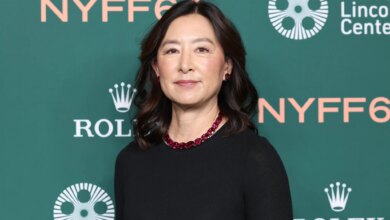
Lionsgate Chief AI Officer Kathleen Grace outlined this strategy Monday at the Fortune Most Powerful Women Summit in Santa Barbara, California. The studio’s approach relies on identifying creators who have already built dedicated followings in decentralized digital spaces and providing the infrastructure to scale their work for theatrical or streaming release.


A prime example is the psychological thriller “The Housemaid,” adapted from Freida McFadden’s novel. The project did not originate through traditional publishing channels or literary agents. A Lionsgate executive discovered the book via BookTok, the reading community on TikTok known for rapidly accelerating sales of specific titles. BookTok has fundamentally altered publishing economics over the past several years, frequently pushing backlist titles onto bestseller lists years after publication based purely on user-generated video recommendations.
The studio is applying the same extraction logic to original filmmaking. Through its talent agency 3 Arts Entertainment, Lionsgate represents Kane Parsons, the creator behind the Backrooms franchise. Parsons built his project from a series of unsettling images of empty conference rooms originally posted on the anonymous message board 4chan in 2019. That internet folklore evolved into a short-form horror series before expanding into a feature film distributed by A24, which has grossed more than $400 million globally to become the independent studio’s highest-grossing release. 3 Arts Entertainment, acquired by Lionsgate in 2018, functions specifically to bridge the gap between unconventional digital creators and traditional Hollywood production machinery.
“We’re helping elevate and support and make these worlds bigger for these creative people that have discovered these great communities that they’re making stuff for,” Grace told summit attendees.
Legacy news organizations face a parallel challenge. Television news viewership has steadily aged and declined, forcing networks to compete for younger demographics on platforms governed by entirely different engagement rules. NBC News anchor Savannah Sellers noted that the rapid evolution of social media algorithms often makes younger creators better equipped to reach audiences than veteran broadcasters.
NBC News attempted to solve this by launching “Stay Tuned” on Snapchat in 2018, with Sellers as co-host. The vertical, short-form news program was designed specifically for mobile consumption, stripping away the traditional anchor desk format. As audience behavior shifted, the program migrated to TikTok and Instagram, accumulating 1.8 million followers across platforms. Sellers stated that NBC News now leads all U.S. news organizations in TikTok engagements, a metric tracked independently by analytics firms measuring likes, comments, and shares rather than passive views.
This performance has changed internal hiring standards. NBC News now evaluates potential on-air and digital talent partly on their demonstrated ability to build and sustain audiences outside conventional broadcast frameworks, recognizing that platform fluency is as critical as editorial experience.
The broader industry transition reflects a permanent departure from the concept of a shared cultural center. Media conglomerates spent decades building linear distribution monopolies, but the current model requires them to act as amplifiers for ideas proven viable in uncontrolled digital environments. Both Grace and Sellers indicated that the absence of a unified monoculture is viewed internally as an operational advantage rather than a loss, allowing organizations to target specific demographics with precision that broad broadcasting never permitted.
Lionsgate continues to integrate its 3 Arts management roster with its film and television production divisions, actively scouting digital-native creators to expand its pipeline beyond traditional script acquisitions.