WhatsApp Message Scheduling Arrives in Android Beta
Users can queue encrypted texts, media and links up to 14 days ahead via a new long-press gesture in build 2.26.8.11.

Meta is preparing to close one of the longest-standing feature gaps in WhatsApp by introducing native message scheduling, a capability first spotted in the Android beta build 2.26.8.11. The addition fundamentally changes how users interact with the platform’s send mechanism and positions the app closer to feature parity with competitors that have offered delayed delivery for years.
Accessing the scheduler requires a long press on the send button rather than a standard tap. This gesture opens a bottom-sheet dialog where users select a specific date and time for delivery. A separate management interface allows senders to review, modify or cancel queued messages before they transmit. The system supports text, hyperlinks, photos and videos, all processed under WhatsApp’s default end-to-end encryption protocol.
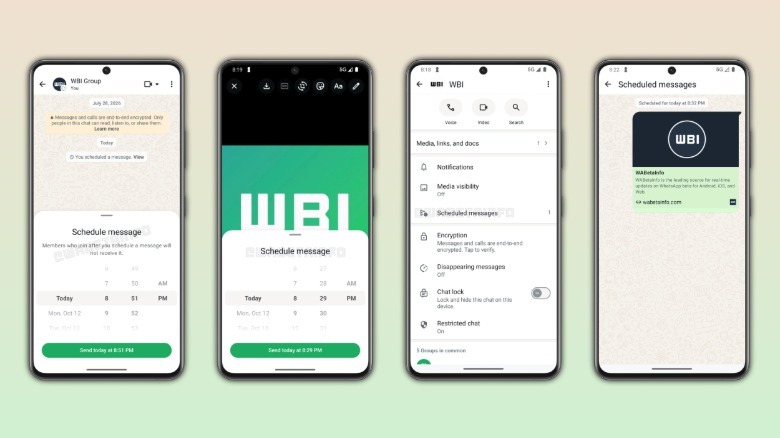

Scheduled transmissions execute server-side. Messages dispatch at the designated time regardless of whether the sender’s device maintains an active internet connection or remains powered on. Users can queue deliveries starting from 10 minutes into the future up to 14 days ahead, and the functionality extends to group conversations alongside individual chats.
The rollout addresses persistent demand from both personal and enterprise users managing communications across multiple time zones or coordinating off-hours business operations without disturbing recipients. Meta has increasingly targeted professional workflows through WhatsApp Business, which currently offers automated greeting messages, away replies and catalog integrations but relies on third-party API providers or manual workarounds for precise timed dispatches. Native scheduling eliminates that dependency for standard accounts.
Rival messaging platforms established this baseline much earlier. Telegram introduced its “Schedule Message” tool in 2019, while Apple embedded a send-later function directly into iMessage with the release of iOS 18 in late 2024. WhatsApp’s architecture, which serves over two billion monthly active users globally, historically prioritized simplicity and low-bandwidth performance over expansive feature sets, delaying the integration of tools common elsewhere.
The scheduling interface is currently restricted to a subset of testers enrolled in the WhatsApp beta program on Android. Broader availability across testing accounts is expected within weeks, typically preceding a stable public release on both Android and iOS.
Build 2.26.8.11 also continues Meta’s broader backend transition toward supporting multi-device architecture, allowing users to operate WhatsApp independently on linked tablets and desktop computers without requiring the primary smartphone to remain online.