Dorothy Lynch Dressing: The Nebraska Condiment That Defies Obscurity
Patented in 1951 and made with condensed tomato soup, this Midwest staple is still bottled by the company that bought the recipe over 60 years ago.
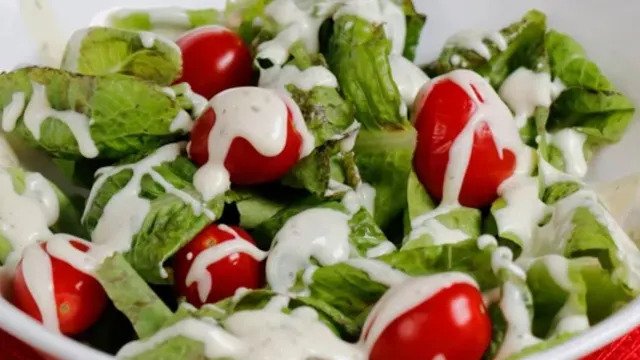
A salad dressing built on a base of condensed tomato soup rather than oil or mayonnaise has quietly survived in the American Midwest for more than seven decades, defying the consolidation that erased thousands of regional food brands. Dorothy Lynch Home Style dressing remains in continuous production under the same corporate entity that purchased the recipe in 1964, an unusually long run for a hyper-local condiment born in a rural veterans’ hall.
The product traces its origins to St. Paul, Nebraska, where Dorothy and Arthur Lynch operated the local American Legion Club starting in 1948. While the club drew crowds for its steaks, the accompanying orange-hued dressing became the primary draw. Dorothy Lynch secured a patent for the recipe in 1951, and her son, Neal, initiated the first commercial phase by bottling the mixture for area grocery stores. The transition from a family operation to a scalable business occurred in 1964 when Gordon “Mac” Hull acquired the formula. Hull established Tasty Toppings Inc., which continues to manufacture the dressing today.



Formulating a dressing around tomato soup places Dorothy Lynch in a distinct category from other reddish condiments. Thousand Island relies on a mayonnaise and ketchup emulsion, while Russian dressing typically incorporates chili sauce, horseradish, and pimentos. By using condensed tomato soup as the primary vehicle, the Lynch recipe achieves a creamy consistency without heavy reliance on dairy or traditional egg-based binders. The spice profile — black pepper, garlic powder, celery seed, and onion powder — yields a flavor that registers as both sweet and peppery.
This specific composition explains its crossover utility. Midwestern consumers rarely restrict the dressing to green salads. It functions routinely as a dipping sauce for french fries, a topping for scrambled eggs, and a binder for taco salads. In Nebraska specifically, it serves as a standard accompaniment to the Runza, a regional bread pocket stuffed with spiced ground beef, cabbage, and onions that operates as a fast-food staple across the state. The manufacturer actively promotes this versatility, publishing applications ranging from grilled chicken marinades to bundt cake ingredients.
Regional food products in the United States face steep structural disadvantages against national conglomerates. Brands like Kraft and Hellmann’s dominate shelf space through massive distribution networks and marketing budgets, forcing most local dressings into extinction by the late 20th century. Dorothy Lynch avoided this fate largely because its consumer base in Nebraska and Iowa treats the product as a cultural fixture rather than a discretionary purchase. Kool-Aid, invented in Hastings, Nebraska, in 1927 and designated the state’s official soft drink, achieved global scale after General Foods acquired it. Dorothy Lynch represents the opposite trajectory: a product that deliberately remained tethered to its geographic origin.
Recent activity on platforms like TikTok has introduced the 1940s-era recipe to younger demographics outside the Cornhusker State, suggesting potential for modest market expansion beyond its traditional stronghold. For consumers located outside the Midwest, physical retail availability remains scarce. Tasty Toppings Inc. fulfills out-of-region demand primarily through direct e-commerce channels, including Grow Nebraska and Amazon.
Tasty Toppings Inc. maintains its manufacturing operations in Nebraska, continuing to bottle the original patented formulation without reformulation for modern low-sugar or preservative-free trends.