

Apple will enter the foldable smartphone arena when the iPhone Duo hits retail shelves on October 23, ending years of speculation over how the Cupertino tech giant plans to tackle bendable hardware. Yet as pre-orders approach on October 16, rival manufacturers have spent months refining designs, trimming chassis dimensions, and packing larger batteries into competing devices to defend their market share.
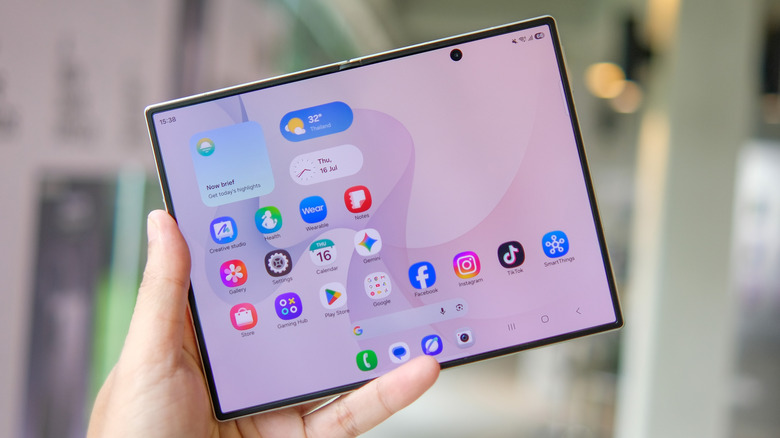
The iPhone Duo commands a $2,000 premium, positioning Apple directly against established flagship hardware from Samsung and Motorola in North America. Samsung took the initiative earlier this summer with the Galaxy Z Fold8, redesigning its core foldable around a passport-style footprint featuring a 7.6-inch inner panel and a 5.5-inch exterior screen. Priced at $1,900, the Z Fold8 moved away from narrower cover displays to offer broader viewing angles for media playback, mirroring the dual-camera configuration chosen by Apple while leaving larger, square panel designs to its higher-tier Ultra line.


International competitors are moving aggressively on physical dimensions and pricing. Xiaomi beat Apple’s unveiling by launching the Xiaomi 18 Fold, adopting identical 7.6-inch internal and 5.4-inch external display proportions. Despite matching the form factor, Xiaomi engineered its device down to 219 grams—considerably below the 254-gram weight of the iPhone Duo. Starting at 10,999 yuan (approximately $1,640) for the Chinese market, Xiaomi also integrated a triple-lens system with optical zoom, an option omitted on the standard Duo.

Power capacity and enclosure thickness remain another battleground. Folded flat, the iPhone Duo measures 11.3 millimeters. In contrast, Oppo shaved the Find N6 down to 8.93 millimeters, roughly parallel to the thickness of standard glass-slab flagships like the iPhone 18 Pro. The Find N6 pairs its ultra-slim chassis with a 6,000mAh battery cell, 80W wired charging capability, IP59 dust and water resistance, and a 200-megapixel primary sensor. While domestic availability remains limited to Asian and select global markets at 9,999 yuan (around $1,490), its hardware profile highlights where Apple chose conservative engineering trade-offs.
Consumers shopping carrier aisles in the United States face immediate alternatives such as the Motorola Razr Fold, which retails at $1,900. Motorola outfitted its foldable with an 8.1-inch main display hitting 6,000 nits of peak brightness—doubling the 3,000-nit ceiling on the iPhone Duo. The device matches the 6,000mAh capacity and 80W charging found in Asian flagships while including a dedicated optical telephoto camera and optional stylus support.
Apple is betting that interface execution will counterbalance sheer specification differentials. Operating system refinements packaged into iOS 27 deliver display-transition animations, split-window behaviors, and dynamic posture detection tailored to dual-screen workflows. Whether software sophistication will convince buyers to overlook heavier framing and a $2,000 starting price becomes clear once pre-orders open nationwide on October 16.



