Internal operational blueprints, messaging dossiers, and organizational records reveal that the worldwide demonstrations targeting Israel this weekend are not spontaneous local gatherings, but the product of a centrally orchestrated international apparatus designed to disrupt public infrastructure and manipulate the global media narrative.
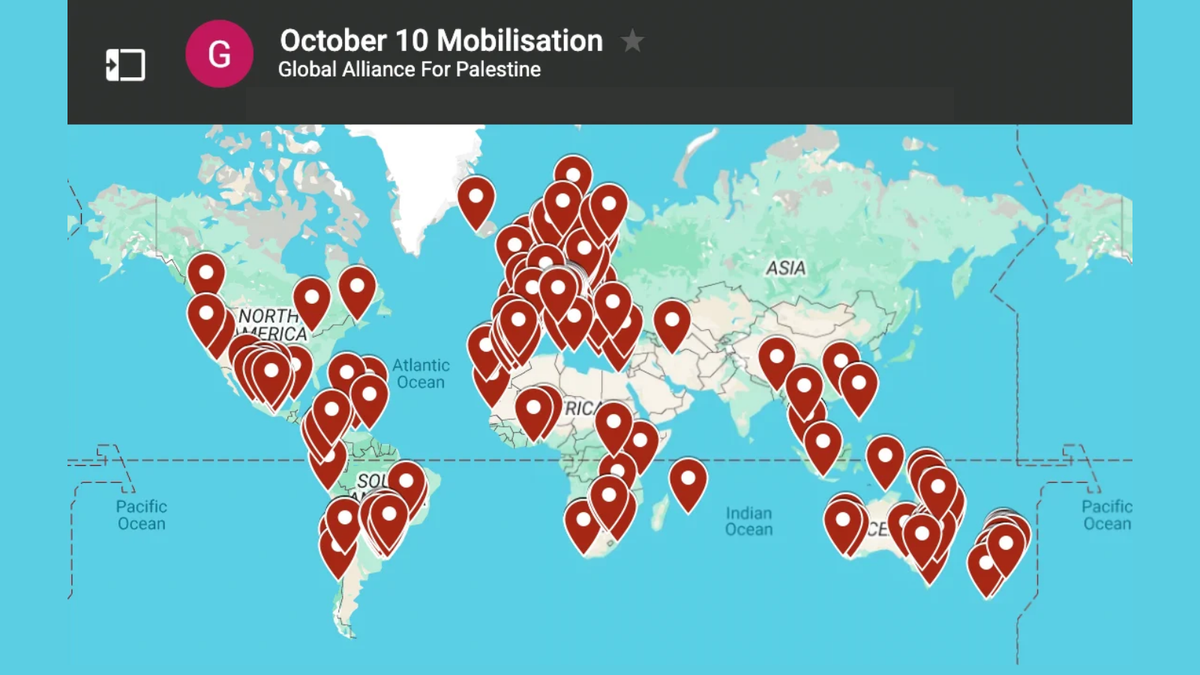
Behind the demonstrations spanning dozens of countries sits an umbrella network of at least 179 non-governmental organizations operating under the direction of the London-based Global Alliance for Palestine, alongside coalition partners including the Anti-Apartheid Movement for Palestine and the Global Coalition to End the Occupation of Palestine. Mapping data maintained by organizers tracks more than 320 synchronized disruptions across three days, ranging from civic center shutdowns in major Western capitals to direct actions in Asia, Africa, and Latin America.

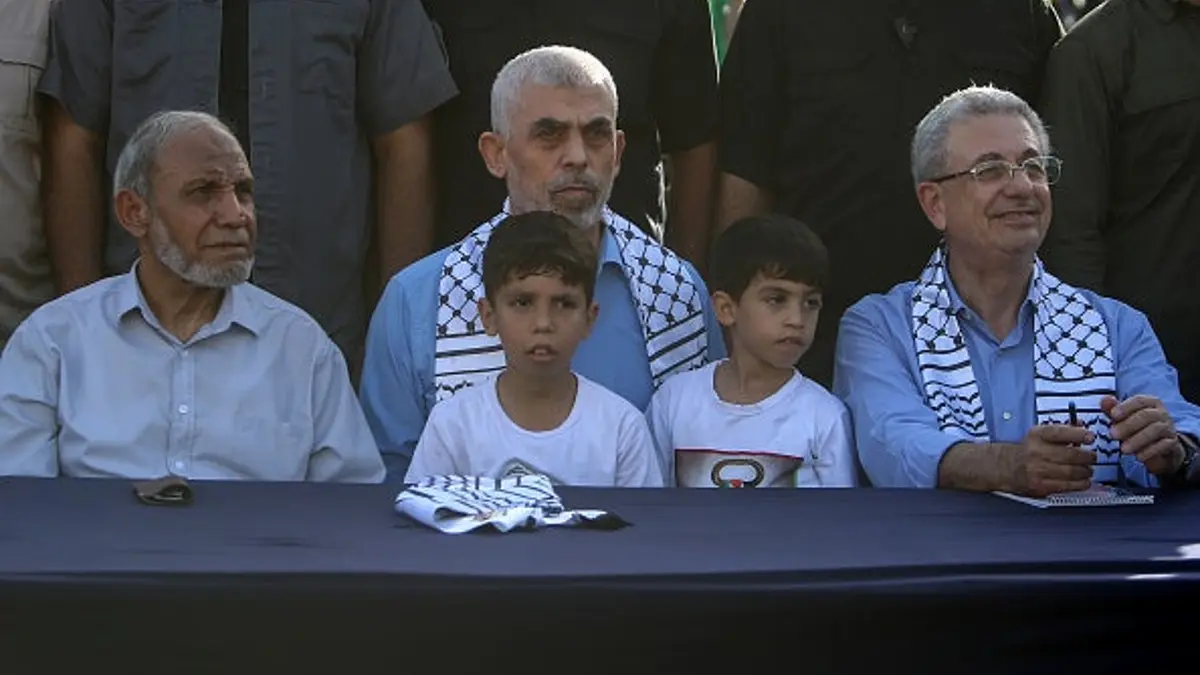
The initiative is steered by an international leadership circle featuring seasoned political operatives and controversial foreign figures. Committee records identify former British Labour Party leader Jeremy Corbyn, former Greek finance minister Yanis Varoufakis, former Sinn Féin chief Gerry Adams, and Palestinian political figure Mustafa Barghouti among its high-level leaders, with Anas Altikriti managing day-to-day operations as secretary-general.
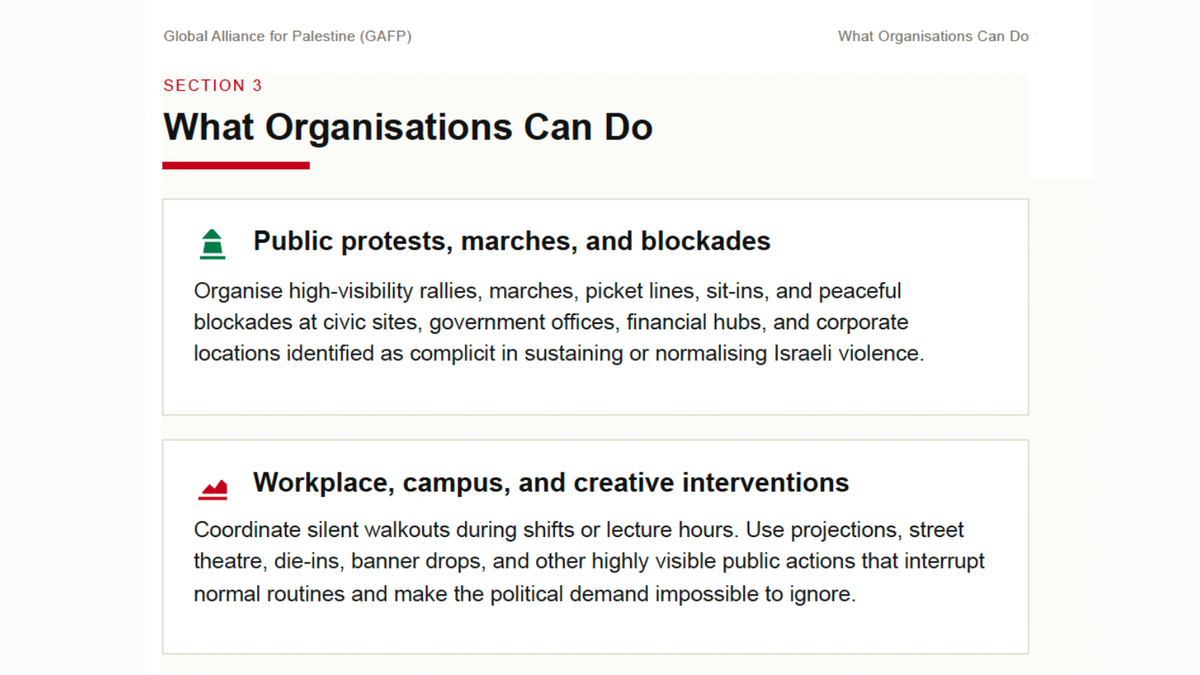
Campaign documents lay out an aggressive mandate extending far past traditional picketing. Coalition guidelines instruct national chapters to execute high-visibility disruptions, encircle government buildings, establish picket lines at financial hubs, and execute blockades at corporate hubs deemed complicit in supporting the Israeli government. The materials explicitly specify that actions must interrupt commercial routines through campus walkouts, banner drops, and coordinated die-ins.
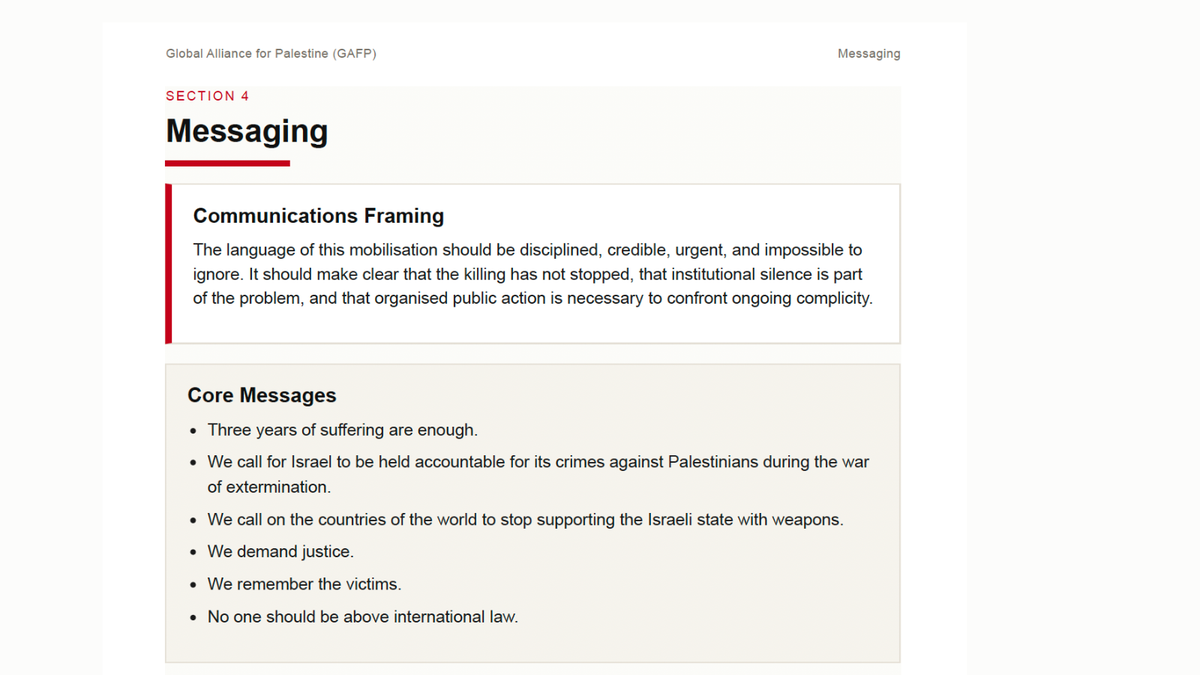
The materials illustrate how modern activist networks deploy corporate-style branding to unify localized protests under a single communications architecture. Weeks before public demonstrations began, organizers distributed comprehensive digital kits containing standardized graphics translated into seven languages: English, Arabic, Spanish, French, Portuguese, Turkish, and Finnish.
Demonstrations in Kuala Lumpur, Malaysia, reflected the strict adherence to this centralized collateral. Protesters assembled carrying identical mass-produced signs featuring barbed wire, watermelon graphics, and slogans including “GAZA GENOCIDE” and “LET GAZA LIVE”—exact replicas of digital assets hosted on the coalition’s shared servers.
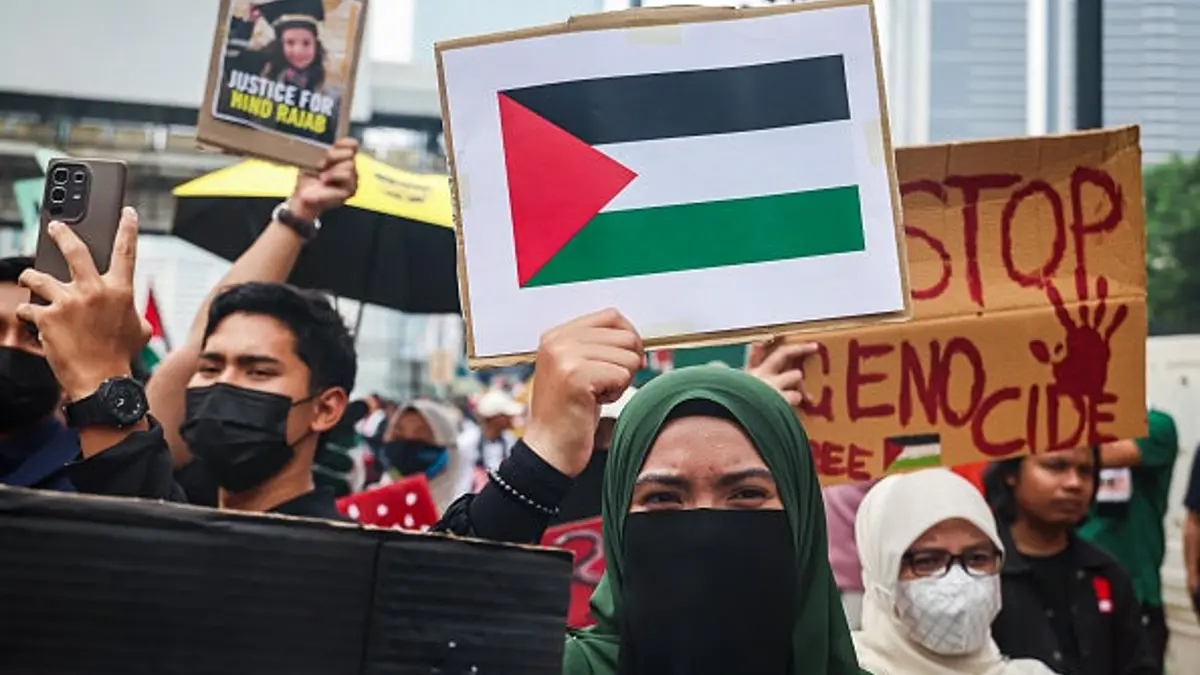
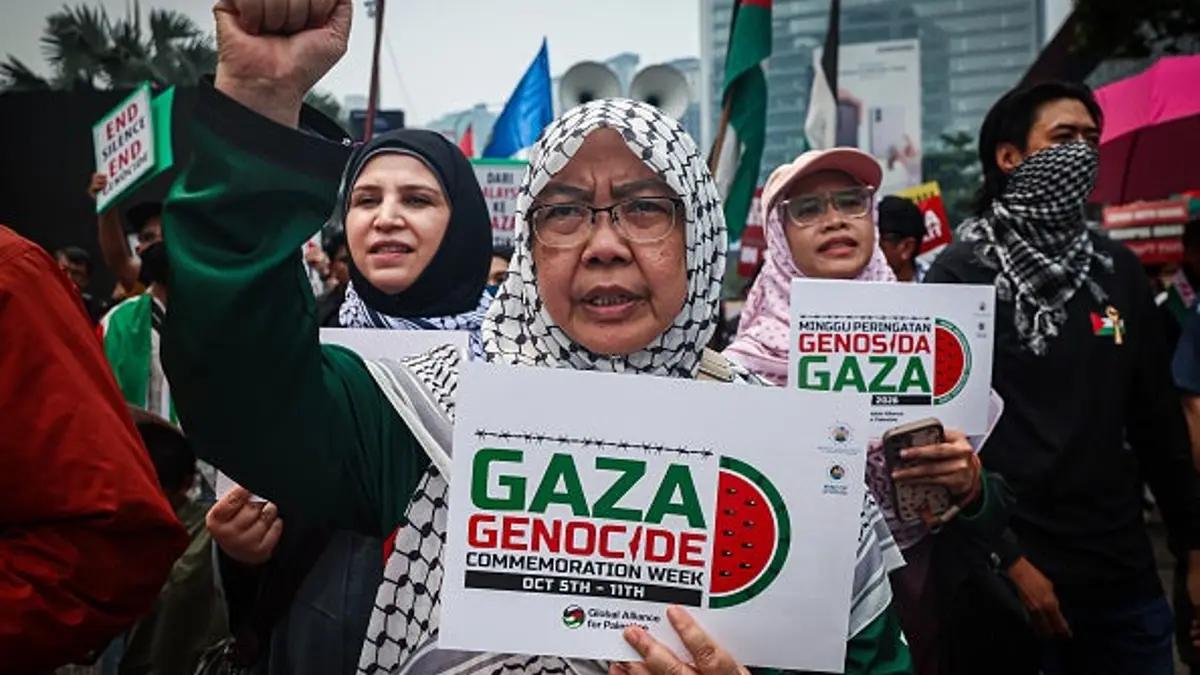
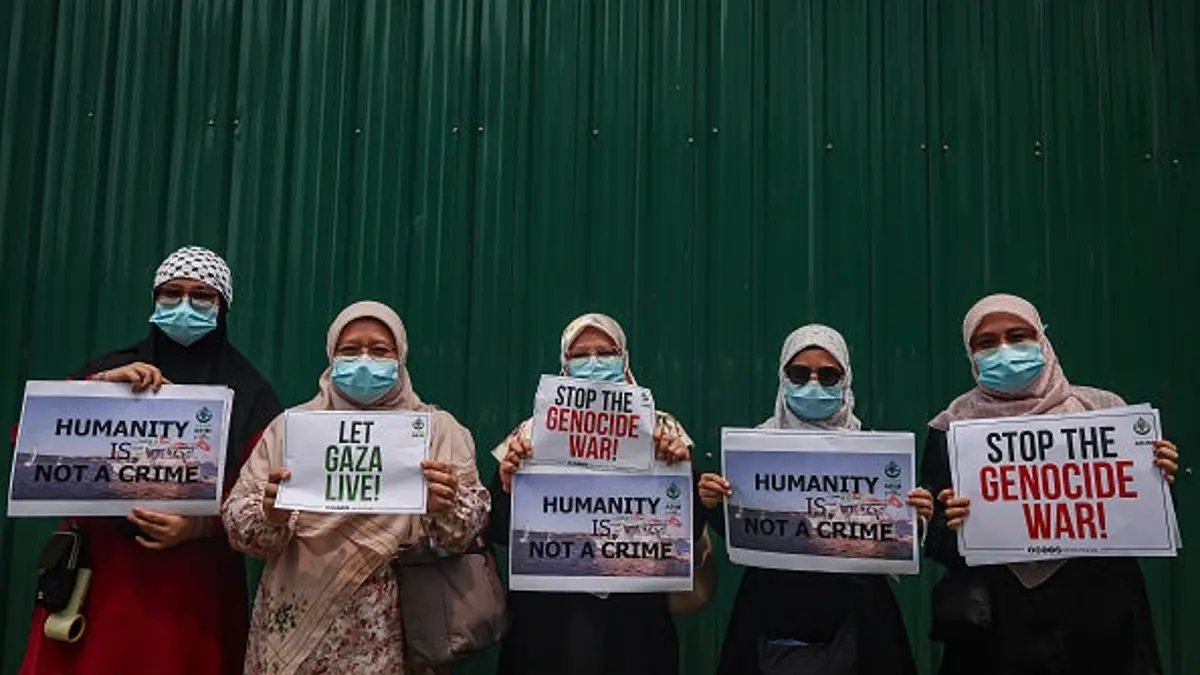
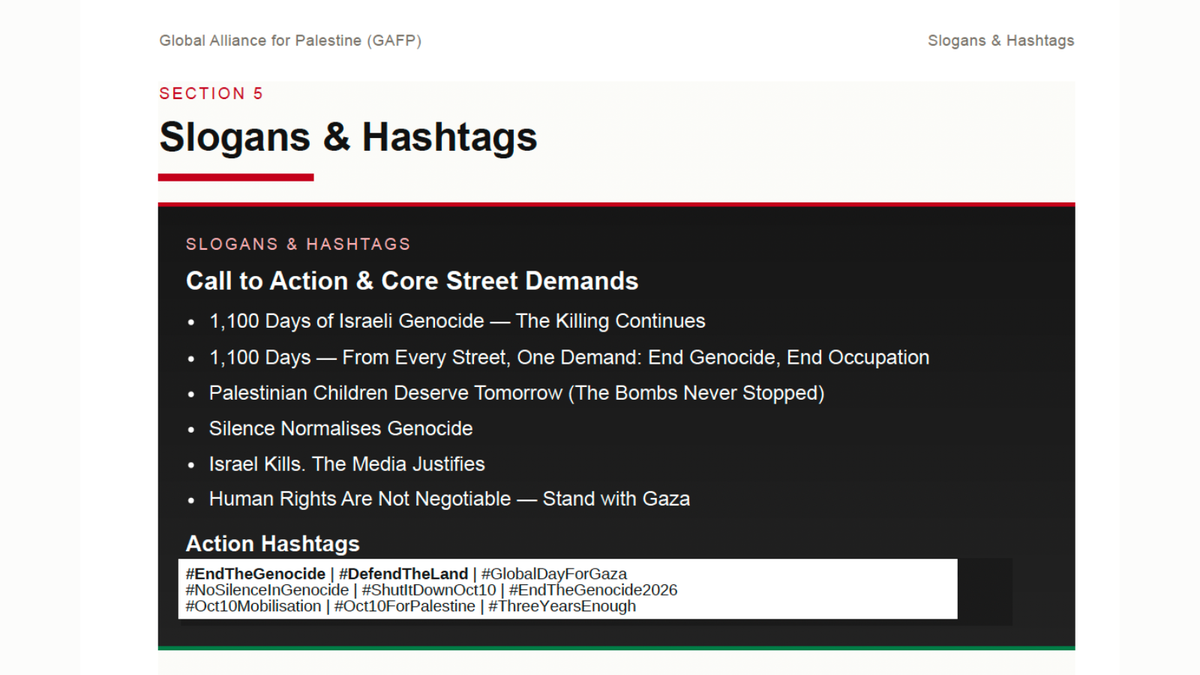
Messaging guidance outlined in the campaign’s concept papers mandates uniform rhetoric aimed at delegitimizing both Israeli defense actions and Western journalistic coverage. Pre-scripted talking points push slogans such as “Israel Kills. The Media Justifies,” while directing participants to frame Israeli operations exclusively as a war of extermination.
In the United States, demonstrations centered on Washington, D.C., and New York feature prominent participation from CodePink, whose leadership urged supporters to form dedicated contingents at major landmarks, including the Library of Congress. The anti-war nonprofit faces heightened federal oversight due to financial entanglements with Neville Roy Singham, a Shanghai-based tech entrepreneur who has directed hundreds of millions of dollars into progressive advocacy organizations. The House Ways and Means Committee, chaired by Rep. Jason Smith, has expanded inquiries into whether these financial conduits serve as foreign influence channels advancing geopolitical objectives tied to adversaries abroad.
Parallel demonstrations abroad have openly integrated militant rhetoric. Events scheduled across Canada, South Africa, and Bangladesh have adopted explicit “Intifada” labels, invoking past campaigns of armed Palestinian uprisings against Israel that featured widespread suicide bombings and civilian casualties.
Beyond street demonstrations, organizers have synchronized legislative pressure campaigns designed to force Western governments to impose total arms embargoes, enact trade sanctions, and sever diplomatic agreements with Israel. Campaign field workers are deploying standardized lobbying templates and digital toolkits to target legislators directly across North America and Europe, as protests continue through the weekend under close monitoring by municipal law enforcement agencies.