
Europe’s Red-Green Alliance Rewrites the Israel Debate
How immigrant voting blocs are influencing Europe’s left and its Israel policy
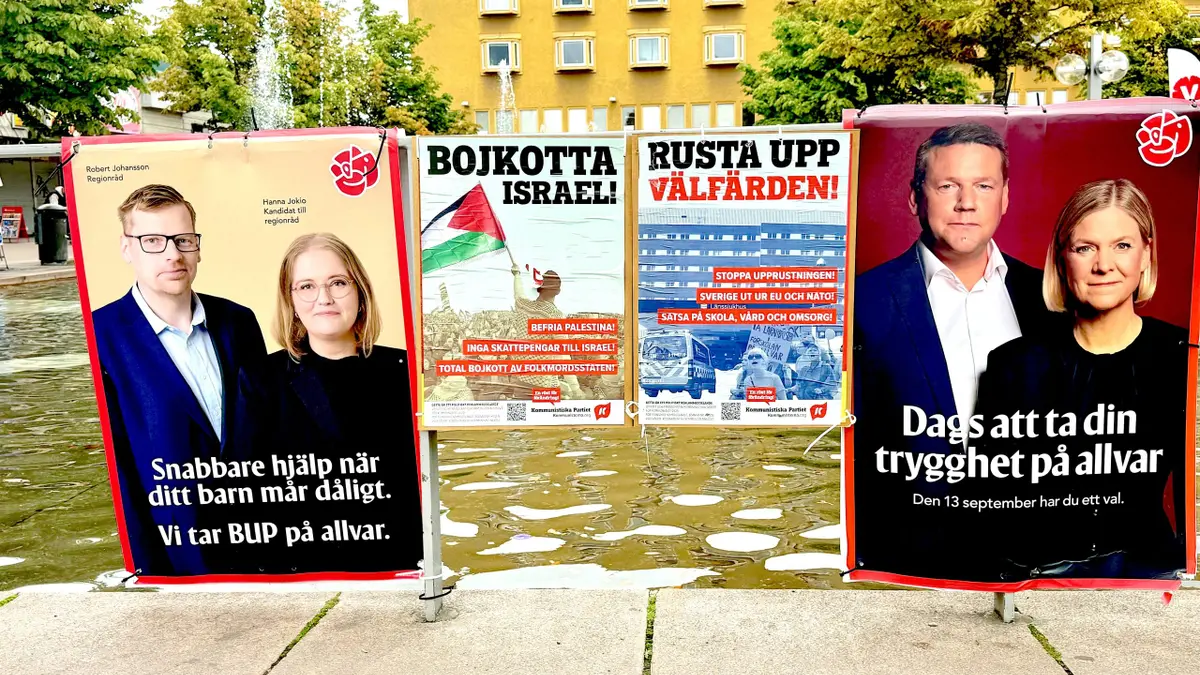
Across Western Europe, immigrant and Muslim populations are growing rapidly in major metropolitan areas, and left-of-center parties are increasingly shaping domestic campaigns and Middle East policies around these critical voting blocs. Recent and upcoming votes in Sweden, Germany, the United Kingdom, France, and Spain reveal how demographic realities are influencing national policy decisions.
According to projections by the Pew Research Center, Europe’s Muslim population has risen to an estimated 45 to 46 million, a 15.9% increase since 2010. Europe’s Jewish population, by contrast, has declined by 8% over the same period, falling to fewer than 1.3 million.
Simone Rodan-Benzaquen, the senior envoy to Europe at the Foundation for Defense of Democracies (FDD), noted that European Jews hold very little electoral weight and are therefore frequently sidelined in broader political calculations. She said that when left-wing parties speak of combating antisemitism, they often use it primarily as a rhetorical tool against their far-right opponents rather than addressing domestic threats.


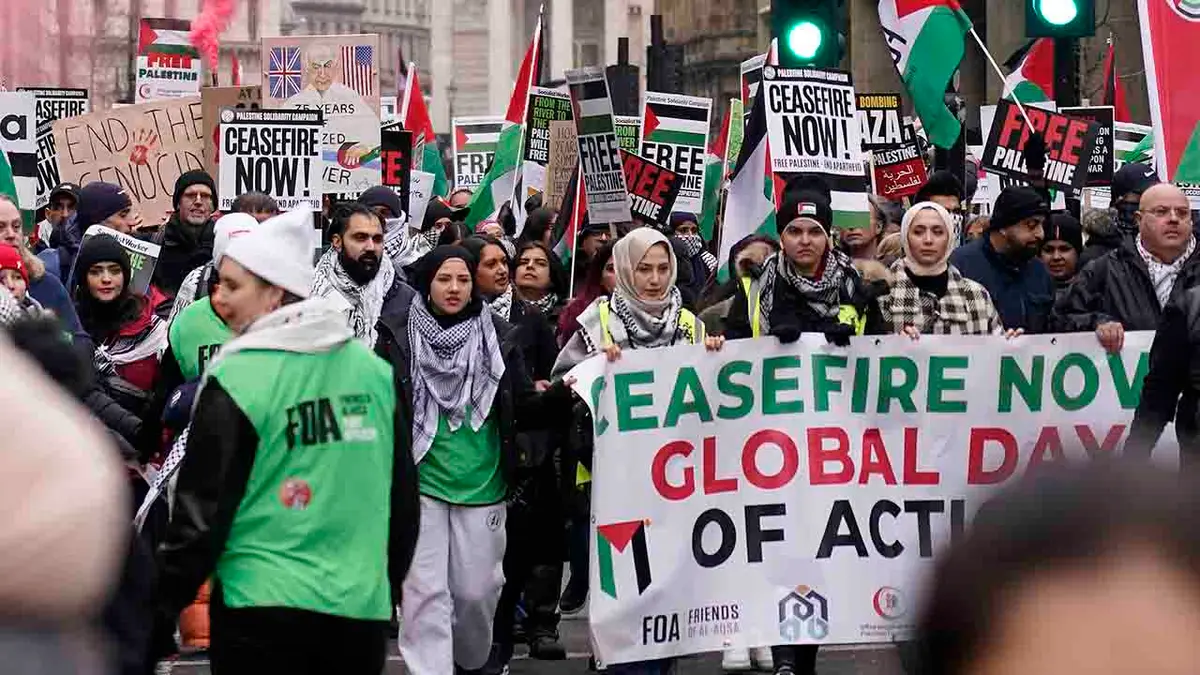
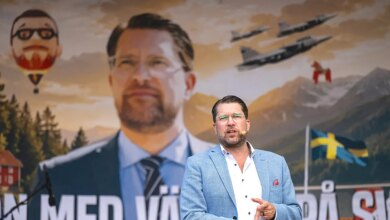
Political analysts often describe the alignment between secular progressive parties and socially conservative Islamist networks as the “Red-Green Alliance.” In Sweden’s recent parliamentary elections, votes from non-European Swedish citizens secured a narrow three-seat lead for a coalition of left-wing parties over the center-right bloc led by Prime Minister Ulf Kristersson, according to exit polling from the state broadcaster.
The Swedish result also underscored a growing divide between metropolitan centers and rural regions. Tobias Hübinette, a prominent Swedish political researcher, described the trend on the social media platform X as the “Mamdanification” of urban Sweden, referring to New York City political figure Zohran Mamdani, whose campaigns highlighted similar progressive-immigrant urban coalitions.
In Germany, voters in Berlin are preparing to head to the polls, while recent surveys show the far-left Die Linke (“The Left”) leading the center-right Christian Democratic Union (CDU) by two percentage points. The rise of Die Linke has drawn intense scrutiny from security analysts and political watchdogs.
Alan Mendoza, the executive director of the London-based Henry Jackson Society, warned that factions within Die Linke in Berlin are actively sharing platforms, demonstrations, and slogans with organizations that German domestic intelligence services have linked directly to Hamas and the Popular Front for the Liberation of Palestine (PFLP). Mendoza pointed to joint campaigns in which chants of “Death to the IDF” and “Intifada” were defended by party members.
Rodan-Benzaquen argued that German parties’ strict “firewall” against the far-right Alternative for Germany (AfD) has no equivalent on the left. She stated that Western Europe has an institutionalized perception that left-wing movements, including those at the extreme end, are not viewed with the same moral skepticism as movements on the right.
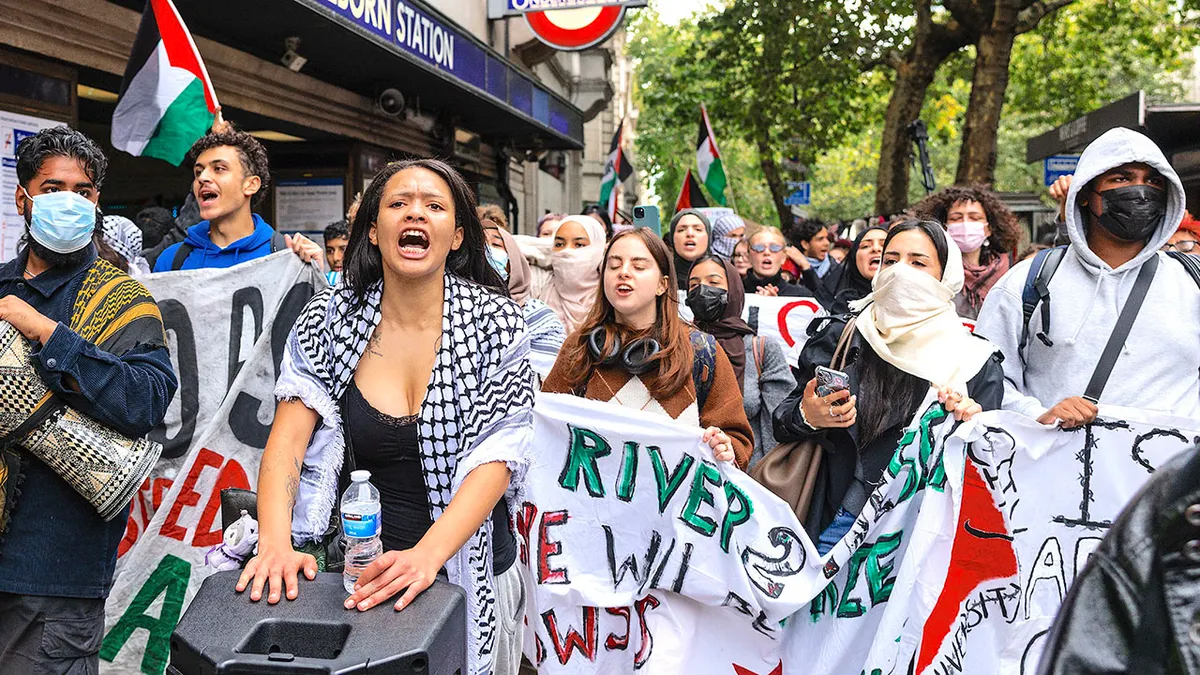
In the United Kingdom, the Labour Party’s relationship with these voting blocs became especially pronounced during Jeremy Corbyn’s tenure as leader from 2015 to 2020. During that period, the party’s platform shifted toward anti-imperialist, anti-colonialist, and identity-focused politics.
Prime Minister Keir Starmer later sought to distance Labour from controversies associated with the Corbyn era. Yet the July 2024 general election forced a tactical reassessment: despite winning a landslide national majority, Labour lost several historically safe, heavily Muslim seats to independent, pro-Palestinian candidates who mobilized voters angry over the government’s initial stance on the Israel-Hamas war.
The Labour government responded to domestic electoral pressures by suspending dozens of arms export licenses to Israel. Conservative lawmaker Tom Tugendhat dismissed the decision as “performative politics” intended to win back disgruntled voters.
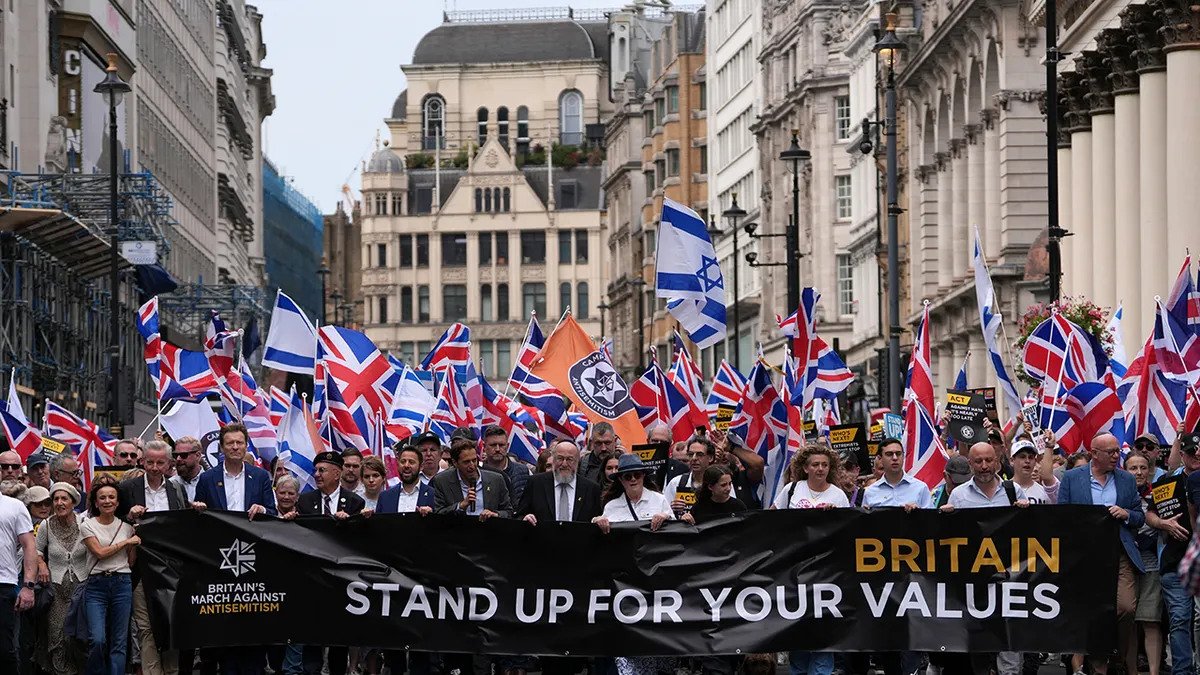
The Chief Rabbi of the United Kingdom, Sir Ephraim Mirvis, condemned the decision on X, calling it “a truly dark day for British Jews.” Mirvis warned that this kind of “gesture politics” validates and inflames a hostile domestic climate and ultimately emboldens individuals who use political opposition to Israel to target Jewish communities.
In France, La France Insoumise (LFI) has built much of its electoral strategy around Muslim-majority suburban districts known as the *banlieues*. Under the de facto leadership of Jean-Luc Mélenchon, the party’s influence has grown ahead of the upcoming presidential election.
Following the October 7, 2023, attacks on Israel, Mélenchon and other LFI leaders refused to designate Hamas as a terrorist organization. Party members also regularly marched alongside Islamist-linked non-governmental organizations during street demonstrations.

French academics and government ministers have accused LFI of “Islamo-leftism” (*Islamo-gauchisme*), a term used to describe the alignment between secular leftists and Islamist groups. Joshua Zarka, the Israeli Ambassador to France, criticized Mélenchon’s public speaking style, comparing his populist rhetoric and use of anti-Israel sentiment to unify crowds with historical authoritarian methods of scapegoating.
Spain’s far-left Sumar coalition, a junior partner in Prime Minister Pedro Sánchez’s governing coalition, has pursued a similar electoral strategy. Its strongest voter turnouts have occurred in districts with high Muslim concentrations, while party leaders have frequently participated in rallies organized by networks associated with the Muslim Brotherhood and repeatedly labeled Israel an “apartheid state.”
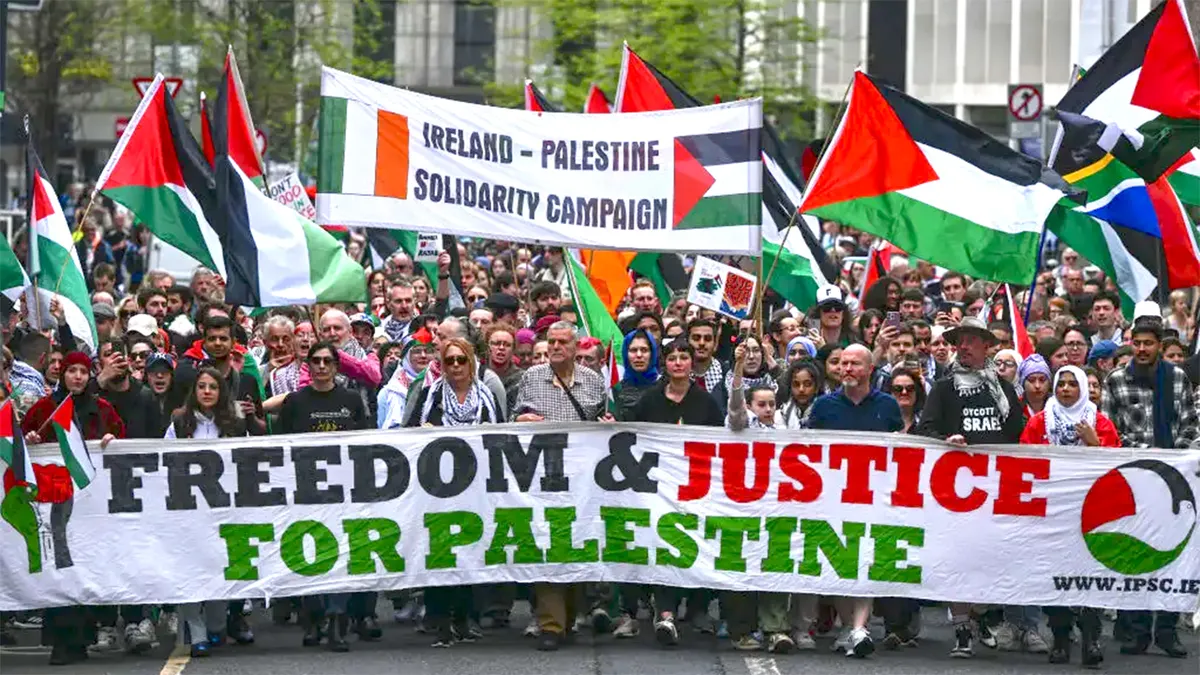
That alignment culminated in May 2024, when Spain, Ireland, and Norway officially recognized a Palestinian state. The underlying alliance between secular progressives and religious Islamists has also been described as an ideological paradox because the two factions hold deeply opposing views on LGBTQ+ rights, gender equality, and secularism.
Janek Treiber, a research fellow at the Dresden University of Technology in Germany, explained that the groups find common ground through shared geopolitical narratives. He said the unifying link is a mutual framework of victimization: the progressive left categorizes Muslims as marginalized populations, while the West and Israel are cast as systemic oppressors. Within that framework, Treiber noted, the conservative or regressive religious views held by Islamist partners are treated as irrelevant.
Historians and political analysts have warned that this tactical cooperation carries historical risks. Rodan-Benzaquen pointed to the 1979 Islamic Revolution in Iran as a direct precedent. Secular Marxist and leftist parties allied with Ayatollah Ruhollah Khomeini’s Islamist forces to overthrow the Western-backed monarchy. After the Islamist regime consolidated power, it systematically outlawed, arrested, and executed its former leftist allies.