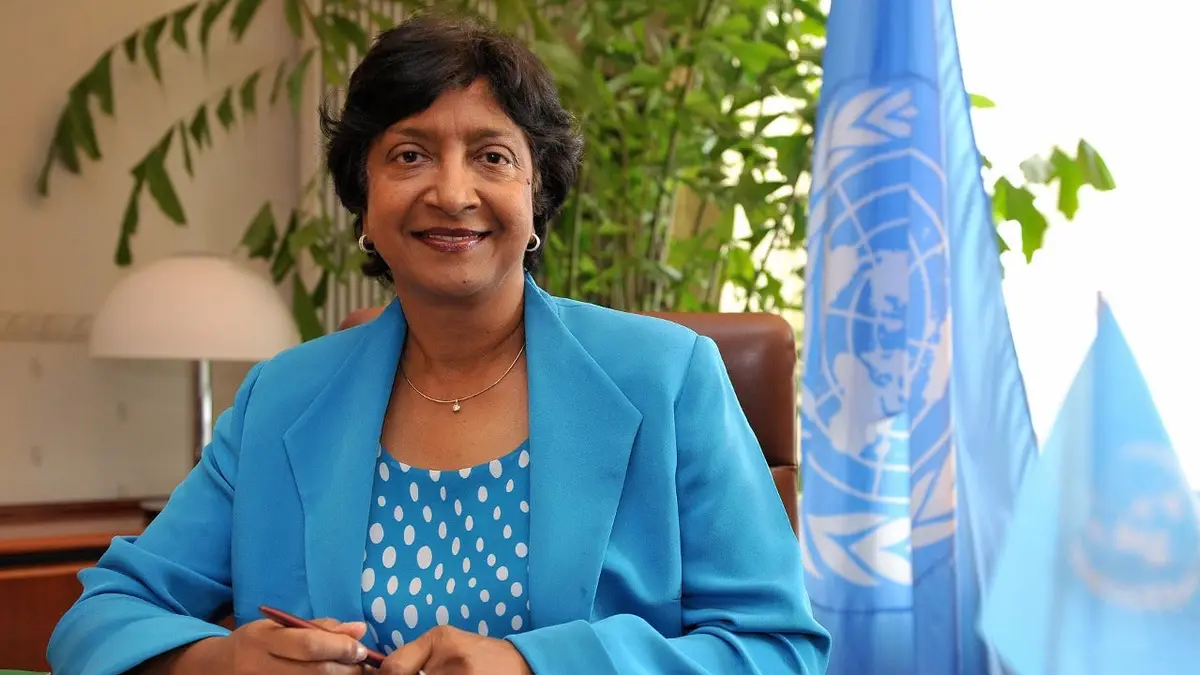
The Norwegian Nobel Committee awarded the 2026 Peace Prize on Friday to Navanethem “Navi” Pillay, recognizing a six-decade legal career that reshaped international criminal law and most recently placed her at the center of the fiercest geopolitical dispute over the war in Gaza.
The committee cited Pillay’s lifelong efforts to promote peace and enforce international law, issuing the award against a backdrop of mounting global hostility toward judicial institutions. In its citation, the panel warned that political attacks against judges and the broader framework of international law have become increasingly commonplace, threatening the only mechanisms available to mediate an expanding number of armed conflicts worldwide.
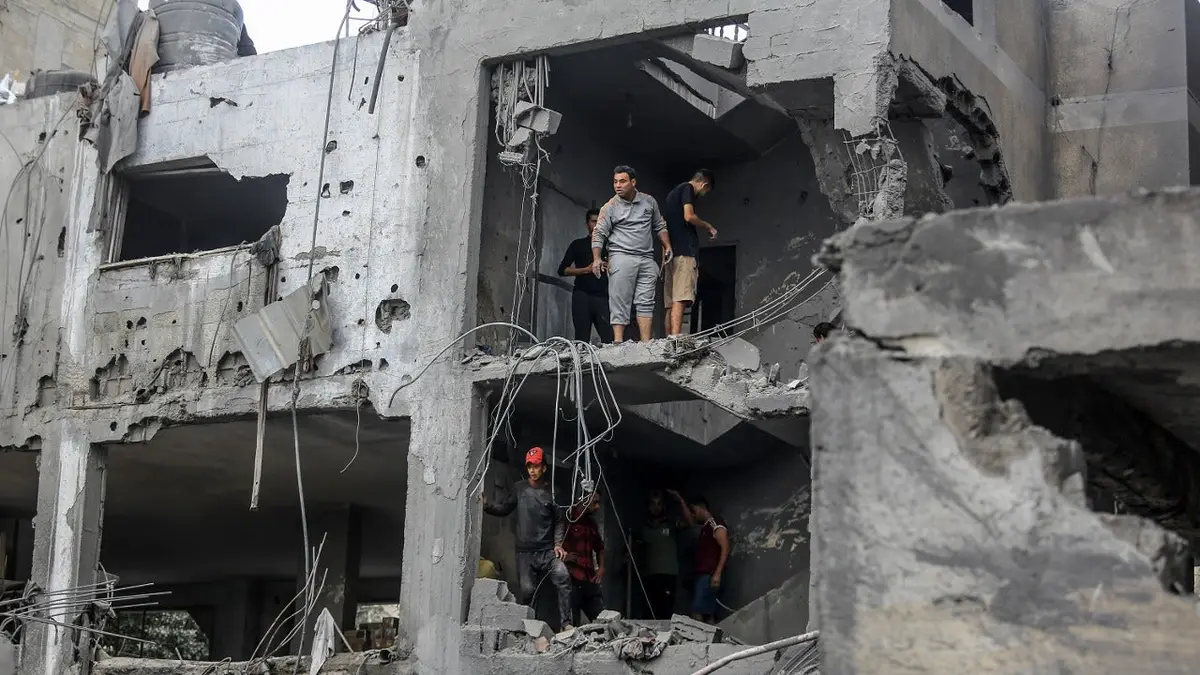
Pillay, 85, currently chairs the United Nations Independent International Commission of Inquiry on the Occupied Palestinian Territory. Under her leadership, the commission concluded in September 2025 that Israel committed genocide against Palestinians in Gaza. The report specifically accused Prime Minister Benjamin Netanyahu and former Defense Minister Yoav Gallant of inciting genocide, stating that acts meeting the criteria set forth in the 1948 Genocide Convention had been carried out with clear intent to destroy the population.

Israel immediately rejected the commission’s findings as distorted and false. The Israeli government has consistently maintained that its military campaign is a lawful response to the October 7, 2023, Hamas attacks, arguing that its forces take extensive measures to protect civilians while targeting militants embedded within civilian infrastructure.
Retired U.S. Army General Jack Keane, a senior strategic analyst who recently spent 11 days touring the region including Gaza’s subterranean tunnel network, has forcefully defended Israel’s operational conduct. Keane and other military officials argue that Hamas systematically uses human shields, making civilian casualties an unavoidable consequence of urban warfare rather than evidence of genocidal intent. This deep divide between Israel’s military defenders and the UN inquiry’s conclusions underscores why Pillay’s selection is guaranteed to inflame existing diplomatic tensions.
The Nobel Committee’s decision drew sharp criticism from Israeli legal advocates. Nitsana Darshan-Leitner, president of the Shurat HaDin Law Center, which has organized protest campaigns against Pillay in Geneva, questioned the rationale behind honoring a figure so deeply entangled in active conflict litigation.
“A peace prize should honor those who build peace, not those accused of turning Israel into a defendant in a campaign of political delegitimization,” Darshan-Leitner said. “What peace, exactly, has she brought? The Middle East remains engulfed in conflict, and the region is nowhere near the peace this prize supposedly celebrates.”
Long before her involvement in the Israeli-Palestinian conflict, Pillay dismantled foundational barriers in international jurisprudence. Born in South Africa’s Natal province to a Tamil Indian family, she opened her own law firm in 1967, becoming the first non-white person to do so in the region. For 28 years, she defended anti-apartheid activists. Her 1973 legal victory secured the right for political prisoners on Robben Island, including Nelson Mandela, to consult with attorneys.
When Mandela became president, he nominated Pillay to the High Court of South Africa in 1995, making her the first non-white woman to serve on the bench. Her tenure was brief. That same year, the United Nations elected her to the International Criminal Tribunal for Rwanda, established to prosecute perpetrators of the 1994 genocide.
At the tribunal, Pillay presided over the landmark prosecution of Jean-Paul Akayesu, a local mayor found guilty of inciting Hutus to murder, rape, and torture thousands of Tutsis. The resulting verdict established a historic legal precedent: rape constituted a crime against humanity and could be prosecuted as an act of genocide when committed with the intent to destroy a targeted group.
“Rape had always been regarded as one of the spoils of war,” Pillay stated following the verdict. “Now it is a war crime, no longer a trophy.”
Her elevation to the International Criminal Court in 2003 positioned her within an institution that remains highly polarizing in American politics. President Donald Trump has repeatedly attacked the ICC as illegitimate, reflecting a broader skepticism among some U.S. leaders regarding foreign tribunals asserting jurisdiction or influence over allied nations.
In 2008, Pillay assumed the role of UN High Commissioner for Human Rights. During the 2014 Gaza War, she condemned both Israel and Hamas for likely violating international law. She also publicly criticized the United States for funding Israel’s Iron Dome missile defense system while noting that Gazans received no equivalent protection against shelling, a stance that alienated American and Israeli officials at the time.

The UN commission Pillay chairs was originally established in 2021 following a severe escalation in Israeli-Palestinian hostilities. Its mandate expanded significantly after the October 7 attacks, eventually producing the sweeping genocide determination that prompted Israel to sever ties with specific UN bodies and accuse the organization of placing it on the same sexual violence blacklist as Hamas.
Pillay continues to serve as an ad hoc judge on the International Court of Justice in The Hague, where she is currently hearing a separate case accusing Burma of committing genocide against the Rohingya, a predominantly Muslim minority in the Southeast Asian nation.