French authorities are confronting intense scrutiny and political fallout after severe injuries suffered by teenage demonstrators sparked fresh outrage over law enforcement tactics during nationwide education strikes.
The controversy escalated after two minors sustained life-altering trauma during clashes with riot police. In northern France, a 15-year-old boy lost his hand when a police grenade detonated during a demonstration. Local prosecutors are investigating whether the teenager attempted to handle the device or if officers launched it directly toward him. Separately, a 16-year-old student in Tours suffered permanent vision loss in one eye after being struck by a projectile that prosecutors suspect originated from a police riot-control launcher.
Addressing the National Assembly, Prime Minister Sébastien Lecornu rejected accusations that security forces engaged in systematic brutality or state-sponsored repression. Lecornu argued that the phrase “police brutality” incorrectly presumes officers operated under orders to inflict unlawful violence, contending instead that officers acted strictly to counter unrest, property damage, and arson.


“What triggers police action is the occurrence of urban violence,” Lecornu told lawmakers, acknowledging the collateral fallout by stating: “Can accidents happen? The answer is yes.”
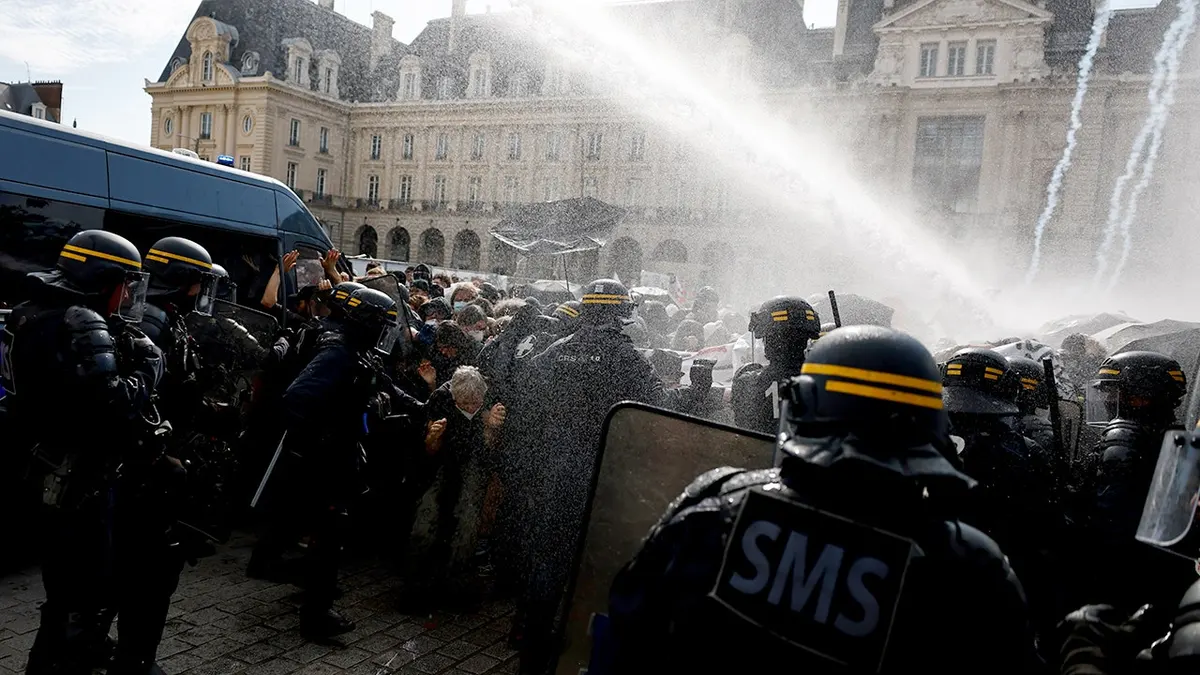
Interior Minister Laurent Nuñez echoed the prime minister’s defense, characterizing officer deployments as proportionate in virtually every engagement. Nuñez and Lecornu both maintained that police maintained discipline while facing persistent rioting, though Lecornu conceded the government must deliver a credible policy answer to address high schoolers’ genuine grievances regarding classroom resources.
President Emmanuel Macron convened an emergency cabinet session with top ministers to evaluate the unrest and manage the fallout. Lecornu took aim at political adversaries, specifically accusing the left-wing opposition party France Unbowed of capitalizing on youth anger to destabilize public order ahead of the upcoming presidential election.
The current wave of demonstrations began in mid-September across high schools in the Paris region before transforming into a broad national movement backed by teachers’ unions, university groups, and leftist coalitions protesting decrepit school conditions and educational spending cutbacks.
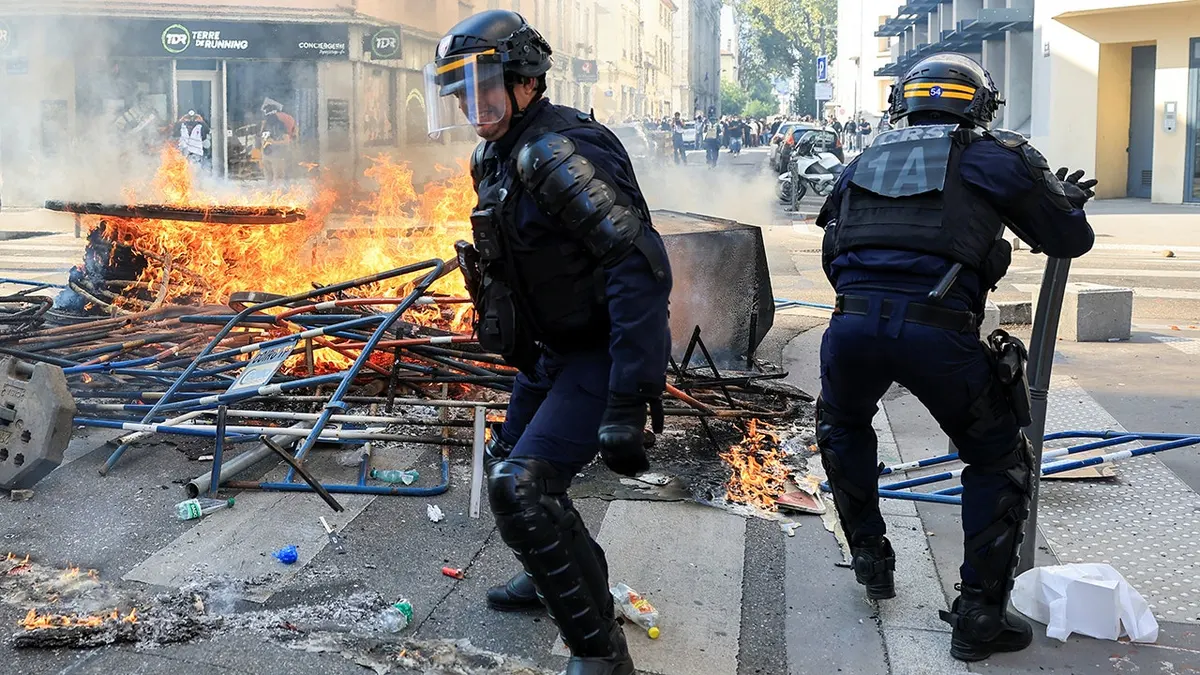
Interior Ministry figures registered roughly 266,000 demonstrators across France during Tuesday’s mobilizations alone, with 56,000 marching through Paris. While large segments of the protests stayed orderly, fringe confrontations with tactical units erupted in several urban centers.
Casualty figures underscore the scale of the confrontation. Government tallies count 715 injured police officers alongside 215 wounded students and 85 hurt school personnel. Law enforcement sweeps have yielded more than 6,500 arrests nationwide, with the overwhelming majority involving minors.
Opposition lawmakers are now mounting a legislative offensive against the crowd-control weaponry at the center of the controversy. Boris Vallaud, head of the Socialist group in parliament, announced plans to submit a bill banning the deployment of sub-lethal projectile launchers and explosive dispersion devices against student gatherings, warning that such ordnance produces irreversible physical mutilation.