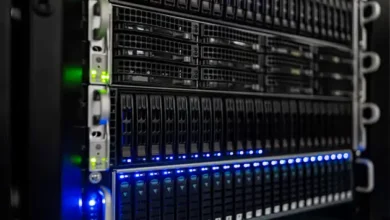
A San Francisco startup called Ghost has exited stealth with a dedicated hardware device designed to run artificial intelligence agents entirely offline, positioning itself against the cloud-dependent model that currently dominates the consumer AI market.
The company announced an $11 million seed funding round led by Andreessen Horowitz on Monday. Abstract, Audacious Ventures, SV Angel, and Nova also participated in the raise.
Ghost’s debut product, Core, is a headless personal computer priced at $3,499. Preorders for the initial production batch opened Monday, with shipping targeted for the final week of October. The units are currently being assembled at the company’s San Francisco facility.


Unlike general-purpose desktop computers such as the Apple Mac Mini, which hobbyists frequently repurpose to run local large language models, Core ships with hardware and software engineered specifically for continuous agent operation. The chassis houses an Nvidia RTX Pro 4000 SFF Blackwell GPU, a workstation-class graphics processor capable of handling demanding inference workloads without relying on external data centers. The cost of the GPU is included in the retail price.
Core operates without a monitor. Users interact with the machine through a smartphone application or voice commands routed via the companion app. Three open-weight models come preinstalled: Qwen-3.8-Next, Qwen-3.8-27B, and Gemma-4-31B. Owners can also download alternative architectures from Hugging Face or load custom-trained weights directly onto the hardware.
The broader appeal of local AI hardware stems from growing consumer unease over subscription fatigue and data privacy. Running models locally eliminates recurring API fees charged by cloud providers like OpenAI or Anthropic, but historically required significant technical expertise to configure dependencies, manage memory allocation, and maintain stable performance. Ghost aims to remove that friction by bundling a proprietary operating system, browser, and file management layer into a turnkey appliance.
To address the security risks inherent in granting an autonomous AI access to personal files, smart home networks, and login credentials, Ghost is developing a dedicated firewall. The system monitors every outgoing network request generated by the agent. If the software detects an unsanctioned action or potential data exfiltration, the firewall blocks the request and flags it for manual user review.
Chief Executive Zain Javaid, 19, stated that all personal memory, source code, logic, and model weights reside exclusively on the physical device. Personal information is encrypted locally, preventing third parties—including Ghost itself—from accessing user data. The architecture is intentionally designed so the computer remains fully functional even if the startup ceases operations.
Software maintenance relies on over-the-air updates pushed directly to the hardware, similar to automotive firmware distribution. Users can opt into automatic updates to ensure their system always runs the latest generation of a given model, or manually approve transitions when new architectures become available.
Javaid founded the company alongside Nicholas Chua, 19, Yifei Chen, 24, and Gautam Sharda, 23. Javaid previously worked in quantitative finance before pivoting to artificial intelligence development following the release of generative text models in late 2022.
While major technology companies possess the supply chain leverage to produce similar hardware, Ghost argues the primary barrier to entry is software orchestration rather than component assembly. The challenge lies in engineering how a local model reasons over disparate data streams—such as correlating biometric inputs like elevated resting heart rates with digital activity logs and seasonal health trends—to trigger proactive notifications without constant user prompting.
Ghost joins a nascent but accelerating category of edge-AI hardware startups attempting to decentralize artificial intelligence away from hyperscale server farms. Competitors in the local-inference space have largely focused on developer kits or compact accelerator modules, leaving a gap for a consumer-facing appliance that manages the full lifecycle of autonomous agents out of the box.