

Mach Industries Hits $3.7B Valuation as 22-Year-Old CEO Ethan Thornton Pivots Defense Tech from R&D to Mass Production
From MIT Dropout to Unicorn: How Ethan Thornton Is Scaling Autonomous Weapons Manufacturing
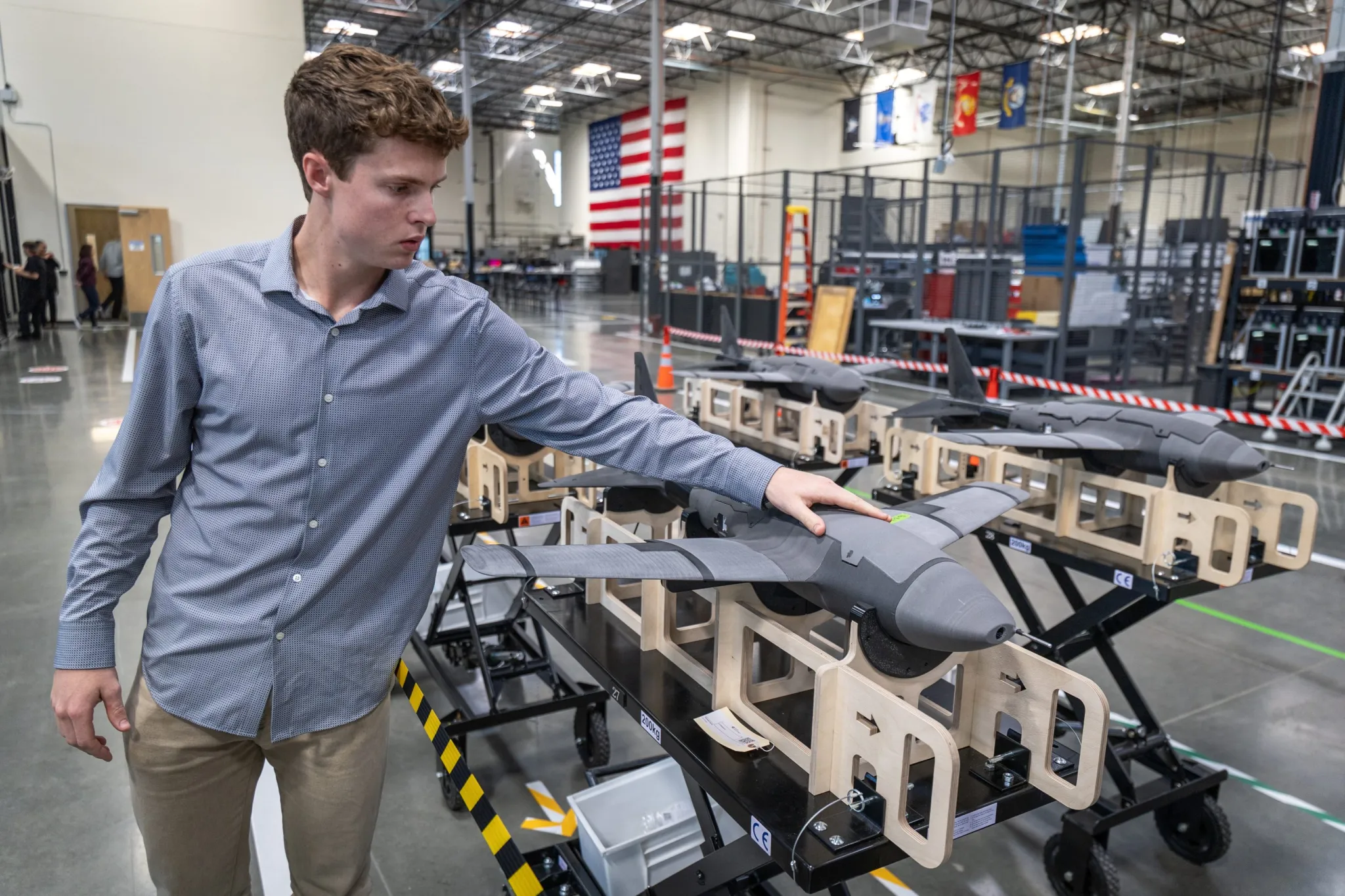
The valuation of Mach Industries surged to $3.7 billion following a $600 million Series C extension, doubling the company’s worth in just three months. This rapid appreciation underscores a shifting dynamic in the defense technology sector, where private capital is increasingly accelerating hardware development cycles that traditionally span decades. At the helm is Ethan Thornton, a 22-year-old founder who launched the autonomous systems firm at age 19. The new funding round marks a critical transition for Mach: moving beyond prototype validation into scaled manufacturing capabilities.
Thornton established Mach in 2023 after leaving MIT’s aerospace program mid-freshman year, accepting a Thiel Fellowship to pursue full-time entrepreneurship. His early work involved prototyping hydrogen-powered weapon concepts on his family’s property in Texas, driven by concerns over great power competition with China. That grassroots experimentation evolved into formal partnerships with federal entities. By 2024, Mach secured a contract with the Army Applications Laboratory to develop vertical-takeoff precision cruise missiles, validating its technical approach and attracting institutional investors including Ribbit Capital, Infinite Capital, Bedrock Capital, and Sequoia Capital.
Sequoia’s involvement was historic; their June 2023 lead investment of $5.7 million represented the venture giant’s first direct bet on a hardware defense startup. Partner Stephanie Zhan described Thornton’s leadership style as characterized by “bias for action” and technical obsession. Today, Mach operates a 115,000-square-foot facility in Huntington Beach, California, housing six active weapons programs. The company aims to vertically integrate production of airframes, jet engines, solid rocket motors, and energetic systems, reducing reliance on legacy supply chains that have struggled to meet modern demand spikes.


This pivot to production aligns with broader industry trends. Defense tech startups deployed a record $19.8 billion in Q1 2026 alone, reflecting urgent government needs for asymmetric advantages against near-peer adversaries. Unlike traditional primes such as Lockheed Martin or Raytheon, which prioritize incremental upgrades to existing platforms, Mach leverages agile software-defined architectures and rapid iteration. Thornton argues that private equity allows for higher risk tolerance during early design phases, enabling engineers to test, fail, and refine components before committing to large-scale procurement contracts. “We’re building the product and the production capability at the same time,” Thornton stated, emphasizing concurrent engineering practices rarely seen in defense incumbents.
While Mach focuses on kinetic autonomy, other emerging players are targeting adjacent bottlenecks. For instance, Baltimore-based Biological Computing Company recently raised $25 million to optimize AI inference using neuron-derived software, addressing compute efficiency challenges inherent in autonomous decision-making. Similarly, Palo Alto’s Prime Minute secured $15 million for wildfire response tech, highlighting how dual-use innovations often feed into military applications. These developments suggest a maturing ecosystem where specialized sub-components—whether propulsion, computing, or sensing—are being developed independently but integrated rapidly by prime contractors like Mach.
Investor confidence remains high despite macroeconomic headwinds affecting late-stage valuations across sectors. The speed of Mach’s fundraising indicates strong belief in its ability to deliver deployable assets within fiscal years rather than decades. However, scaling physical manufacturing introduces complexities absent in pure software ventures, including supply chain volatility, regulatory compliance for munitions, and workforce training for precision assembly. Mach’s success will depend not only on technological superiority but also on operational execution under tight deadlines set by Department of Defense acquisition timelines.









