
Range Rover Electric Puts 800 Volts Under a Familiar Shape
JLR pairs MLA-Flex packaging with 350-kW charging, a sealed battery and active cabin noise cancellation
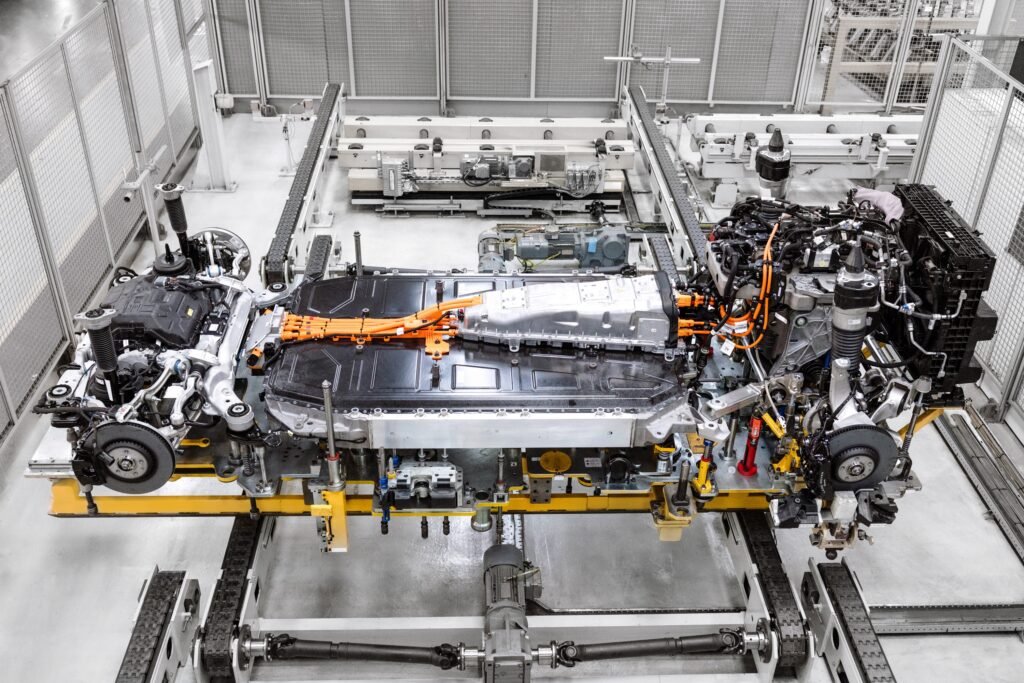
The Range Rover Electric uses an 800-volt electrical architecture, a 118.5-kWh net battery and two electric drive units in place of the V8 powertrain. JLR says the motors are 24 percent more efficient than those in the I-Pace and have response times of 50 milliseconds.
Each motor uses 144 copper hairpins, 0.2-millimeter laminations and a 0.7-millimeter air gap between the rotor and stator. Silicon-carbide inverters respond in less than a millisecond.


The battery pack and drive units are mounted to the chassis.
The pack is a double stack of cells arranged in 10 modules. AESC supplies the nickel-manganese-cobalt cells, with aerogel spacers between them. Two virtual twins assist the active battery-management system in calculating performance.
Power electronics occupy the transmission-tunnel space used by conventionally powered Range Rover models. The electric Range Rover is built on JLR’s Modular Longitudinal Architecture, or MLA-Flex, developed at the company’s Solihull facility for internal-combustion, plug-in-hybrid and fully electric powertrains on the same assembly line.
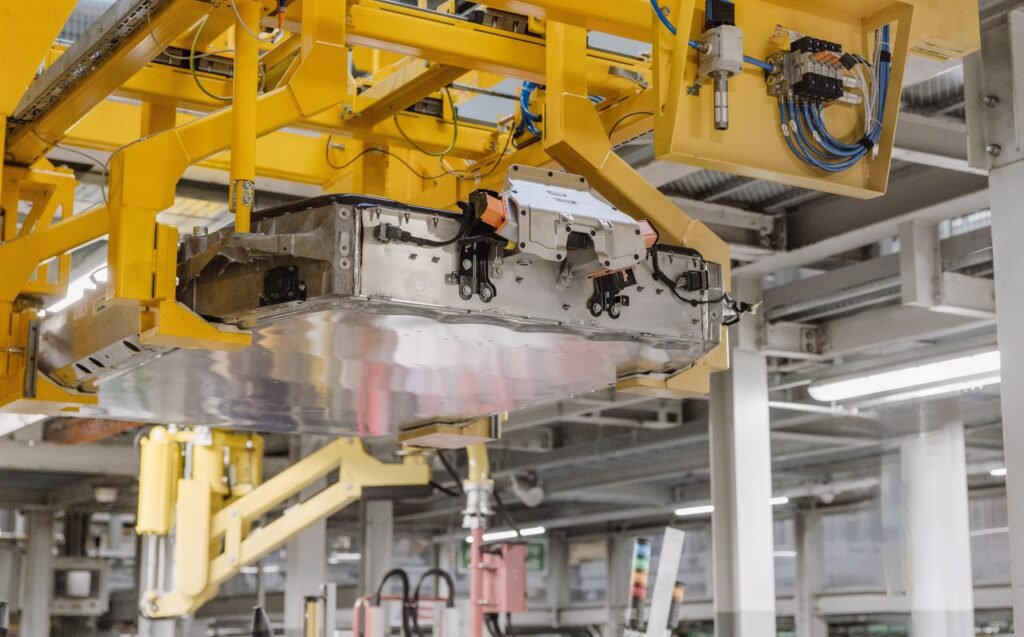
The battery enclosure has a smooth underfloor. ThermAssist heat management recaptures waste energy, increasing range by 7 percent and reducing the energy required to heat the vehicle by 40 percent.
JLR gives the Range Rover Electric an EPA-estimated range of at least 333 miles. The company says that figure covers 97 percent of owners’ daily needs.
North American models receive a native NACS port with Tesla Supercharger access and ISO15118 plug-and-charge support. The vehicle’s 350-kW DC fast-charging system adds up to 125 miles in 10 minutes, while a 10-to-80-percent charge takes 22 minutes.
The Range Rover Electric joins the Mercedes-Benz G 580 with EQ Technology and the Cadillac Escalade IQ among large electric luxury vehicles offered in North America. It has vehicle-to-load capability of up to 3.6 kW, with vehicle-to-grid support planned for a future version.
The aluminum battery frame increases chassis rigidity by 56 percent. The battery also lowers the center of gravity by 3.4 inches compared with the V8 model.
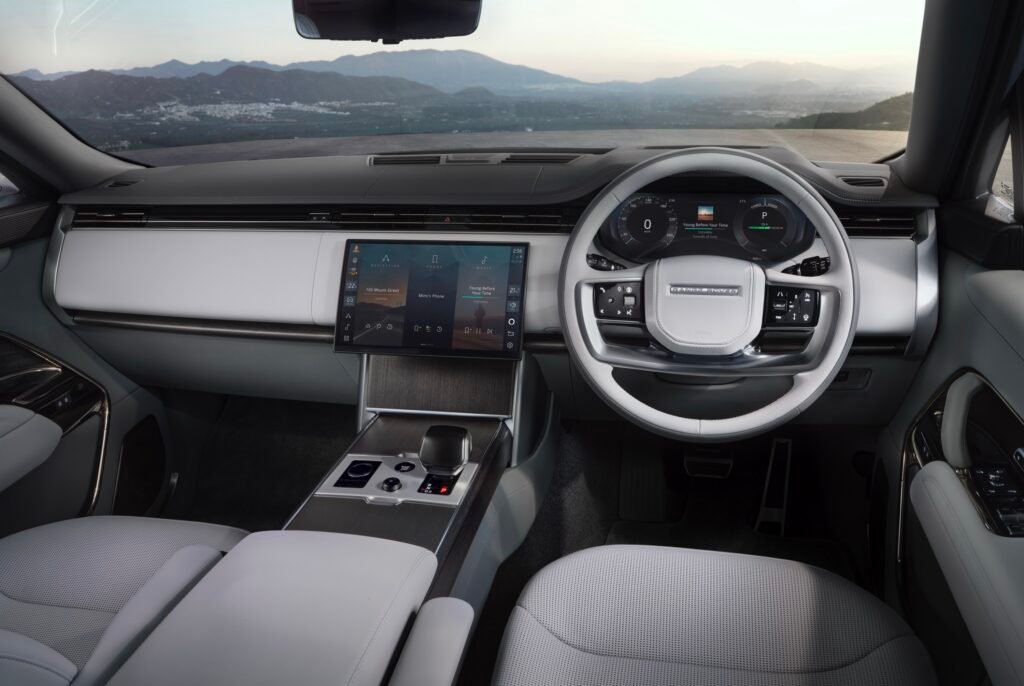
Standard air suspension uses twin-valve dampers. JLR targets water-wading capability of up to 33.5 inches, or 850 millimeters, through hermetically sealed battery enclosures and high-voltage conduits.
The electric drive units are quieter than an internal-combustion engine, and JLR says the Range Rover Electric is 7 decibels quieter than the V8 model. The company added isolation around the front drive unit and addressed high-voltage cables that can transmit noise and vibration into the cabin.
An active noise-cancellation system uses thin membrane speakers developed by JLR and Warwick Audio and mounted in the seat headrests.