

Meta Wants Your Credit Card and Email Access—Two Weeks After an $18 Billion Settlement
Muse wants access to your digital life as Meta tries to rebuild trust
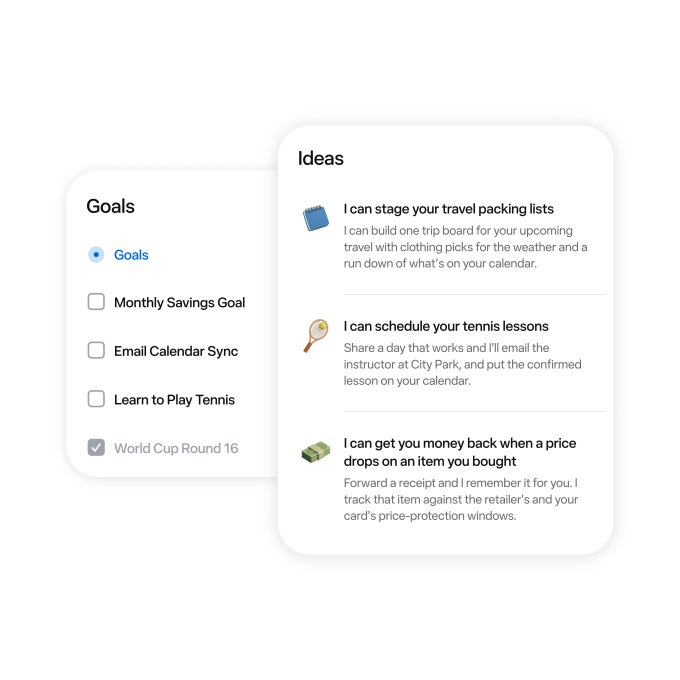
Less than two weeks after Meta agreed to the Meta 18 billion social media settlement over social media’s consumer harms, the company introduced Muse, a personal AI agent that asks users to connect email, calendars, payments, health and fitness apps, smart-home systems, dining, shopping, music and event services.
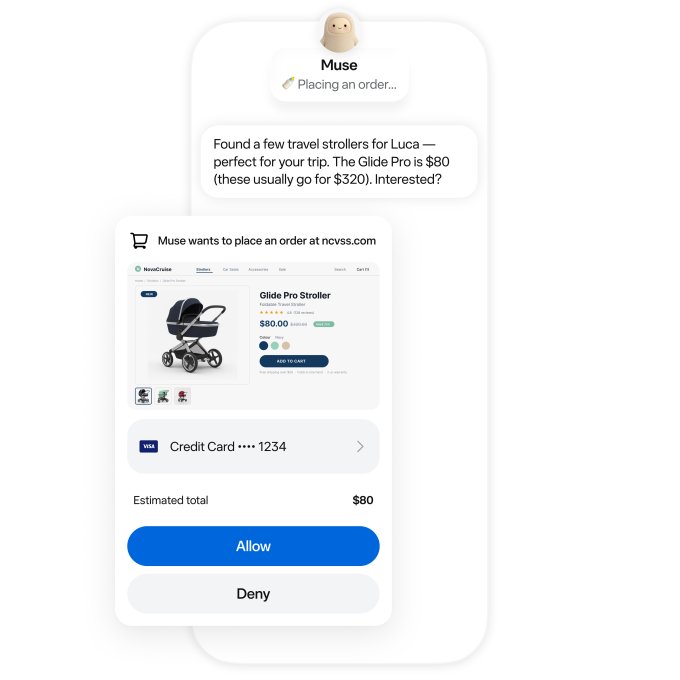
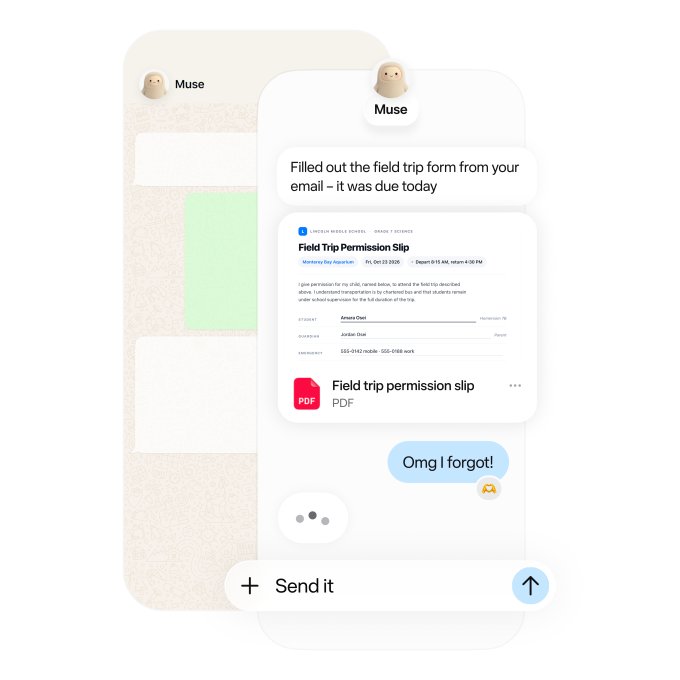
Connecting those services would let Muse send emails, book travel, lower bills, fill out forms, create plans, turn recipe reels into grocery lists, send party invitations and make purchases. It can continue working after users leave the app and learn from their conversations to make unprompted suggestions.
Checkout runs through Link by Stripe, which offers purchase protections. Shopify’s Shop Pay and 1Password integrations are also coming. Muse requires a payment card to get started, even though the service includes a free tier.


Users can connect services one at a time. Muse has built-in connectors, can create a connection through a public API using credentials supplied by the user, or access a service through a browser when no API is available.
Automated purchases also bring the Federal Trade Commission’s scrutiny of AI data and transaction practices into the launch. Under Chair Lina Khan, the FTC has warned that companies cannot retroactively change terms of service or use misleading opt-in systems to quietly train AI on sensitive user histories without risking unfair-or-deceptive-practices enforcement.
The launch comes less than two weeks after Meta agreed to an $18 billion multistate settlement.
Muse will initially be available at muse.ai, through iOS and Android apps, and in WhatsApp chats. The company says it will soon reach Meta’s AI glasses. Usage limits will determine when the free service gives way to paid plans, and an in-app meter will show how much of the allowance remains.
Two paid tiers are planned: Power at $20 a month and Maximum at $100 a month. Both offer more usage for handing off everyday tasks, while Meta expects most users to remain on the free tier.
The Meta Muse AI agent subscription also marks a move beyond Meta’s advertising model. Targeted advertising has historically generated more than 97% of the company’s total revenue, while the 2023 launch of Meta Verified began building a subscription business. Paid Muse tiers give Meta another revenue stream as privacy-related targeting restrictions and ad-market volatility threaten that model.
Claude Cowork and Gemini Spark are pursuing similar tasks through AI services and web browsers. Apple is integrating AI into iMessage, while SMS and WhatsApp are becoming interfaces for other assistants.
Under the hood, Muse runs in what Meta calls a dedicated, secure computer with its own browser, the Muse Secure VM. A separate Sentinel agent operates on the same virtual machine but remains isolated from Muse at the system level.
The architecture leaves the company asking users and researchers to trust proprietary systems. Apple’s Private Cloud Compute model offers a different precedent: Apple released open-source virtual machine code so independent cryptographic and security researchers could inspect its off-device privacy claims.
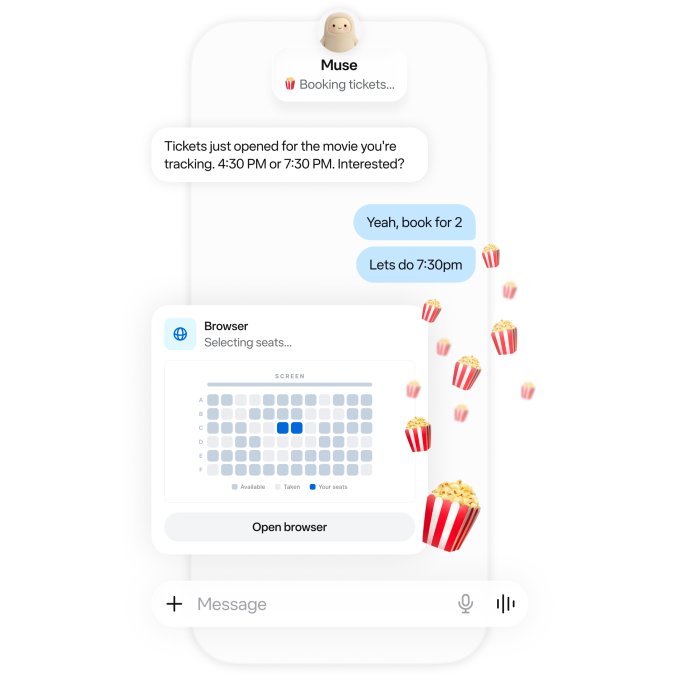
Muse’s background learning continues across this architecture. The agent can keep working after the user leaves the app and use conversations to identify what matters to that person, while Sentinel is intended to supervise the environment in which those actions take place.
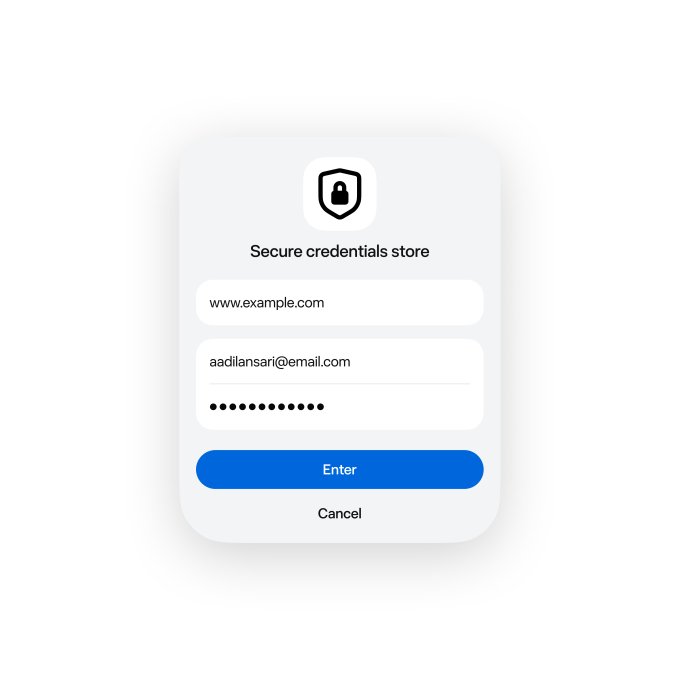
Meta says Muse will not see people’s passwords or payment methods and that conversations and other data will not be shared with its advertising systems. The company’s technical documentation says the virtual machine is designed to provide privacy, safety and security protections, but the claims require deeper investigation by security experts.
Meta’s earlier technical record includes a 2019 discovery that some user passwords had been stored in readable formats, exposing people to potential hacks. The Cambridge Analytica scandal also involved Facebook data belonging to millions of consumers being collected by a third party without their consent.
Instinct, another AI assistant, created a separate privacy concern when early testers found that its terms required a broad “perpetual and irrevocable” license to access, use, host, cache, store, reproduce, transmit, display, publish, distribute and modify users’ materials, including for training its AI models.
That kind of licensing is the systemic tripwire the FTC is monitoring. The agency has warned that firms cannot use a retroactive terms-of-service change or a misleading opt-in arrangement to quiet-train AI on sensitive histories.
Meta’s regulatory history extends beyond AI. In 2011, the company settled with the FTC over charges that it deceived consumers by making private information public without their approval. In 2019, the FTC imposed a then-record $5 billion penalty over eight privacy-related violations. In 2023, the agency charged Meta with violating a privacy order filed after that settlement.
Congress has repeatedly questioned Meta about how it protected minors. The company became the target of lawsuits including a New Mexico case over harms to children, in which it was ordered to pay $942 million, along with thousands of personal-injury and school-district cases pending against multiple social media companies.

Those cases followed years of testimony and litigation over social media addiction, age limits and the effects of Meta’s products on young users.
Meta’s counterweight to this scrutiny is personalization. Muse can be given a name, assigned an avatar and configured with settings that determine how it communicates with the user.
When you purchase through links in our articles, we may earn a small commission. This does not affect our editorial independence.