

VVV Surges 3,500% as Private AI Processing Gains Momentum
Venice AI token reaches record high amid private inference demand
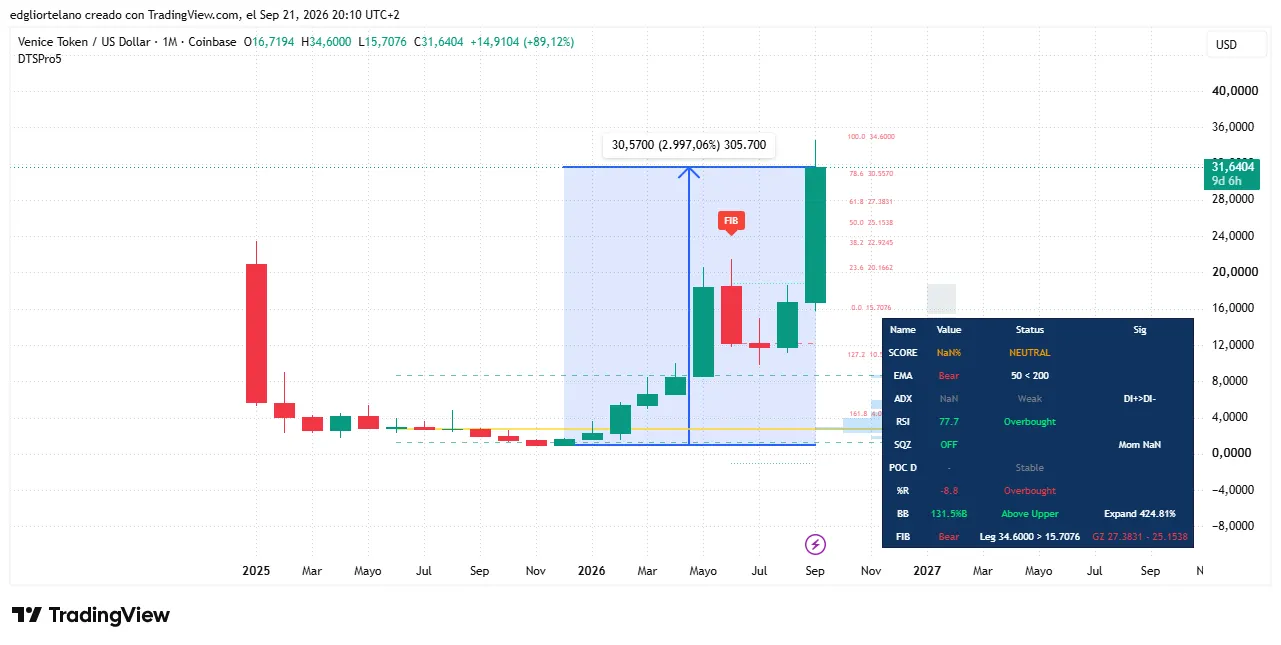
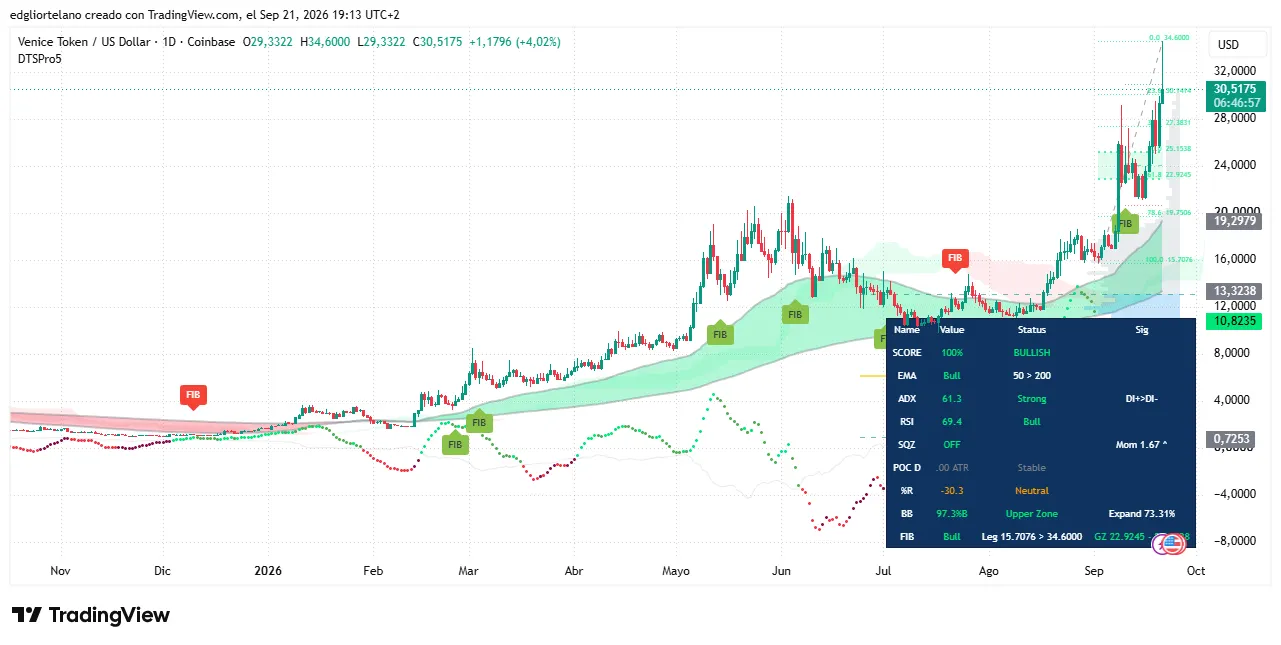
Venice AI’s native asset, VVV, reached an all-time high of $34.51 on Sept. 21, rising 17% over 24 hours. The token has advanced more than 3,500% since reaching a trough of $0.92 in December.
With a market capitalization of approximately $1.6 billion, VVV is the third-largest cryptocurrency in the artificial intelligence sector, behind Near Protocol (NEAR) and Bittensor (TAO). Its appreciation has come as developers and enterprise users raise concerns about how major proprietary AI platforms collect, store, and utilize prompt data.


Venice operates as a zero-logging private router rather than training original frontier models. The platform routes user prompts to open-source systems, including Meta’s Llama models and open-weight models developed by Chinese AI research firm DeepSeek.
Founded in 2024 by Erik Voorhees, Venice requires no user registration, maintains no prompt logs, and enforces no platform-level content filters. Voorhees founded the non-custodial exchange ShapeShift in 2014 before converting it into a decentralized autonomous organization in 2021.
The platform’s privacy architecture drew market attention after a public dispute in September between New York University researchers and OpenAI over intellectual property rights concerning fluid-dynamics mathematical proofs. Neither party alleged data exposure, but the controversy intensified discussions on social platforms and developer forums about potential enterprise data leaks in centralized AI workflows.
That discussion triggered a 34% single-day price surge in VVV on private inference speculation. Venice’s model infrastructure remains dependent on the progression of open-weight systems such as Llama and DeepSeek, which generally rank below top proprietary models on standardized industry benchmarks.
Venice replaces traditional software-as-a-service (SaaS) credit card subscriptions with an asset-staking economic framework. Users who lock VVV tokens into platform smart contracts receive a proportional allocation of daily AI inference, the computational work performed by graphics processing units (GPUs) to generate text and image outputs.
The platform also uses a secondary token called DIEM. When users lock up staked VVV, the protocol mints DIEM, which provides a continuous yield of $1 in daily API platform credit per token.
Venice allocates part of its corporate revenue toward purchasing VVV on public exchanges and permanently burning those tokens. The process permanently removes the purchased tokens from circulation.
Annual VVV emissions stood at 14 million tokens at network inception before falling to 2.5 million VVV on Sept. 1. A further programmed reduction is scheduled to lower annual emissions to 2 million VVV on Oct. 1.
The token’s rally has followed corporate expansion and venture funding. In July, Venice secured $65 million in a Series A financing round led by crypto venture capital firm Dragonfly at a $1 billion valuation. It was the company’s first external institutional investment since its launch.
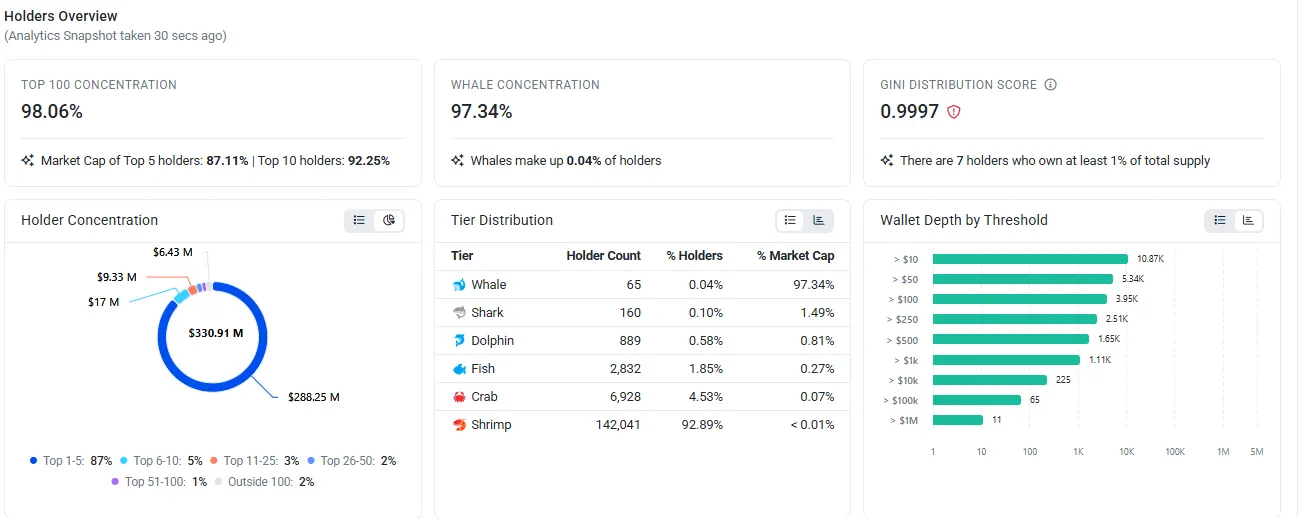
Venice reported that its annualized revenue run rate increased from $70 million in July to $100 million in August. At the same time, blockchain ledger data indicates substantial ownership concentration: the 100 largest wallet addresses currently control roughly 98% of VVV’s total circulating supply, leaving the token’s market price sensitive to concentrated position adjustments by large holders.







