

How Germany’s Electoral Safety Valve Could Hand the Far Right an Absolute Majority
A fragmented vote could hand the AfD absolute power in Saxony-Anhalt
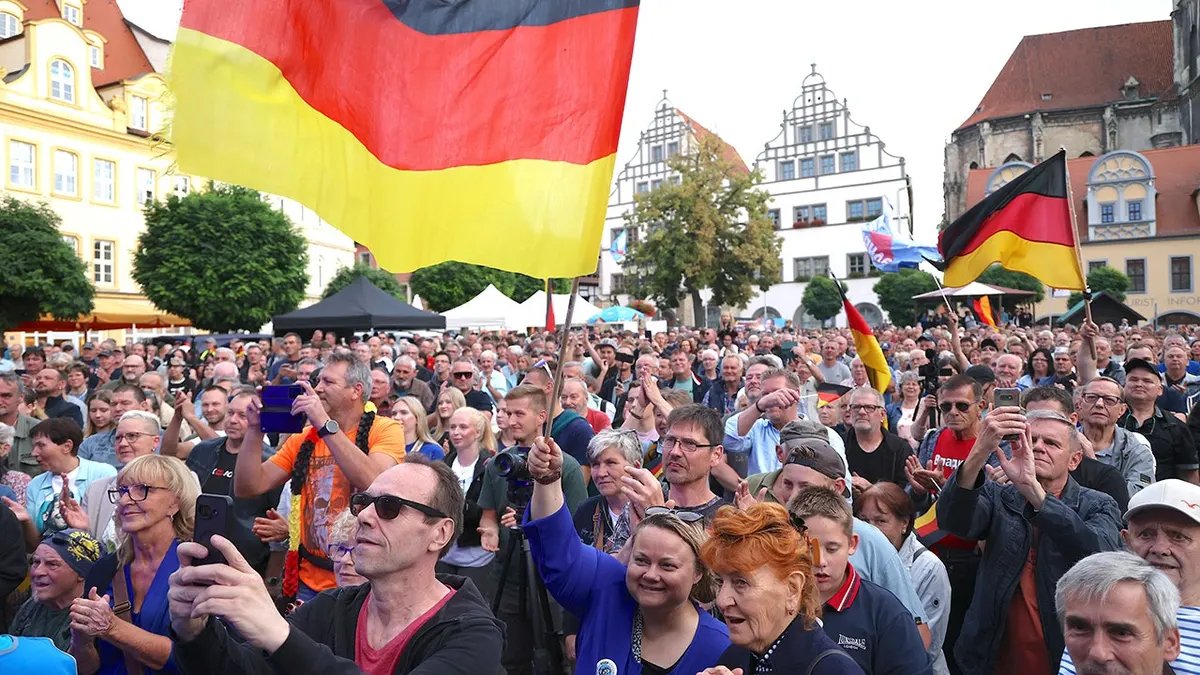
A party polling at 41% to 43% could win more than half the seats in Saxony-Anhalt’s state parliament on Sunday, even if most voters choose someone else. The possibility rests on Germany’s postwar electoral design, including a 5% threshold intended to keep fragmented extremist forces out of parliament.
According to the independent German election website Wahlrecht.de, the AfD leads the CDU by 41%-23% in Saxony-Anhalt, followed by three leftist parties. A party or coalition needs at least half the seats to control parliament and name a state minister-president, essentially a governor. The AfD, which won 20.8% in the February 2025 federal election and is now the second-largest party in the Bundestag, could become the first party outside the mainstream Social Democratic Party, Christian Democratic Union and Christian Social Union to win an outright state majority since World War II.
German voters cast two ballots. One is for a local candidate, and the other is for a party. The party vote determines how many seats each party receives. Any party below 5% receives no seats, meaning those votes are removed from the seat calculation. The liberal Free Democratic Party is polling at approximately 3% in Saxony-Anhalt, while the environmentalist Green Party is at about 4%. If both remain below the 5% threshold, their combined votes would be redistributed among the parties clearing the bar. Several other smaller parties are also close to the cutoff, making a 42% or 43% AfD vote capable of producing more than half the seats in the Landtag. Other minor parties have led governing coalitions in German states, but no party outside the SPD or the CDU and CSU has held a single-party governing majority since the Federal Republic was re-established in 1949.
Saxony-Anhalt could wake up to an AfD majority government even though a clear majority of voters chose someone else.
Foreign policy expert Daniel Schatz, who holds a doctorate in political science from Berlin’s Humboldt University, said the state election matters because “the AfD is no longer just knocking on the door of power. It may be close to kicking it open.”
The political consensus known as the “Brandmauer,” or firewall, has so far prevented other parties from cooperating with the AfD. The term describes the refusal by mainstream parties to work with a party that Germany’s domestic intelligence authorities have accused of being a “right-wing extremist endeavor.” An outright win in Germany’s sixth-smallest state would put that consensus under direct pressure.
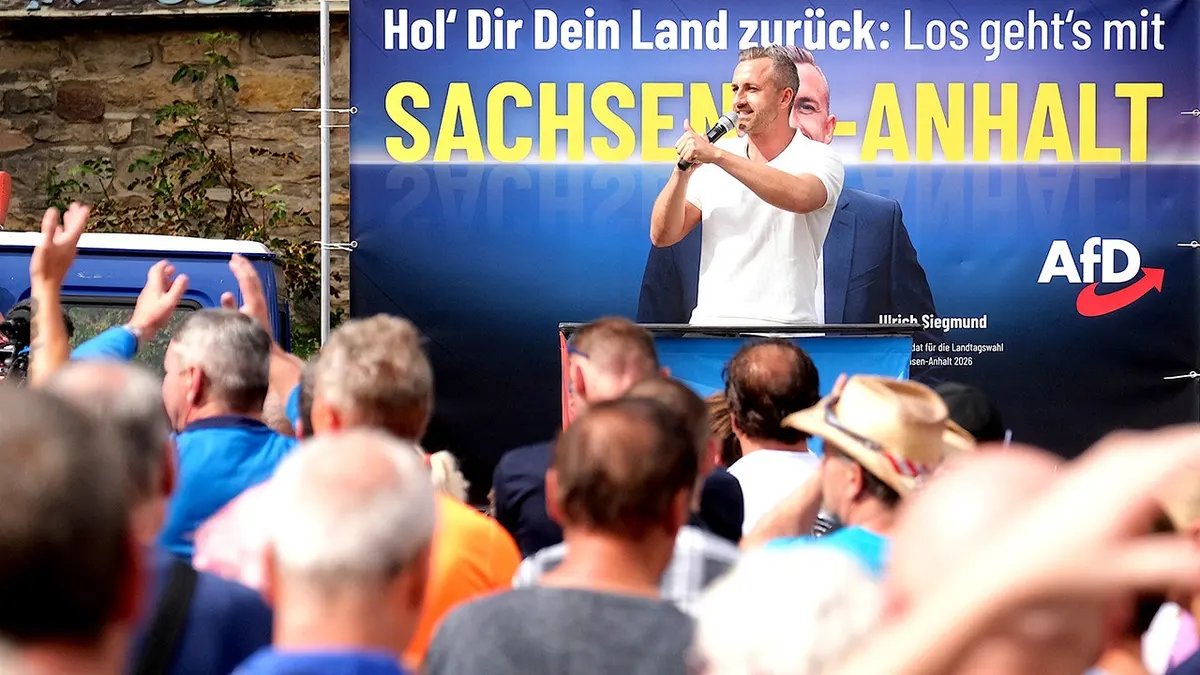
Ulrich Siegmund, the AfD’s lead candidate in the state, has helped drive the party’s support. In a state of just over 2 million people, Siegmund has more than 700,000 followers on TikTok, where the party’s polished digital presence has helped it reach younger voters.
The AfD’s strongest recent gains have come among voters ages 18 to 25, where the party tripled its results compared with the 2021 national election. At the same time, younger voters are sharply divided. Some are backing the AfD, while others are turning to the left-wing Die Linke.
More than two in five AfD voters believe the party does not sufficiently distance itself from right-wing extremist positions. A Center for Strategic & International Studies report found that 60.5% of AfD voters hold a right-wing extremist worldview. The split among young voters remains visible before any explanation of it is settled.
Rising expenses and unemployment are pushing some younger voters toward the AfD, according to Janek Treiber, a political science researcher at Dresden University of Technology. He described the youth electorate as “kind of polarized because the other part of the youth in Germany is voting for the left party (Die Linke).”
That economic pressure exists alongside support for the AfD’s ideology rather than replacing it. Schatz described the party as “a nationalist, anti-immigration party on the far right that has become a powerful vehicle for voter anger at Germany’s political establishment — especially in the former East Germany.” The party campaigns for much tighter immigration controls, a stronger emphasis on German national identity, rejection of much of the green agenda and a softer line toward Russia.
On German broadcaster ZDF, AfD national co-chair Alice Weidel called for Germany to close its borders and leave Europe’s Schengen treaty. She said illegal migration and open borders were damaging internal security. She also demanded that all Syrian refugees have their protected status revoked, that they return to Syria and that those who do not leave voluntarily be deported by force.
Weidel said Germany should stop naturalizing people who should be leaving the country and declared, “We have Islamization.” In May 2025, Germany’s Federal Office for the Protection of the Constitution classified the AfD as a “confirmed right-wing extremist” group, citing anti-migrant positions and an ancestry-based definition of German identity. A German court placed that classification on hold this past February, ruling that although there was evidence of potentially unconstitutional statements and policies, there was not sufficient evidence to characterize the entire party as extremist.
Those legal battles have done little to damage the AfD’s popularity in Saxony-Anhalt. Siegmund’s public image remains carefully managed. A CSIS report said his “polished appearance and professional tone lend respectability,” while radical demands are combined with footage of a community-oriented politician responding to questions. The report described the party’s physical presence in the streets and media as reinforcing an “us versus them” message: the AfD is there for voters and the other parties are not.
Siegmund was also a prominent participant in the November 2023 Potsdam meeting reported by investigative outlet Correctiv, where right-wing politicians and extremists discussed a master plan for the “remigration” of naturalized German citizens. The meeting triggered the largest nationwide anti-extremism protests in modern German history. The smooth digital persona and the radical discussion belonged to the same political campaign.
In Magdeburg, the capital of Saxony-Anhalt, the economic anxieties feeding this political shift are written in concrete. Intel recently announced a two-year delay to its planned €30 billion semiconductor mega-fab project there, citing global cost-cutting measures and changing market realities.
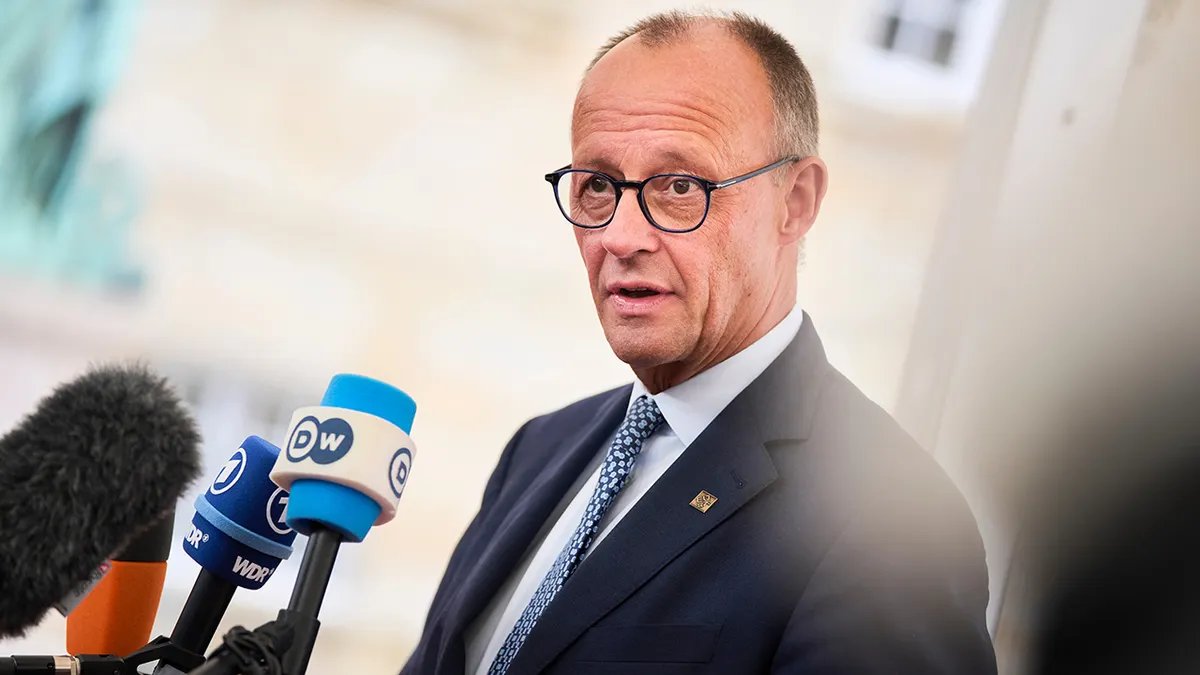
German Chancellor Friedrich Merz recently warned state broadcaster ARD that he could not imagine international investors attending a groundbreaking ceremony with an AfD minister-president to establish new plants and businesses in Saxony-Anhalt. He said the state would suffer “considerable damage” if voters produced the result national leaders fear.
The Intel project was already in jeopardy before the election. That delay now sits alongside warnings from Berlin that an AfD victory could make the region even less attractive to investors, as local frustration over stalled economic promises continues to shape the vote.
Treiber said an outright AfD victory would have limited policy influence because of Germany’s federal system. He cautioned, however, that the political symbol would be more important than changes to local schools or universities. A single right-wing party ruling a German state would show that parties governing Germany since 1949, or governing the East since 1990, had lost control and power.
Two weeks after Saxony-Anhalt votes, the electoral experiment moves to Mecklenburg-Western Pomerania, where the AfD currently leads the ruling SPD by three points, 35%-32%, according to Wahlrecht.de. Voters in the state, where former Chancellor Angela Merkel grew up and began her political career, will elect their state assembly on Sept. 20.
Berlin voters will also go to the polls that day. Recent polling puts Die Linke and the CDU in a dead heat at 20%, followed by the AfD at 18%, with the Greens and SPD each near 15%. The firewall is no longer facing pressure in one isolated state. Its future is being tested across regional political lines.
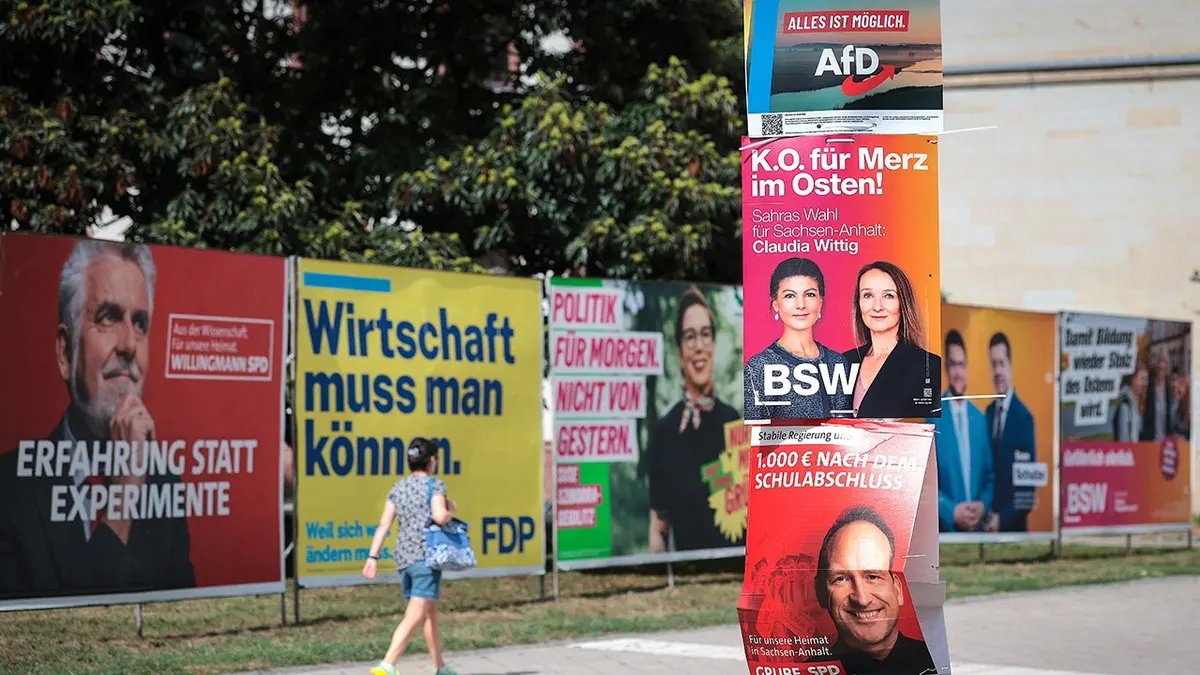
The AfD’s support remains strongest in the former East Germany, but the party is represented in 14 of Germany’s 16 state legislatures. It also holds 15 of Germany’s 96 seats in the European Parliament.
Tyler Speicher is an American journalist living in Slovenia after spending 25 years covering stories ranging from the Little League World Series to hurricanes, 9/11 and its aftermath for New York City news outlets, including 20 years on the Fox News Channel assignment desk.