Elon Musk Ignored His Mother’s Advice—and Built an Empire Across Six Companies
How Elon Musk turned his PayPal fortune into a sprawling technology portfolio
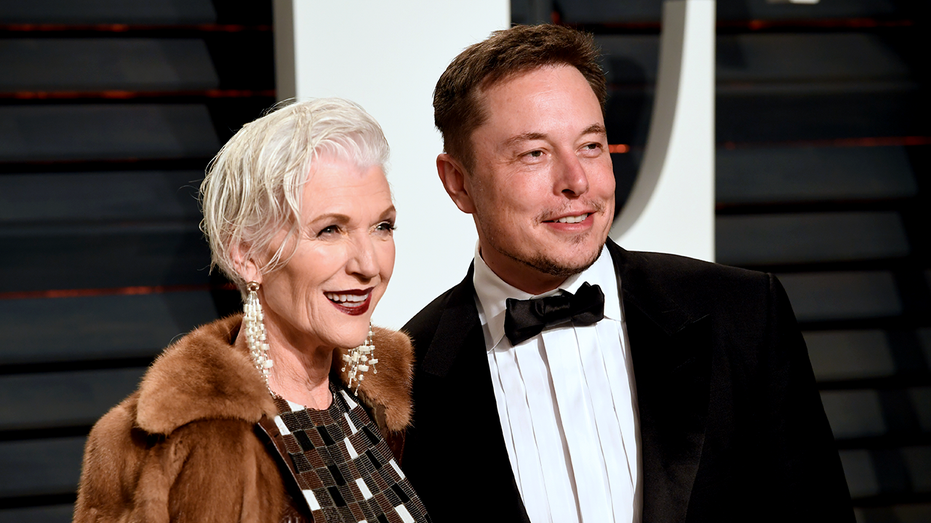
Maye Musk said Elon Musk’s unconventional thinking was visible when he was still a child. At about three years old, he would enter periods of deep concentration, analyzing and describing complex phenomena in ways that surprised her.
That focus later followed him into a career spanning electric vehicles, space exploration, renewable energy, artificial intelligence, brain-computer interfaces, and tunnel construction. Maye Musk, a model, dietitian, and author who recently published a book on personal reinvention, recalled sleeping in her son’s garage at Starbase, SpaceX’s production and launch facility in Boca Chica, Texas.
Starbase is the focal point of SpaceX’s work to build and test Starship, the fully reusable rocket designed for deep-space missions. The hands-on setting reflects the lifestyle that has characterized Musk’s career since his post-PayPal days.

After eBay acquired PayPal for $1.5 billion in stock in October 2002, Musk received approximately $175 million. Facing a choice about what to do next, he asked his mother whether he should invest the money in electric vehicles, rocket technology, or solar energy.
“And I say, ‘you’ve just worked so hard, just do one,’” Maye Musk told Stuart Varney on FOX Business’ “Varney & Co.” She was trying to direct her son toward the traditional corporate approach of concentrating resources in a single industry. “So you see, he doesn’t listen to me.”
Musk had already founded Space Exploration Technologies Corp. (SpaceX) in May 2002, before the PayPal acquisition was finalized, using $100 million of his own capital. By 2004, he had joined Tesla Motors, now Tesla, Inc., as chairman and its primary Series A investor. He later became Tesla’s chief executive officer during the 2008 financial crisis.
His next move involved solar energy. In 2006, Musk supplied the initial financial backing for SolarCity, a solar energy services company co-founded by his cousins. Tesla acquired SolarCity for $2.6 billion in 2016, while Musk’s portfolio was also expanding into other technologies.
The strategy drew severe criticism from financial analysts, along with warnings that the companies were close to collapse. During the late 2008 financial crisis, both Tesla and SpaceX neared bankruptcy. SpaceX had used much of its early capital after its first three Falcon 1 launches failed to reach orbit, while Tesla faced production delays and rising costs for the Roadster, its first vehicle.
Musk divided his remaining personal funds between the two companies to keep them operating. A successful fourth Falcon launch led to a $1.6 billion NASA resupply contract, while a last-minute funding round prevented Tesla from being liquidated.
“And then he did six companies, and they were all going to fail. Remember? Everybody’s fail, fail, fail and now I’m so proud of him,” Maye Musk said during the interview.
Musk later founded Neuralink in 2016 to develop implantable brain-computer interfaces and established The Boring Company to construct subsurface transit tunnels. In 2023, he launched xAI, an artificial intelligence startup intended to compete with companies including OpenAI and Google.
The primary product of xAI is the Grok AI platform. Grok has since been integrated into X, the social media network formerly known as Twitter, which Musk acquired for $44 billion in late 2022.