
The $6 Million Loss That Saved the Supercar: Driving the Bugatti Veyron Vitesse at 20
A 1,200-horsepower monument to engineering madness that cost Volkswagen a fortune and can never be replicated.
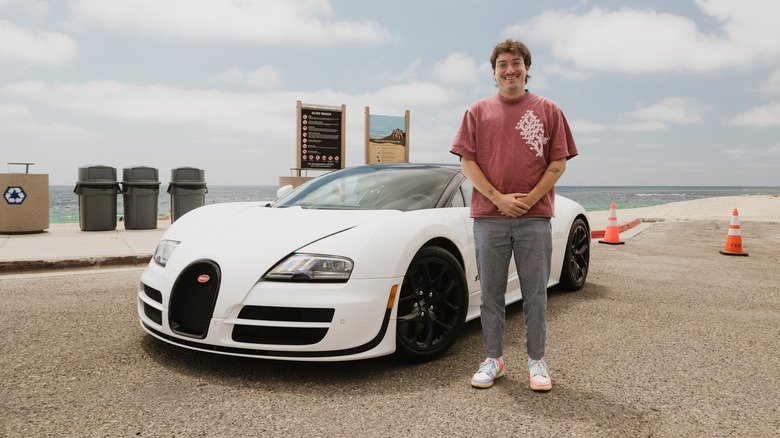
Spooling up the four turbochargers right behind the driver’s head produces a noise that does not resemble an engine. It sounds like a building coming apart. The 8.0-liter quad-turbocharged W16 engine in the Bugatti Veyron Grand Sport Vitesse produces 1,200 horsepower and 1,106 lb-ft of torque. The wastegates scream. The wind rushes over the open-top cabin with enough force to distort the driver’s face. Fuel consumption at top speed empties the tank in approximately 15 minutes.
Lifting off the throttle leaves silence. Volkswagen Group lost an estimated $6.2 million on every Veyron sold during its production run.
The heart of the machine is essentially two narrow-angle V8s fused together on a single crankshaft. Ten radiators are required to cool a W16 engine that generates enough heat to warp metal. Ferdinand Piëch, the legendary chairman of Volkswagen Group, conceived the Veyron with an uncompromising checklist: it had to produce 1,001 metric horsepower, hit over 400 km/h, sprint from 0-100 km/h in under 2.5 seconds, and be civilized enough for a night at the opera.
The steering wheel communicates the physical feedback of a 4,400-pound open-top car that required a custom Michelin Pax tire system. The rubber had to withstand the heat generated at 250 mph without disintegrating. The driver’s confidence on the road is interrupted by the mechanical limit of those tires. The cabin’s leather and luxury provide a brief, almost dismissive contrast to the physical struggle against thermodynamics, air resistance, and tire degradation.
In 2013, the Vitesse set the world record for the fastest open-top production roadster at 254.04 mph (408.84 km/h), driven by Chinese racing driver Anthony Liu at Volkswagen’s Ehra-Lessien proving grounds. Liu described the absolute sensory isolation of driving 254 mph with the top down.
Twenty years ago, the Veyron project was treated as a technology demonstrator rather than a profitable product. Volkswagen reportedly treated the car as a marketing tool, but the obsessive engineering standards drove costs to a point where a major corporation lost billions of dollars on a production run.
Bugatti is currently phasing out the pure W16 combustion era, transitioning to the newly revealed 2026 Bugatti Tourbillon—a naturally aspirated V16 hybrid co-developed with Rimac. The Veyron Grand Sport Vitesse marks not just an anniversary milestone, but the final, unregulated high-water mark of pure internal combustion audacity before electrification intervened. We will never see a car built this way again.