

iOS 27 Gives Siri Access to Your Personal Context
Apple rebuilds Siri around on-device AI and personal data
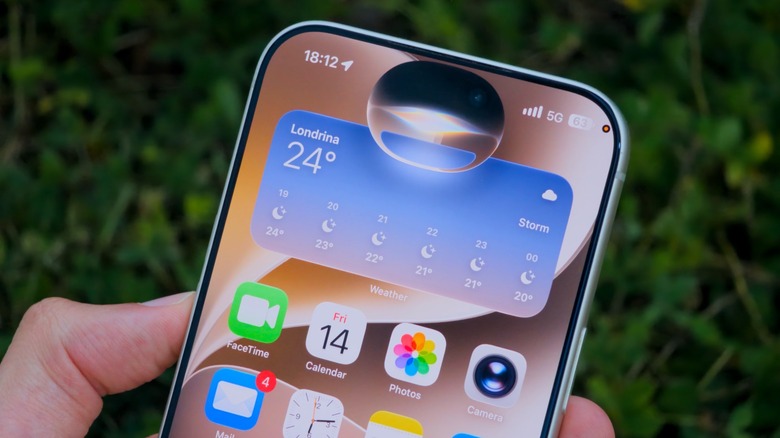
CUPERTINO, Calif. — Apple has launched a comprehensive technological overhaul of Siri with iOS 27, integrating generative artificial intelligence into the virtual assistant’s core architecture. The release is the most significant restructuring of Siri since its integration into the Apple ecosystem more than a decade ago.
The new Apple Intelligence framework introduces “personal context understanding.” It indexes a user’s local on-device footprint to build a knowledge base of daily activities, communications, and preferences, rather than relying solely on cloud-based database queries.



After upgrading to iOS 27, users are prompted in the Settings application to enable an indexing phase called “Optimize Search and Siri.” The device compiles and analyzes emails, text messages, calendars, and notes during the initialization period. The computation-heavy process is designed to run primarily while the device is locked, connected to a power supply, and operating on Wi-Fi to mitigate thermal throttling and preserve battery longevity.
Apple is transitioning Siri from a rigid, rule-based command processor to an AI-driven system capable of semantic search and contextual awareness. When Apple acquired Siri in April 2010, the technology was considered a pioneering mobile application of natural language processing. Apple later debuted the assistant on the iPhone 4S in October 2011.
The original Siri architecture was restricted to pre-programmed intents. It could set alarms, dial specific contacts, create timers, and pull search engine results through explicit, isolated commands, but it could not synthesize user data or maintain long-form conversational context.
Once local information has been indexed, Siri can execute complex relational queries across native databases. A user can ask for a hotel address from travel logistics in email archives; Siri can identify the correct confirmation message, extract the location details, and copy the address directly to the clipboard.

The assistant can also scan message histories for recommendations shared by contacts, including a specific book title or song. Broader media queries are supported as well, such as identifying specific live setlists from concert tours and queuing them within Apple Music.
The generative Siri features extend beyond first-party software through updated developer APIs. Flight-tracking tool Flighty and fitness utility Gentler Streak have already integrated support, allowing Siri to execute complex, app-specific actions based on conversational prompts.
On-device large language models (LLMs) require substantial processing power and high-bandwidth memory. The upgraded Siri therefore does not support older smartphone architectures and requires an iPhone 15 Pro, iPhone 15 Pro Max, or a subsequent model. On iPads and Mac computers, compatibility is limited to devices with an M1 silicon chip or later, along with the seventh-generation iPad mini powered by the A17 Pro chip.
The initial rollout also has geographical and language constraints. At launch, the system functions exclusively in English. Apple has confirmed plans to add French, Japanese, Korean, Portuguese, and Spanish, with those localization pipelines scheduled to begin rolling out in October. Users seeking immediate access to the updated assistant and the dedicated Siri AI application may be placed on a temporary waiting list during the phased software deployment.






One Comment