

4 Pilates Core Exercises to Strengthen Deep Spinal Muscles
Targeting the transverse abdominis and multifidus through anti-movement drills reduces lower back strain more effectively than traditional abdominal workouts.
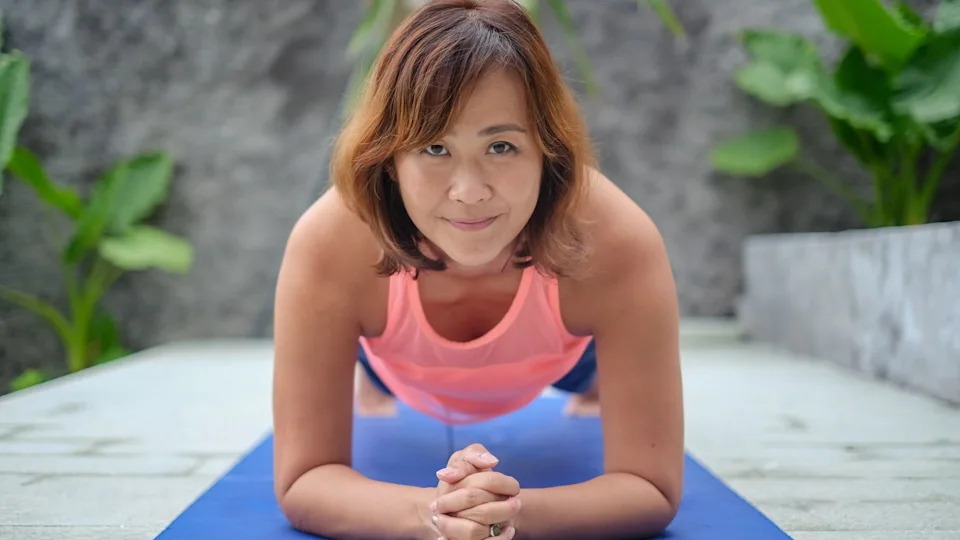
Most people equate core training with visible abdominal definition, but the muscles that matter most for long-term spinal health and physical function sit far deeper. The transverse abdominis, multifidus, diaphragm, and pelvic floor form a pressurized cylinder around the spine. When these deep stabilizers weaken, the risk of lower back pain, postural collapse, and athletic injury rises significantly.
Pilates targets this inner architecture more directly than traditional crunches or heavy compound lifts. Developed by Joseph Pilates in the 1920s as a rehabilitation system, the method relies on anti-movement principles — forcing the torso to remain completely rigid while the limbs generate destabilizing forces. Madison DiSalvo, a Pilates instructor at STRONG Pilates Commack, describes the approach as building foundational stability from the inside out.
Unlike standard planks or sit-ups that primarily recruit the rectus abdominis, anti-extension and anti-rotation exercises demand continuous engagement from the deep core. Physical therapists routinely prescribe these exact movement patterns to patients recovering from lumbar injuries because they build endurance in the stabilizers without placing compressive loads on the spinal discs.


Four specific movements isolate these deep tissues effectively, requiring nothing more than floor space and controlled breathing.
**Dead Bug**
The dead bug generates intense cross-body rotational torque that the deep core must actively resist. Lying face up, extend both arms toward the ceiling and bend the knees so the calves run parallel to the floor, maintaining a neutral spine rather than pressing the lower back flat into the mat. Exhale while lowering the right arm overhead and extending the left leg toward the floor simultaneously. Stop just before the lower back begins to arch. Inhale to return to the starting position, then alternate sides. Aim for two to three sets of 10 to 15 repetitions per side. The primary challenge is keeping the pelvis entirely motionless against the pull of the moving limbs, which directly activates the transverse abdominis.
**Bird Dog**
While the dead bug provides a stable surface beneath the spine, the bird dog removes that support, testing balance and coordination under load. Start on all fours with hands positioned directly beneath the shoulders and knees under the hips. Exhale and extend the right arm forward while lifting the left leg backward to hip height. The hips must not tilt, and the lower back cannot sag. Lower slowly on an inhale and switch sides for two to three sets of 10 to 15 repetitions per side. This contralateral limb movement mirrors the natural mechanics of human walking and running, making it highly functional for daily movement patterns.
**Bear Plank**
Isometric holds build the muscular endurance required to maintain posture throughout the day. From a tabletop position on hands and knees with toes tucked, exhale and draw the navel toward the spine. Lift the knees exactly one inch off the floor. Hold this position for 20 to 30 seconds across three to five sets, keeping the back flat and the neck elongated. Engaging the pelvic floor during the hold connects the bottom of the deep core cylinder to the rest of the stabilizing network. The minimal knee lift prevents the larger quadriceps and shoulder muscles from taking over the work.
**Plank Leg Lift**
A standard forearm or high plank builds baseline stability, but adding limb movement exposes weaknesses in the deep musculature. Step back into a straight-line plank position with hands stacked under shoulders. Keeping the pelvis perfectly level, exhale and lift the right leg by squeezing the glute, ensuring the lower back does not arch. Lower on an inhale and repeat with the left leg, avoiding any lateral weight shifting. Perform two to three sets of 10 to 12 repetitions per side. This variation forces the multifidus — small muscles running along the vertebrae — to fire continuously to prevent the pelvis from rotating.
Integrating these four exercises into a routine two to three times weekly addresses the deep stabilizers that conventional gym workouts frequently ignore. Breath synchronization remains critical; exhaling during exertion naturally increases intra-abdominal pressure, providing mechanical support to the lumbar spine.
Clinical research published in the Archives of Physical Medicine and Rehabilitation continues to validate deep core stabilization protocols, demonstrating that targeted transverse abdominis and multifidus training significantly reduces the recurrence of chronic lower back pain compared to general exercise programs alone.









