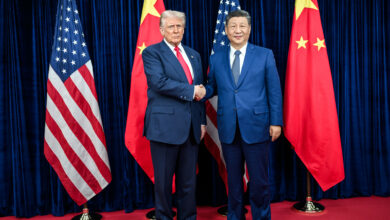
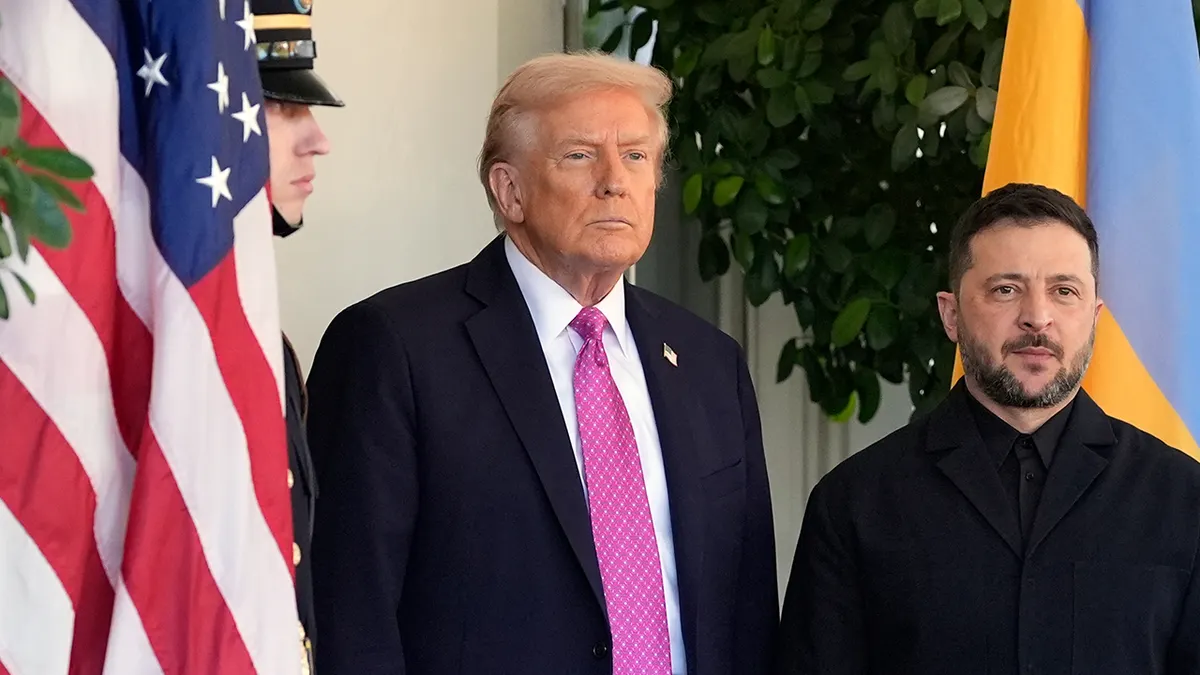
Ukrainian President Volodymyr Zelenskyy stated Tuesday that the likelihood of Russian aggression expanding beyond Ukraine’s borders is “very high,” framing such potential attacks not as random escalations but as calculated moves to fracture Western political will. Speaking to Fox News Digital after meeting with U.S. President Donald Trump on the sidelines of the 81st United Nations General Assembly in New York, Zelenskyy argued that Vladimir Putin, facing diminishing returns in his prolonged campaign against Kyiv, may seek instability elsewhere in Europe to force a reduction in international support for Ukraine.
The core of Zelenskyy’s warning rests on a strategic theory: if Moscow cannot achieve a decisive military victory in Ukraine, it may attempt to demonstrate power through limited offensives against neighboring states. “How to divide unanimity in Europe? … To attack somebody else,” Zelenskyy said. “To attack and say, look, I will go further if you will not stop this.” He emphasized that countries bordering Russia or Belarus face elevated risks from drone strikes, missile barrages, or ground operations designed to test NATO’s collective defense mechanisms without triggering a full-scale war.

This assessment aligns with recent intelligence assessments and observable patterns across the continent. Over the past month, European nations have reported a surge in hybrid warfare tactics, including unauthorized airspace violations and cyber-disruptions targeting critical infrastructure. These incidents serve as both reconnaissance missions and psychological pressure tools, aiming to normalize low-level conflict while gauging the speed and severity of allied responses. The Ukrainian leader urged European governments to adopt a posture of immediate retaliation rather than diplomatic caution. “Respond. Always respond. It’s not about the war. If you don’t respond, Russians, they will go further,” he asserted, suggesting that passivity invites further encroachment.
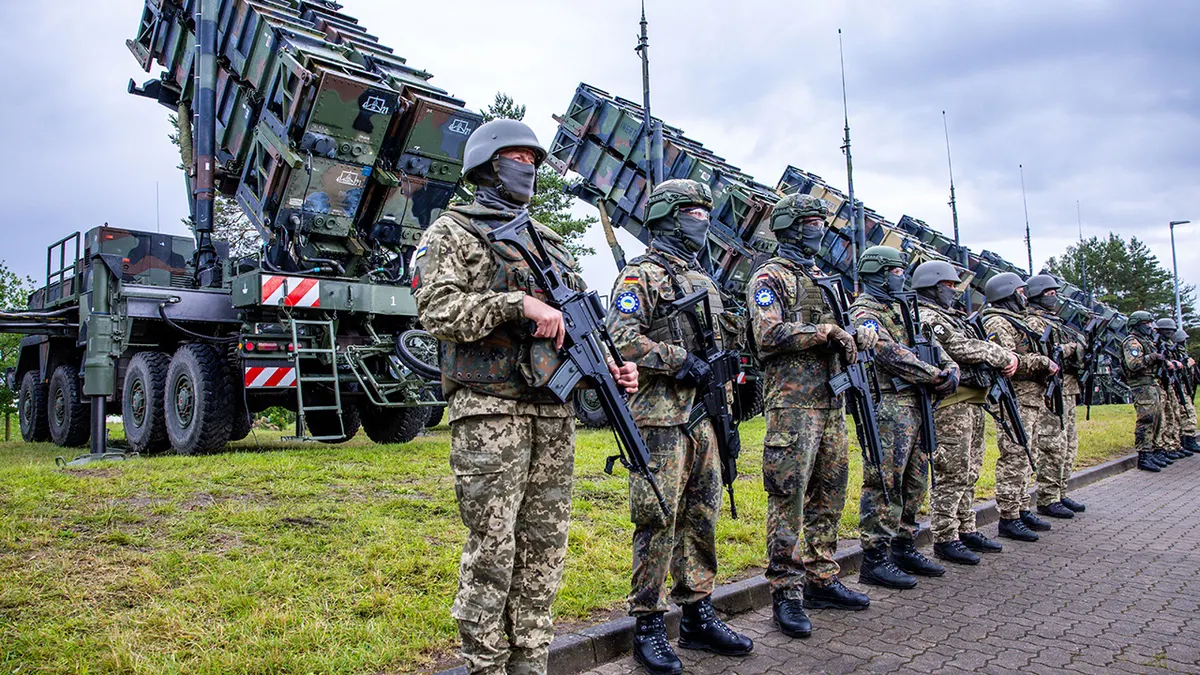
The backdrop to these warnings includes intensifying aerial combat over Ukraine itself, particularly targeting energy grids ahead of winter. During his discussions with President Trump, Zelenskyy proposed a mutual halt to strikes on energy infrastructure, a measure intended to protect civilian populations and stabilize essential services. While Zelenskyy indicated Ukraine’s readiness for such an agreement, he expressed skepticism regarding Moscow’s willingness to reciprocate. Additionally, he sought increased deliveries of Patriot air defense systems, highlighting the urgent need to shield Ukrainian cities from ballistic missile threats. Although Trump reportedly expressed openness to aiding Ukraine’s air defense capabilities, no concrete commitments on immediate hardware transfers were announced during the brief encounter.
Recent events corroborate the urgency of Zelenskyy’s stance. In early September, Romanian defense officials confirmed a drone intrusion into national airspace that subsequently crashed in Moldova, illustrating how conflicts spill over into neutral or peripheral territories. Days later, Italian fighter jets operating under NATO’s Baltic Air Policing mission intercepted and destroyed a drone entering Lithuanian airspace from Belarusian territory. Officials noted the device was likely of Russian origin, though investigations remain ongoing. Such incidents underscore vulnerabilities in eastern flank defenses, where geographic proximity to hostile actors complicates detection and interception timelines.
Political leaders across Europe have echoed concerns about fragmentation. German Chancellor Friedrich Merz warned earlier in September that peace on the continent remains precarious, citing Russia’s growing assertiveness in the Arctic and its deployment of hybrid tactics against EU members. Similarly, Polish Prime Minister Donald Tusk cautioned that Moscow might orchestrate false-flag operations—portraying deliberate attacks as accidents—to sow discord within NATO. Latvian President Edgars Rinkēvičs highlighted technological gaps in counter-drone capabilities, noting that current air defense architectures struggle to keep pace with evolving swarm technologies and cheap unmanned aerial vehicles used by Russian forces.

Zelenskyy’s strategy hinges on maintaining momentum in diplomatic channels despite battlefield stalemates. By linking the security of non-belligerent European states directly to the outcome in Ukraine, he aims to transform local skirmishes into existential questions for the broader alliance. His insistence on proactive response measures reflects a shift away from deterrence-by-punishment toward deterrence-by-denial, requiring robust integrated air defense networks capable of intercepting diverse threat vectors before they reach populated centers or military installations.
The interaction between Zelenskyy and Trump marked one of several high-profile engagements at the UN General Assembly focused on sustaining aid flows amidst shifting global priorities. As winter approaches, the focus turns increasingly to protecting civilizational resilience—not just through weapons supply chains but through unified political messaging that rejects any notion of negotiated surrender based on territorial concessions. For now, the emphasis remains on preventing localized provocations from escalating into wider regional conflagrations, a task demanding vigilance, rapid decision-making, and unwavering solidarity among democratic partners.