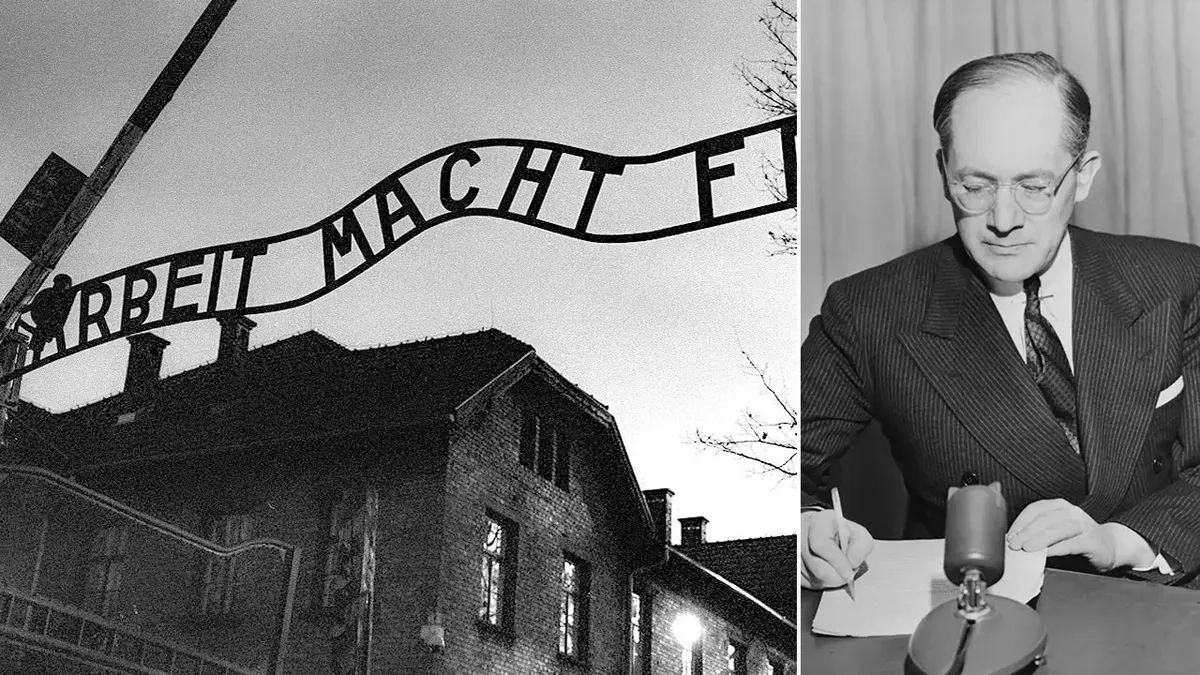
A regulatory dispute in Pennsylvania is placing the legacy of Raphael Lemkin, the Jewish legal scholar who coined the term “genocide” and drafted the United Nations Genocide Convention, at the center of a legal battle.
The challenge was brought by Joseph Lemkin, a U.S. attorney whose father was Raphael Lemkin’s cousin. Working with the Brussels-based European Jewish Association (EJA), Joseph Lemkin has appealed to Pennsylvania state regulators to investigate the use of the Lemkin name by the Lemkin Institute for Genocide Prevention and Human Security.
The Pennsylvania-based nonprofit has repeatedly accused Israel and the United States of committing genocide in Gaza following the October 7, 2023, Hamas-led attacks. The legal action seeks to force the organization to remove Lemkin’s name from its title.



In June, Lemkin and his legal team sent letters of concern to political and community leaders across Pennsylvania. The campaign culminated in April 2025 with a 32-page legal complaint and a 58-page evidentiary appendix submitted to the office of Pennsylvania Governor Josh Shapiro and the Pennsylvania Department of State’s Bureau of Corporations and Charitable Organizations.
Under Pennsylvania’s Solicitation of Funds for Charitable Purposes Act, the Department of State regulates nonprofit registration and financial solicitations to protect the public from deceptive practices. Bureau investigators are responsible for ensuring that charitable organizations do not use misleading titles or falsely imply endorsement by particular individuals or estates.
Geoff Morrow, a spokesperson for the Pennsylvania Department of State, said the department is legally restricted from confirming or denying whether there are active complaints or ongoing investigations concerning the organization. Governor Shapiro’s office has not publicly commented on the matter.
Joseph Lemkin’s challenge is also tied to his family’s history. His father was the sole survivor of a family of six during the Holocaust. His grandparents and one brother were killed at the Auschwitz-Birkenau concentration camp, while two other brothers died fighting in underground resistance movements.
Joseph Lemkin said he grew up under a “black cloud” of generational trauma. He recalled that his father spent years raising money to fund the funeral of Raphael Lemkin, who died destitute in New York in 1959.
The dispute began after Joseph Lemkin’s teenage son showed him a social media post from the Lemkin Institute accusing Israel of genocide. The post prompted concerns that the family name was being used for political purposes contrary to Raphael Lemkin’s original intent.
Raphael Lemkin was born in 1900 in Bezwoda, a village in what is now Belarus. He studied linguistics and law at the University of Lwów and became deeply affected by the absence of international laws to prosecute state-sponsored mass killings, particularly the Ottoman Empire’s annihilation of its Armenian population during World War I.
After fleeing the Nazi invasion of Poland in 1941, Lemkin immigrated to the United States. He joined the faculty of Duke University and later worked for the U.S. War Department. In his 1944 book Axis Rule in Occupied Europe, he combined the Greek root genos, meaning race or tribe, with the Latin suffix cide, meaning killing, to create the word “genocide.”
During World War II, 49 of Lemkin’s relatives were murdered by the Nazis. After the war, he lobbied delegations at the newly formed United Nations, helping lead to the General Assembly’s adoption of the Convention on the Prevention and Punishment of the Crime of Genocide on December 9, 1948.
The convention defined genocide as acts committed with the “intent to destroy, in whole or in part, a national, ethnical, racial or religious group.”
The Lemkin Institute was founded in Pennsylvania in 2016–2017 as an all-volunteer organization. Its co-founders, Dr. Elisa von Joeden-Forgey and Dr. Irene Massimino, established the group after conducting field research in Northern Iraq.
That research documented atrocities committed by the Islamic State (ISIS) against Yezidis, Christians, Shabak-Shia, Kakay, and other local minority groups. In 2021, the founders renamed the organization to honor Raphael Lemkin’s scholarship and contribution to international human rights law.
Raphael Lemkin died without direct heirs or a formal estate, so the institute did not seek permission from surviving relatives when it adopted the name. The organization says the name honors his scholarly legacy and that its present advocacy is consistent with his broader humanitarian goals.
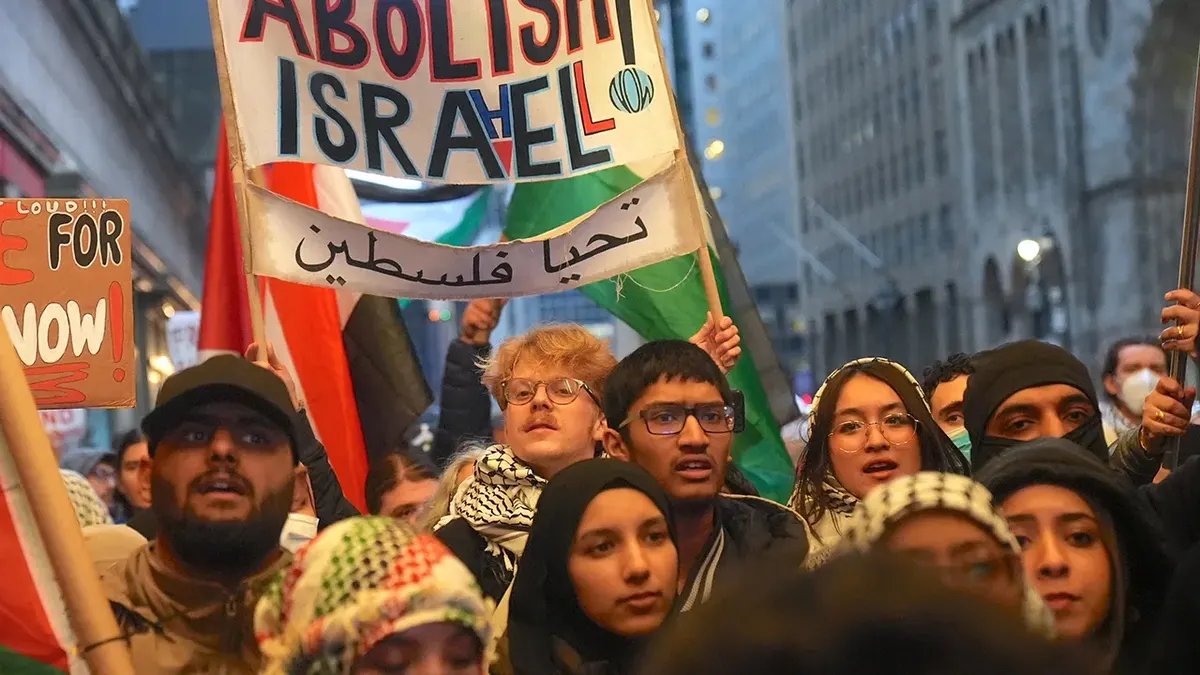
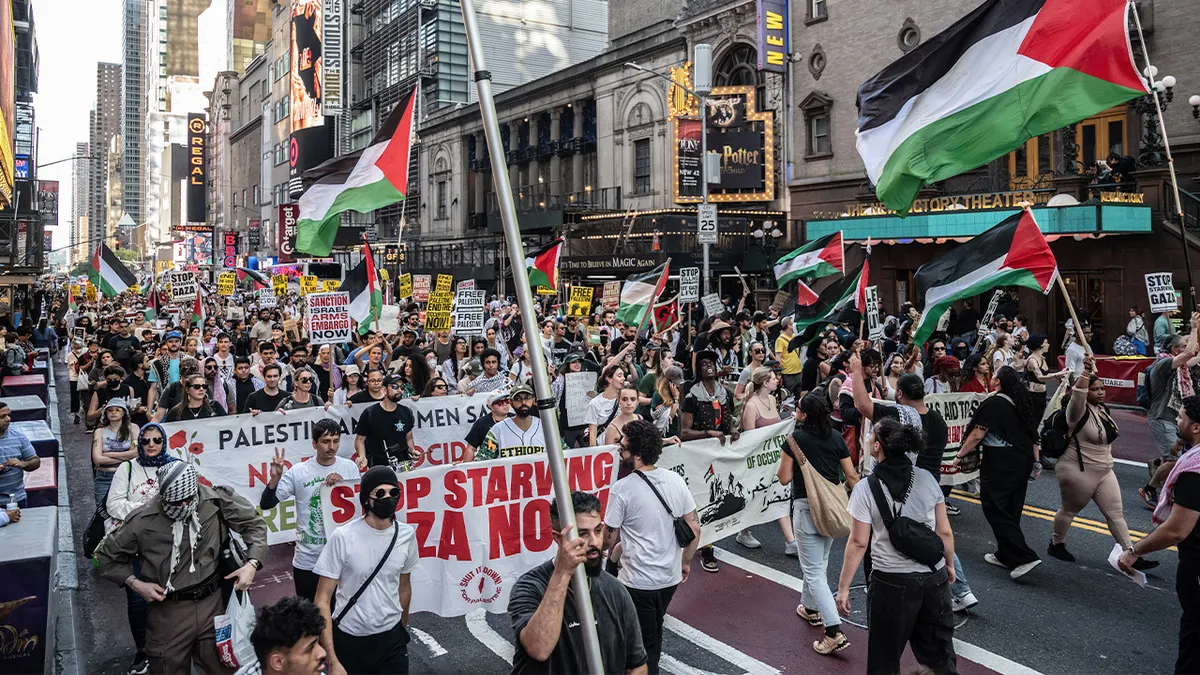
The institute’s statements about the conflict in Gaza have drawn sharp criticism from pro-Israel organizations and legal scholars. On October 13, 2023, less than a week after the Hamas incursions, it issued its first public warning of potential genocidal actions in the region.
By October 28, 2023, the organization had released a formal statement asserting that Israel and the United States were actively committing genocide in Gaza. A later report, published on May 28, 2024, described Israel’s military operations as “atrocity crimes of the most barbaric kind” and argued that Western leaders providing diplomatic or material support should be prosecuted.
In a press release dated October 13, 2025, the Lemkin Institute said Raphael Lemkin’s historical writings suggest he would have recognized the current “genocidal dynamics” in Gaza. It also argued that Joseph Lemkin does not speak for the entire extended family.
According to the institute, other relatives have supported its work, including Peter Lemkin, whose childhood home Raphael Lemkin frequently visited.
In late 2025, the institute launched a public fundraising campaign to obtain resources for administrative costs and legal representation in Pennsylvania. It characterized the challenge as part of a broader effort in the United States to stifle dissent against Israeli policy.

Nitsana Darshan-Leitner, an Israeli civil rights attorney and president of the Shurat HaDin Law Center who is not involved in the litigation, said the appropriation of a deceased historical figure’s name is not inherently illegal. She noted, however, that it can become actionable under state consumer protection and charitable laws.
According to Darshan-Leitner, legal liabilities may arise if a name misleads donors into believing that an organization has formal authorization from the family, or if it creates a false impression of continuity with the historical figure’s specific legal framework.
The use of the term “genocide” for the Gaza conflict has also faced strong criticism from prominent historians and international legal experts. British historian Sir Simon Schama, speaking in a keynote address to the Holocaust Educational Trust on September 7, called the application of the term to Israel’s actions a modern-day “blood libel.”
Schama pointed to what he described as the historical distortion of accusing the descendants of Holocaust survivors of committing the crime that was defined to describe their own destruction.
While the Pennsylvania Department of State continues to review the administrative filings, the conflict illustrates how the language of international humanitarian law, developed in the shadow of the Holocaust, remains a fiercely contested battleground in modern geopolitics.