U.S. Strategic Petroleum Reserve Falls Below 285 Million Barrels as Conflict Drawdowns Continue
Venezuelan crude swaps face oil-quality and production hurdles as emergency releases continue.
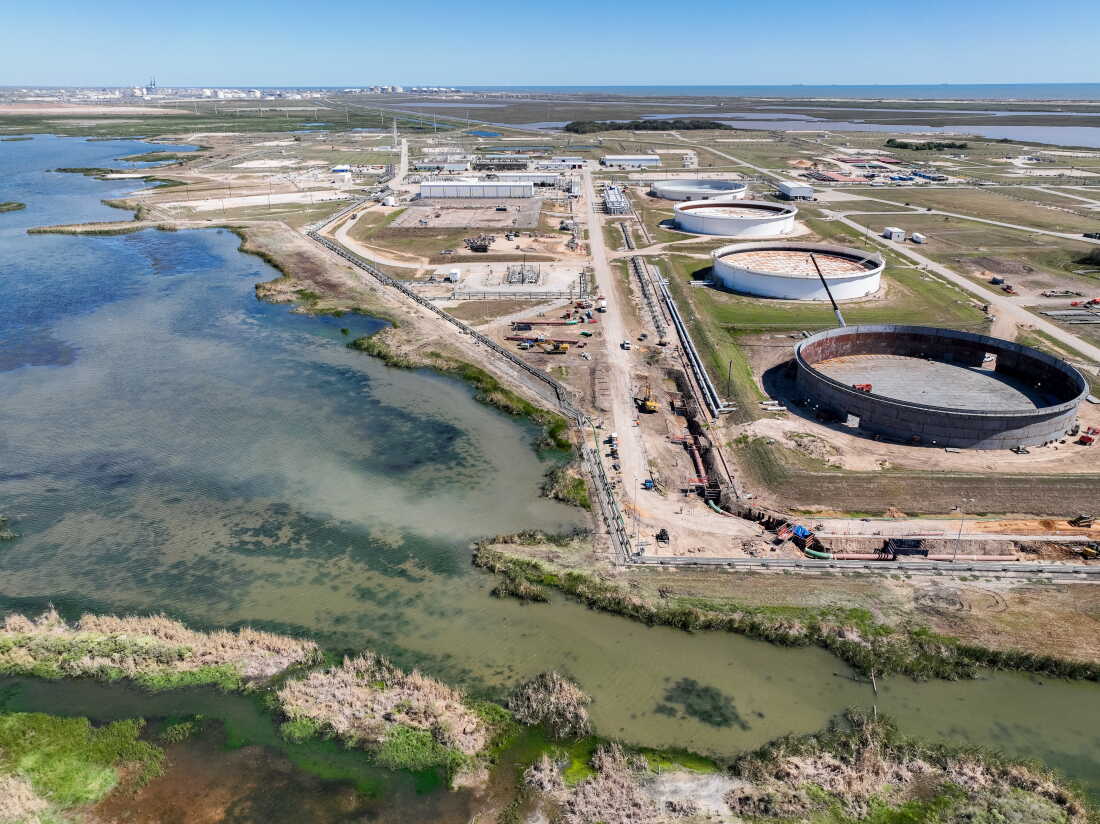
The U.S. Strategic Petroleum Reserve has fallen below 285 million barrels, its lowest level in more than four decades, after sustained emergency releases prompted by military conflict involving the United States, Israel and Iran. The stockpile has shrunk by more than 30% in six months, leaving less capacity to absorb another oil supply shock as Brent crude trades above $100 a barrel.
In February, before hostilities in the Middle East disrupted international tanker routes and maritime trade lanes, the underground reserve held approximately 415 million barrels. Brent is now 47% above its pre-conflict price, while U.S. retail diesel prices have reached all-time highs, maintaining cost pressures on freight, agriculture and commercial transportation.



The reserve was established as a federal safeguard against severe petroleum supply disruptions under the Energy Policy and Conservation Act of 1975. Its current inventory is the lowest since the early 1980s, when the stockpile was still being expanded. Ben Cahill, a non-resident senior fellow covering global energy at the Atlantic Council, said the commercial inventories and floating storage that supplied market liquidity before the conflict have since been largely exhausted, limiting options for replenishing government stocks while global prices remain high.
“A lot of the things that got us through the last six months, all those buffers, have really been worn away,” Cahill said.
The Trump administration has paired reserve releases with temporary waivers of the Jones Act to accelerate fuel shipments between U.S. ports. The century-old statute requires goods moved between those ports to travel on vessels that are domestically built, flagged and crewed. Regulators have also authorized an early shift to winter-blend gasoline, which contains more butane and costs less to refine than low-volatility summer fuel. Both measures are intended to counter persistent energy inflation and distribution bottlenecks.

Energy analysts caution that continued reliance on emergency releases has reduced the government’s ability to withstand further market shocks. Rapid withdrawals also place demands on the reserve’s storage caverns, which are hollowed out of deep underground salt domes at four Gulf Coast complexes: Bryan Mound and Big Hill in Texas, and West Hackberry and Bayou Choctaw in Louisiana.
The caverns are formed through solution mining, and oil is withdrawn by pumping fresh water into them to displace crude upward through pipes. Each injection dissolves more salt from the walls, changing the caverns’ shape and potentially weakening the surrounding dome over repeated cycles. “You can damage them by pumping too much out of them,” said Samantha Gross, director of the Energy Security and Climate Initiative at the Brookings Institution. She warned that accelerated operations risk permanent damage and that severe structural degradation can compromise the caverns’ long-term usefulness.

In late August, the White House announced a commercial agreement giving the U.S. government a majority equity interest in 17 Venezuelan oil fields in partnership with North American Blue Energy Partners (NABEP), a Barbados-headquartered energy firm. The administration called it a way to secure “a stable supply of low-cost oil that can facilitate refilling the Strategic Petroleum Reserve.” But much of Venezuela’s output, particularly from the Orinoco Petroleum Belt (Faja del Orinoco), is extra-heavy crude with high sulfur and heavy metal content.
That dense, viscous oil needs specialized upgrading or blending with lighter hydrocarbons before it can move through conventional pipelines or be processed in standard refinery configurations. The reserve instead requires standardized sweet and medium-sour crudes within specified API gravity and sulfur tolerances to avoid contamination and remain compatible with standard domestic refinery units in an emergency. Carl Larry, a manager at energy data provider Enverus, noted that lighter grades are considerably easier to turn into high-demand fuels such as gasoline and ultra-low-sulfur diesel.

After the White House announcement, U.S. Secretary of Energy Chris Wright said the administration plans crude swaps rather than putting Venezuelan oil directly into the salt domes. “We’ll swap you a barrel of heavy crude for a barrel of light or medium United States crude,” he told CNBC. Venezuelan barrels would go to Gulf Coast refineries with specialized coking capacity for heavy sour feedstocks; equivalent volumes of domestic light or medium crude would go into the reserve.

Producing substantial new volumes from the Venezuelan fields would take significant capital expenditure and years of development, energy analysts and upstream specialists said. Several of the 17 fields are undeveloped greenfield assets that need full-scale surface and subsurface installations, according to Jorge León, head of geopolitical analysis at energy consultancy Rystad Energy. “You need to literally make the holes on the ground and insert cement and piping and build all the infrastructure,” he said. Francisco Monaldi, director of the Latin American Energy Program at Rice University’s Baker Institute for Public Policy, estimated that bringing remote fields lacking infrastructure into commercial production could take “10 to 20 years.”
NABEP defended its timetable, pointing to assets it already holds in the Orinoco region. “The NABEP team is deeply familiar with the unique challenges of oil production in Venezuela,” it said in a statement. “Our engineering team is led by local industry professionals with decades of experience, including in our PetroCedeno and Junín Sur fields in the Faja. This team’s track-record is clear, having already increased production in NABEP’s existing assets tenfold over the past two years.”
China, which holds the world’s largest crude oil stockpiles, has also drawn on emergency inventories during the Middle East conflict. Its rate of depletion has been moderated by domestic demand-side displacement, according to Antoine Halff, a non-resident fellow at Columbia University’s Center on Global Energy Policy. International Energy Agency data indicate that electrification of Chinese passenger vehicles, commercial buses and two-wheeled transport displaces at least 1.5 million barrels of liquid fuel demand a day.

“To manage market disruption risks, China shows it pays to have a multi-pronged approach,” Halff said. Under the Trump administration, U.S. energy policy has focused primarily on expanding fossil fuel supply while rolling back federal measures intended to reduce transportation fuel consumption, including the $7,500 federal consumer tax credit for buying or leasing a new electric vehicle.