U.S. Escalates Diplomatic Fight With South Africa Over 5 Demands
Washington cites ignored demands on farm attacks, BEE mining rules, and geopolitical alignment as ties deteriorate.
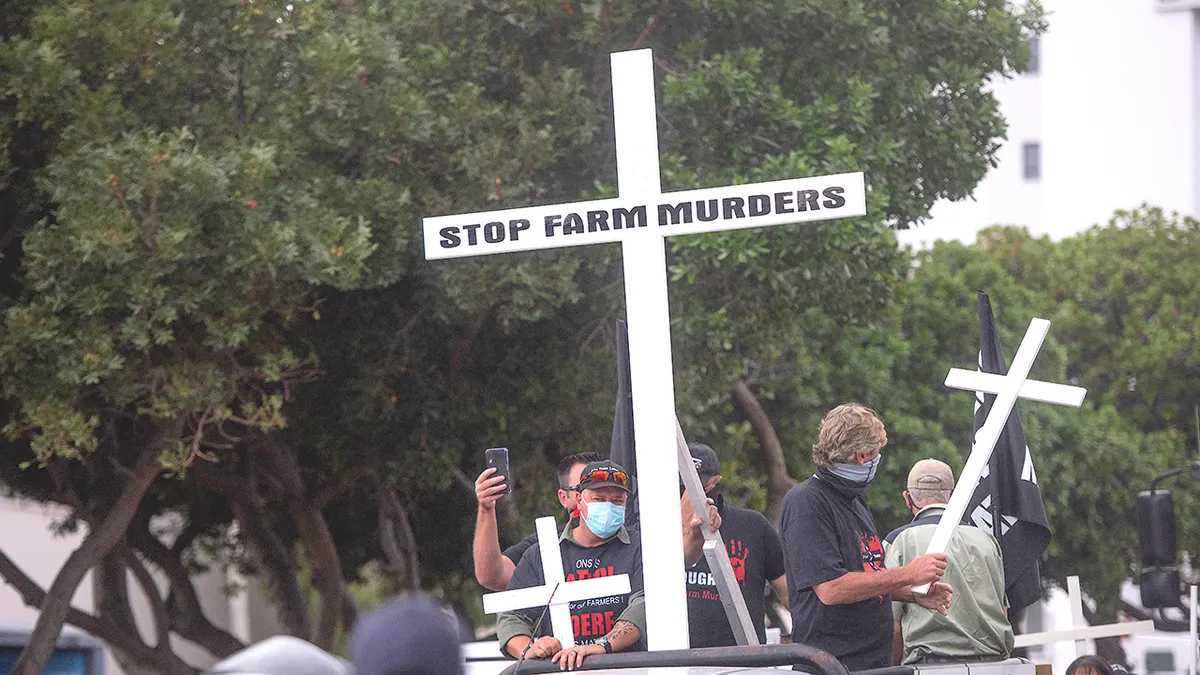
The U.S. State Department has issued a blunt ultimatum to Pretoria, declaring that the future of bilateral relations now rests entirely on how South Africa responds to an executive order signed by President Donald Trump. The warning followed the third formal diplomatic rebuke delivered to U.S. Ambassador L. Brent Bozell III in nine months, marking one of the most severe public ruptures between Washington and its largest African trading partner in decades.
State Department officials dismissed the latest summons of Bozell to South Africa’s Department of International Relations and Cooperation as procedural maneuvering. A spokesperson stated Friday that Washington is no longer interested in dialogue for its own sake and expects Pretoria to outline the specific type of relationship it intends to maintain with the United States.
The friction centers on five explicit demands the Trump administration presented following a contentious Oval Office meeting between Trump and South African President Cyril Ramaphosa approximately 16 months ago. According to Bozell, Pretoria has ignored three of those directives. The rejected items include halting race-based ownership mandates in the mining sector, addressing violence against Afrikaner farming communities, and ending what Washington characterizes as South Africa’s strategic drift toward U.S. adversaries.


At the core of the dispute is the chant “Kill the Boer, kill the farmer,” which surfaces regularly at political rallies and sporting events across South Africa. Ramaphosa has maintained that he cannot ban the slogan because the country’s highest courts have ruled it constitutes protected speech rather than actionable hate speech under current constitutional interpretations. Bozell rejected that legal defense, arguing that democratic leaders routinely challenge judicial findings they view as harmful, and characterized the refusal to condemn the chant as an endorsement of incitement to murder.
The phrase carries deep historical weight. Originating during the anti-apartheid struggle, South Africa’s Equality Court ruled in 2022 that the chant constituted hate speech. However, the Supreme Court of Appeal overturned that decision later, determining the lyrics functioned as historical political expression rather than a direct threat. That ruling remains highly contested domestically, with agricultural unions documenting hundreds of violent attacks on commercial farms annually, while the government attributes rural crime to broader socioeconomic failures rather than targeted racial violence.
Beyond domestic grievances, Washington is leveraging economic access to force geopolitical alignment. Bozell framed the standoff as a choice between American investment and Chinese extraction. He outlined a proposal where U.S. firms would process rare earth minerals and platinum group metals inside South Africa, contrasting this with Beijing’s established model of exporting raw ore for refinement in China. South Africa holds roughly 80 percent of global platinum reserves and significant deposits of manganese and chromium, making it indispensable to both nations’ supply chains for electric vehicles, defense systems, and electronics.
This economic pressure directly collides with South Africa’s Black Economic Empowerment framework. Current regulations require foreign telecommunications and mining companies to allocate 30 percent of local equity to black entrepreneurs. Bozell cited this mandate as the primary barrier blocking billions of dollars in pending U.S. capital deployment. He specifically pointed to Elon Musk’s Starlink satellite internet service, claiming the company offered to equip 500 South African schools with free, permanent connectivity but was denied market entry because it refused to surrender the required ownership stake.
Starlink’s absence from South Africa is not solely due to BEE laws. The Electronic Communications Act requires individual licensees to be majority-owned by historically disadvantaged groups, a regulatory hurdle that has kept the service out of the country while it operates freely in neighboring states like Mozambique and Zambia. Legislative amendments to bypass this requirement for low-earth orbit providers have stalled in parliament for years, complicating any rapid resolution even if political will existed.
The Trump administration has already begun applying tangible consequences. Earlier this year, Washington imposed new visa restrictions targeting South African officials linked to land expropriation policies and alleged discriminatory practices. These restrictions add to existing tensions stemming from Trump’s broader skepticism of multilateral engagement, including his administration’s ongoing review of the African Growth and Opportunity Act, which currently grants South Africa duty-free access to U.S. markets for thousands of products.
Pretoria’s foreign ministry attempted to project calm following the latest démarche. A senior official confirmed the ambassador was summoned to explain conduct deemed undiplomatic but emphasized that resolving outstanding matters remains a priority for both capitals. This measured response contrasts sharply with the escalating rhetoric from Washington and reflects the difficult position of Ramaphosa’s Government of National Unity. The coalition relies on balancing pro-Western business interests with factions deeply sympathetic to Russia, China, Iran, and Cuba.
South Africa’s membership in the BRICS bloc and its refusal to condemn Russia’s invasion of Ukraine have consistently tested Washington’s patience. Recent joint naval exercises involving Russian and Chinese vessels off the South African coast, alongside diplomatic engagements with Hamas representatives, have fueled U.S. accusations that Pretoria has abandoned its post-apartheid non-aligned stance. Bozell explicitly questioned why South Africa maintains cooperative ties with Havana and Tehran, framing these relationships as incompatible with robust American partnership.
The immediate trajectory of the relationship hinges on Pretoria’s formal response to the Trump executive order. No deadline for compliance has been publicly announced, but the State Department’s refusal to engage in further procedural discussions signals that Washington considers the negotiation phase closed.