U.S. Confirms Weapons Are Already in Orbit
Washington acknowledges orbital defenses as China and Russia develop new counter-space systems
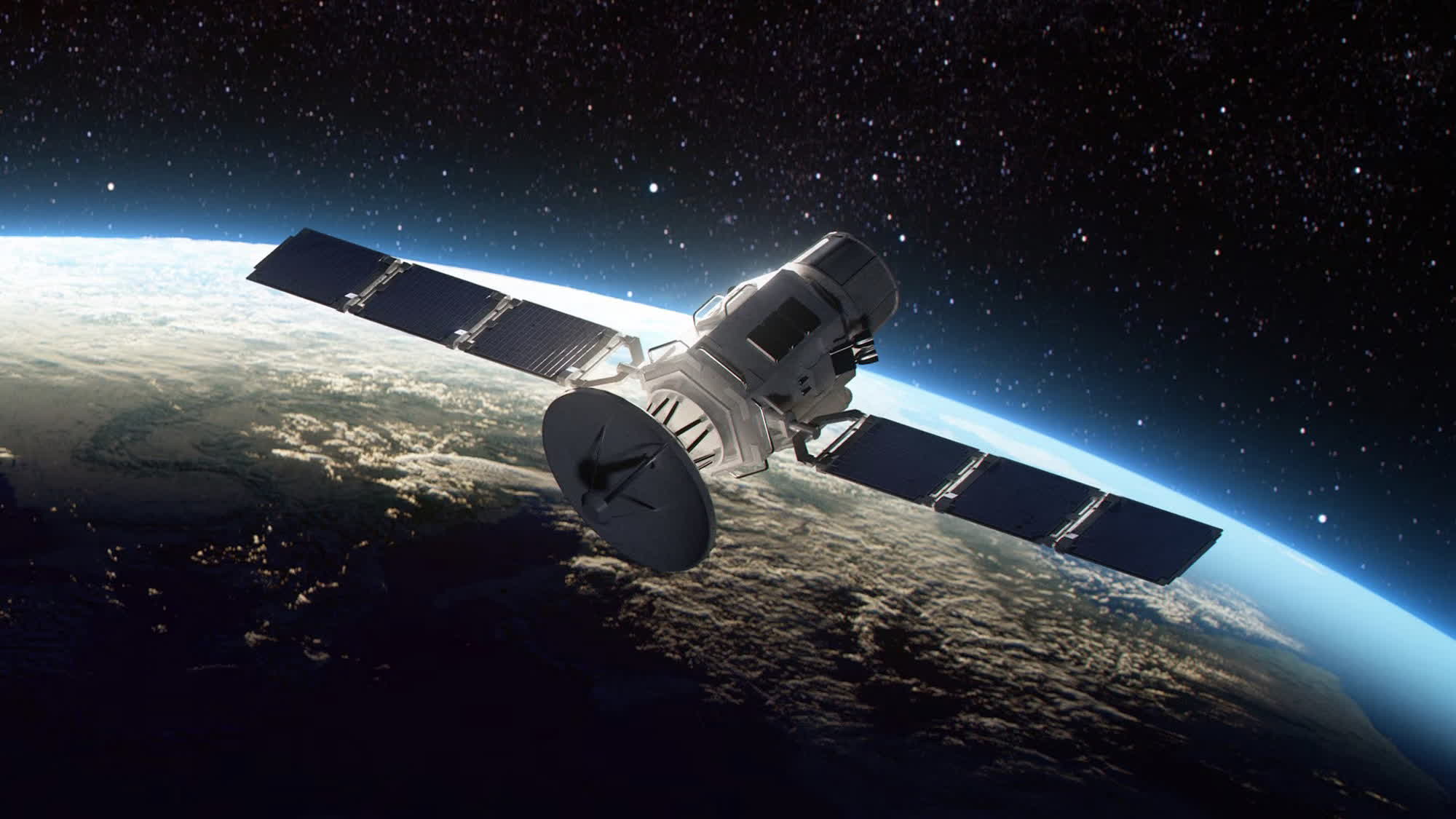
NATIONAL HARBOR, Md. — Troy Meink, a senior aerospace official, acknowledged at the Air Force Association’s annual Air, Space & Cyber Conference in Maryland that the United States has deployed orbital assets specifically intended to defend U.S. space infrastructure against hostile actions. He declined to provide technical specifications or explain the exact mechanism of the weapons.
For decades, the United States maintained a carefully guarded policy of strategic ambiguity regarding its military capabilities in outer space, treating the orbital regime as a fragile sanctuary. The public admission marks a fundamental shift in American military posture and signals a move from passive observation to active, armed deterrence.
The disclosure comes as tensions rise in low Earth orbit (LEO) and geostationary orbit (GEO). China and Russia have rapidly advanced counter-space technologies, while the Pentagon has repeatedly warned that American GPS, communication, and reconnaissance satellites—the nervous system of the modern U.S. military—are increasingly vulnerable to foreign interference.


The U.S. Space Force was established in December 2019 as the first new branch of the U.S. Armed Forces in over 70 years, with a mandate to address these emerging vulnerabilities. Its personnel have repeatedly tracked highly unusual maneuvers by foreign satellites. U.S. military commanders have accused Beijing of conducting coordinated close-proximity operations described as orbital “dogfighting,” in which maneuvering Chinese satellites shadow and inspect U.S. national security hardware.
The threat environment now extends beyond the destructive, debris-creating anti-satellite (ASAT) missile tests associated with China’s high-altitude intercept in 2007 and Russia’s destruction of a retired Soviet-era satellite in 2021. Co-orbital technologies and electronic warfare have become central concerns, and defense analysts have long hypothesized about the nature of possible U.S. space-based defenses.
Those theoretical concepts include localized electronic counter-measures, high-powered lasers designed to blind optical sensors, and heavily shielded, highly maneuverable mobile platforms capable of physically intercepting incoming hostile projectiles. The United States has not publicly detailed which systems are now deployed in orbit.
Russia has also demonstrated aggressive posture changes, particularly since its invasion of Ukraine. Senior Russian officials have publicly warned that commercial satellite constellations supporting Ukrainian defense efforts, most notably SpaceX’s Starlink network, are legitimate military targets. Intelligence reports shared among NATO allies indicate that Moscow is developing advanced co-orbital capabilities, including specialized interceptors that could release clouds of high-velocity micro-projectiles to physically shred target satellites without triggering massive nuclear fallout.
The deployment of these defensive assets does not violate existing international legal frameworks. The Outer Space Treaty of 1967, the bedrock of space law, was drafted during the height of the Cold War to prevent the escalation of the nuclear arms race into the cosmos. Article IV prohibits signatories from placing nuclear weapons or other weapons of mass destruction into orbit or stationing them on celestial bodies, but it contains no equivalent restriction on conventional weaponry. Conventional kinetic interceptors, electronic warfare jamming systems, and directed-energy weapons therefore remain legal under international law.
The policy shift is unfolding as major powers compete for cislunar space, the region between Earth and the Moon. The United States, through its Artemis program and the associated Artemis Accords, is leading a coalition of nations seeking permanent habitats, landing zones, data centers, and power grids on the lunar surface. Commercial and state-sponsored infrastructure is beginning to extend toward the Moon, while China and Russia are collaborating on the rival International Lunar Research Station (ILRS).