Tesla begins Semi deliveries in Nevada as Catalyst confirms 2,500-truck order
The electric Class 8 truck offers up to 500 miles of range, while Tesla has not set a full-volume production timetable for this year.
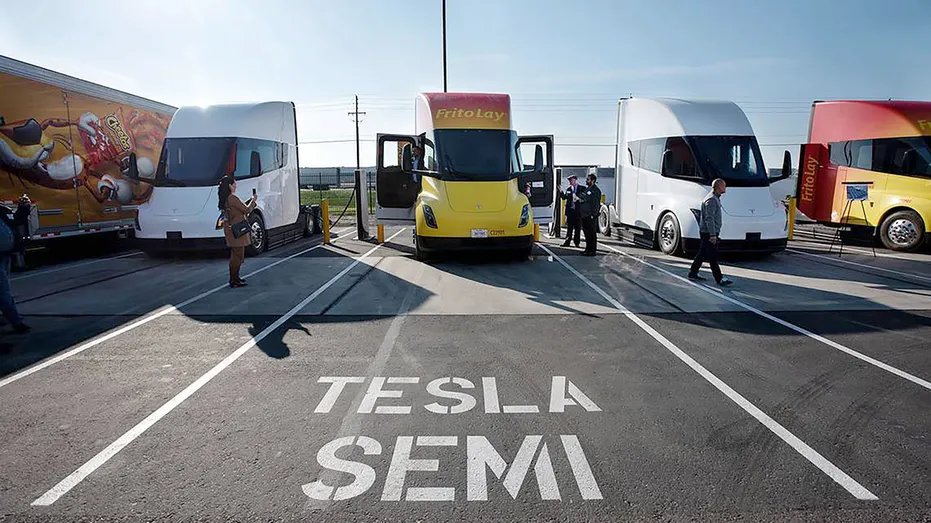
Tesla has begun customer deliveries of its battery-electric Class 8 Semi from manufacturing operations outside Reno, a shift from years of field testing toward broader commercial fleet use. The handovers were confirmed during a corporate presentation at the company’s industrial site in Sparks, Nevada.
PepsiCo, DHL and U.S. Foods displayed branded trucks at the facility. The vehicles are aimed at freight logistics operators seeking to reduce operating expenses as diesel fuel costs remain persistently elevated.
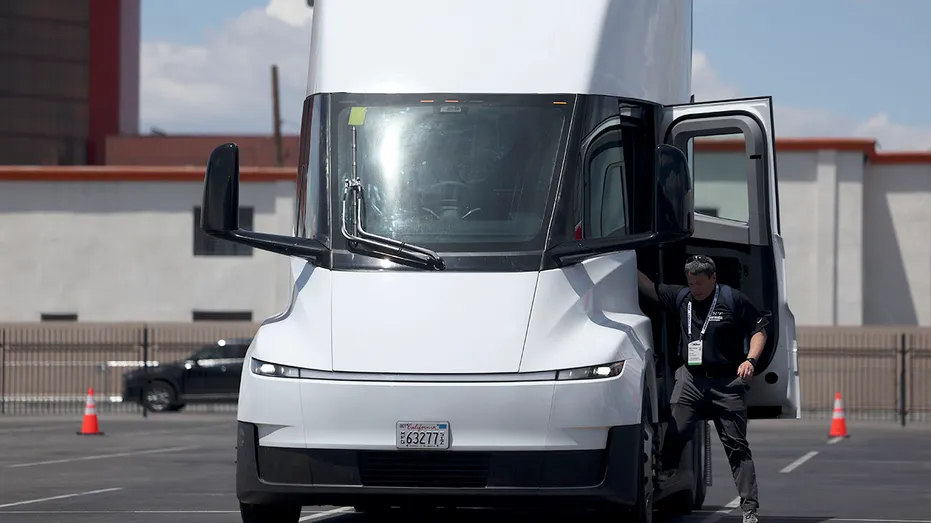


The first low-volume pilot began in late 2022, when Tesla delivered a limited batch of hand-built Semis to PepsiCo’s bottling plant in Sacramento and Frito-Lay’s distribution hub in Modesto, California. Those trucks were used to test efficiency, route durability and charging turnaround times. Tesla assembled its first truck on an expanded high-volume line in April, after the pilot phase and before the latest customer handovers.
The company previously set out plans to produce as many as 50,000 Semi tractors a year at its Nevada site. Updated corporate guidance has not committed to reaching full-volume output this calendar year, and Tesla disclosed neither revised retail prices nor immediate quarterly production targets at the presentation.
Orders are also coming from corporate freight networks facing tighter emissions requirements, including California’s Advanced Clean Fleets regulation and federal fleet-decarbonization rules. Those rules are supported by Inflation Reduction Act commercial clean vehicle tax credits of up to $40,000 per Class 8 truck. Nonprofit industry group Catalyst Mobility confirmed an order for 2,500 Tesla Semis on behalf of a consortium of major corporate cargo owners, including Microsoft and PepsiCo. The commitment is nearly twice the total number of heavy-duty electric commercial vehicles currently deployed on U.S. highways. Swedish freight mobility company Einride separately agreed to add 500 Semis to its global transport network.
In a recorded video address to attendees, Chief Executive Elon Musk said the Semi order pipeline had an extensive waiting list and urged fleet customers to reserve early to secure production slots. Tesla offers a standard version with a range of up to 325 miles per charge and an extended-range version designed for up to 500 miles.
Dan Priestley, Tesla’s director of Semi truck engineering, said the 500-mile figure reflects real-world testing with loaded trailers operating near the U.S. gross combination weight limit of 82,000 pounds. That limit includes an additional 2,000-pound regulatory allowance for zero-emission commercial tractors.
The truck’s tri-motor powertrain is derived from Tesla’s high-performance passenger sedans and sends torque to the rear axles without a traditional multi-gear transmission. Specialized Megawatt-level direct-current charging stations are designed to replenish about 70% of the high-voltage battery in 30 minutes.
Musk unveiled the Semi concept in November 2017, with an initial release targeted for 2019. Repeated delays followed, driven by industry-wide supply chain constraints, engineering changes to heavy-duty thermal management and limits on the allocation of high-density battery cells needed for commercial long-haul transport.