Scott Laux Spoke for the Blue Angels in July and Was Removed in Silence in November
The team flew a show a jet short in July and explained it within days. In November it flew a show a jet short and offered one sentence, while a second officer was removed in silence too.
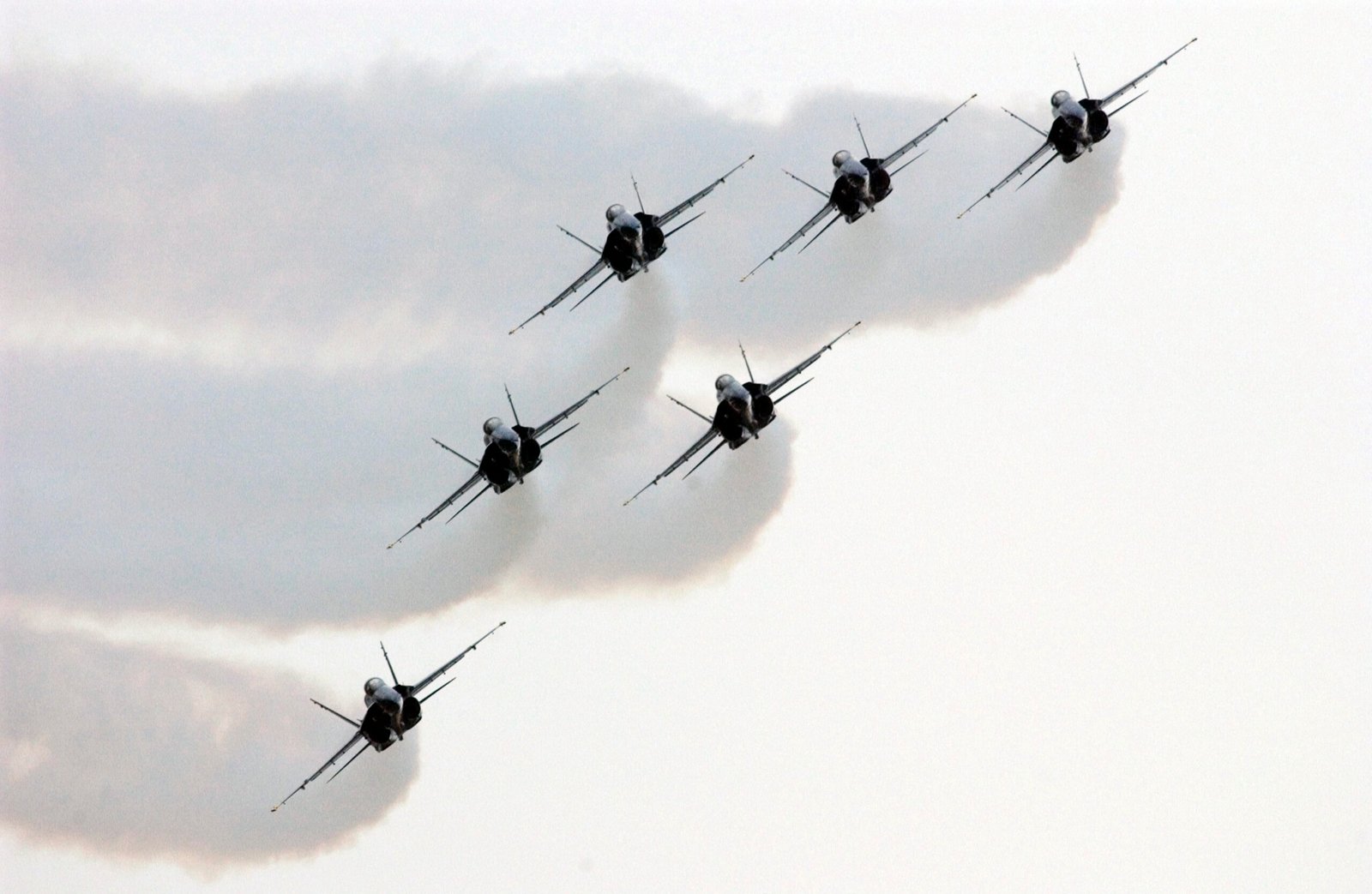
The crowd at Naval Air Station Pensacola counted five jets on Friday. The Blue Angels fly six, and everyone watching knew it. Jo Petty, who was at both homecoming shows, wrote on Facebook that night: “both Pensacola home shows… formation one aircraft short each show…. classy blues 👌🏻”
The Navy confirmed the missing jet belonged to Marine Maj. Scott Laux, the No. 6 opposing solo pilot, only when the Pensacola News Journal asked. The Chief of Naval Air Training said he had been removed “for failing to uphold the standards expected of members of the Navy Flight Demonstration Squadron” and would not take part in the team’s remaining performances this season. It did not say what he had done, or when. The homecoming marked the naval air station’s 200th anniversary and the team’s 80th, and it was the show’s return after the 2025 homecoming was cancelled during the government shutdown.
Laux, 37, from Chantilly, Virginia, graduated from the Naval Academy in 2012 with a degree in Chinese, earned his wings in 2015, flew F/A-18s from Marine Corps Air Station Miramar and deployed aboard the carrier Nimitz before moving to the F-35C in 2022. He had more than 1,300 flight hours and 169 carrier landings before he joined the Blue Angels in September 2024, spent 2025 as the team’s narrator, and flew as No. 6 through the 2026 season. The opposing solo flies with the lead solo in the head-on crossing passes that fill the gaps between the four-jet Diamond’s routines, and the team keeps no spare demonstration pilot: each aviator needs 120 winter training flights before flying the low-altitude formations.


It was the second time this year the team flew a show a jet short. The first time, in July, the Navy explained the missing jet within days, named the pilot, and said the pilot would keep flying. This time it offered one sentence and took the pilot’s photograph and biography off its website.
The empty slot had been visible for a week before the Navy said anything. The team flew without its No. 6 jet at the Air Dot Show in Atlanta on October 31 and November 1, and on November 2 a spectator asked in a discussion under photographs of the show why No. 6 had not flown on the Saturday. The removal itself came on November 3, which does not explain the Atlanta absence, and the Navy has not said when Laux stopped flying.
A second name vanished from the team’s website at around the same time. Marine Capt. Danielle Cribb, the squadron’s public-affairs officer, had her biography taken down too, and the Navy has said nothing about her at all: not when she was removed, or why. Her family told the Post her removal had nothing to do with Laux. A source with knowledge of the situation told the New York Post on Monday that Cribb “was removed prior to and separate from Maj. Laux,” and a source told Navy Times the two removals had nothing to do with one another.
The team’s own officers page still shows the gap. It lists the pilots from No. 1 to No. 5, then jumps to No. 7, and no public-affairs officer appears anywhere on it.
Four months earlier, on the same stretch of Florida coast, a Blue Angels jet came over Pensacola Beach so low that the sand came up with it. It was July 15, the morning “Breakfast with the Blues” practice, and the No. 3 jet, flown by Lt. Chris Houben, banked through a turn unusually close to the beach and sent tents, chairs and umbrellas tumbling. The team’s own manoeuvre manual puts the aircraft 500 feet above the ground over an audience.
The commanding officer, Capt. Adam Bryan, told reporters the next day that the pass had been unsafe. “The pilot found himself unfortunately in a situation that we would deem unsafe over the beach,” he said. “We never intend to fly over the crowd that low.” The team said it was conducting a safety review, and Bryan added that the squadron had been “taking a heavy look at yesterday to ensure that we are doing things first and foremost safe.”
The review did not last the day. Acting Navy Secretary Hung Cao posted on X that afternoon: “Flight debrief complete. No reprimands. No firings. No problem.” War Secretary Pete Hegseth added: “The flyovers will continue until morale improves.”
Houben did not fly the Pensacola Beach Air Show that weekend. Fans had spent the week campaigning online to “free No. 3.” The team flew with five jets on July 17 and 18 and said so in a statement, calling it “a proactive safety measure, not a punitive one,” while the safety review ran. Houben was back in the six-jet formation at the next show, in Seattle on August 1 and 2.
Houben told Florida Rep. Michelle Salzman afterwards that the low pass had been a mistake. “He didn’t make excuses. He didn’t try to shift blame,” Salzman wrote on Facebook. “He simply talked about the miscalculated a turn, something no pilot ever wants to experience, especially one who has dedicated his life to flying at the highest level of precision.”
Scott Laux was the man answering reporters’ questions at Pensacola the day after the low pass. “We appreciate the trust in support, and it’s our privilege to be able to perform in that way,” he said. “We’re gonna keep bringing the heat and continue doing it safely.” He had spent the 2025 season as the team’s narrator, the voice that talks the crowd through the show. The narrator’s job is to explain the team to the public.
On the Military.com post about the removal, commenters kept having to correct each other about July. “you’re confusing him with Blue Angel #3 Lt. Chris Houben,” Elsa Agdeppa Aho wrote. “He’s the one who did the low pass.” The confusion is understandable. The July pass and the November removal both ended with a jet missing from the formation, but they were different pilots, four months apart.
Verna Ellis, commenting on the same post, put the cost of the silence in one line: “Would have been smarter to give the reason. Would cut out a lot of unnecessary speculation.” Ralph Woods, defending Laux, wrote that it was sad “how one mistake everyone wants to judge, or make a mockery of his downfall,” and that Laux was “a Marine who puts his life on the line for all of us and his country.” George Mears took the other side. He describes himself as a retired naval aviator with more than 5,600 hours, and he wrote that Laux “was given the opportunity of a lifetime and— for whatever reason— he blew it,” and had “disgraced himself and the Blues.”
Much of the rest of the reaction is guesswork about what Laux did. The post had 479 comments by November 11, most of them centring on an alleged relationship with Cribb. No official source has said any such thing, and the two sources who spoke to the Post and Navy Times said the removals were separate. The Navy has announced no court-martial, no nonjudicial punishment and no next assignment for Laux, and removal from the team is not a discharge from the Marine Corps.
What the Navy has not explained is who decides when a removal gets an explanation and when it gets one sentence. The officer whose job it was to speak for the team is the second removal nobody has explained: Cribb ran public affairs, and her biography is gone from the same page as Laux’s. The 2026 season is over — the homecoming was the last scheduled show — and the team’s officers page still jumps from No. 5 to No. 7.