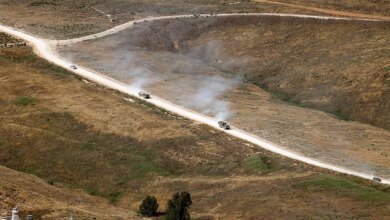
Nordic Air Forces Execute First Joint Intercept of Russian Jets Over Gulf of Finland
Operational milestone achieved as Putin mocks Baltic defense warnings

For the first time since Sweden and Finland joined NATO, their air forces executed a coordinated intercept of supersonic Russian military aircraft over the Gulf of Finland on Sept. 24. The event marks a tangible shift in Nordic defense integration, moving from theoretical interoperability to operational reality amidst escalating tensions with Moscow.
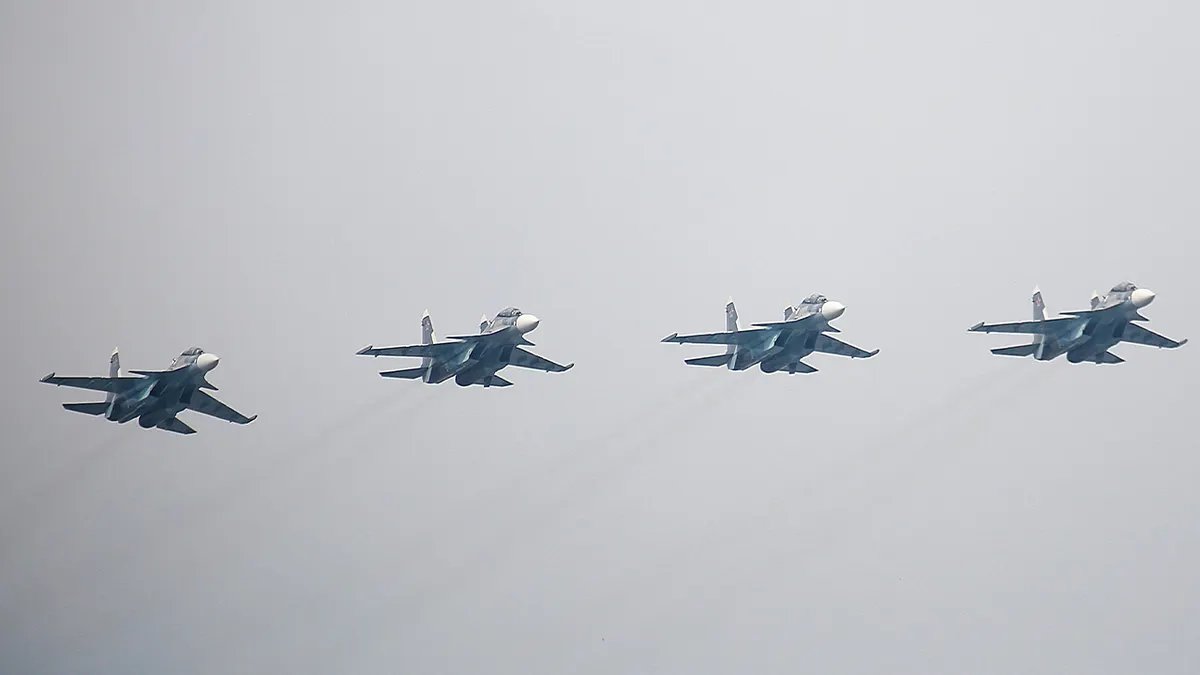
The joint mission involved Finnish F/A-18 Hornets and Swedish JAS 39 Gripens scrambling to identify and track a formation of Russian aircraft detected in international airspace. According to the Swedish Armed Forces, the Russian group consisted of a Tu-134 transport plane, MiG-31 high-altitude interceptors, and Su-30 multirole fighters. This composition suggests a mix of logistical support and combat-capable assets probing regional defenses.

Maj. Gen. Jonas Wikman, commander of the Swedish Air Force, described the operation as proof that years of trust-building have yielded seamless cooperation. “We can now operate together — as air forces, as nations and as Allies,” Wikman stated. The significance lies not just in the intercept itself, but in the elimination of procedural friction between two nations that were historically neutral or non-aligned until recently. Finland acceded to NATO in April 2023, followed by Sweden in March 2024, effectively doubling the alliance’s land border with Russia and creating a contiguous northern flank.
This development occurred against a backdrop of increased Russian aerial activity near NATO borders. In the weeks prior, incidents included drones entering Polish airspace, a Mi-8 helicopter crossing from Kaliningrad into Poland, and armed Russian jets violating Estonian airspace on Sept. 18. These probes are widely interpreted by Western analysts as tests of reaction times, radar coverage, and political resolve rather than precursors to immediate invasion.
Political rhetoric has sharpened alongside these military maneuvers. On Sept. 25, Russian President Vladimir Putin dismissed European fears of an imminent attack, speaking at the St. Petersburg International United Cultures Forum. He characterized warnings from Baltic states as “political clowning” and asserted that Russia has no plans or motives to escalate conflict with Europe. His comments specifically targeted Estonia’s Defense Minister Martin Herem, who had warned earlier that Russia might be capable of using force against Tallinn within a year.

Estonia, a NATO member since 2004, sits directly across the Gulf of Finland from both Sweden and Finland, making it geographically central to this new tripartite security architecture. Prime Minister Kristen Michal indicated that Tallinn is prepared to close border crossings rapidly if threat assessments deteriorate, signaling a posture of heightened readiness despite diplomatic pushback from Moscow.
NATO Secretary General Mark Rutte reinforced the alliance’s deterrent stance during recent remarks, emphasizing the interdependence of U.S. and European security. “If he does anything silly, he knows our reaction will be tough,” Rutte said, underscoring Article 5 commitments. Meanwhile, Denmark’s Defense Intelligence Service assessed the risk of a limited Russian attack on a NATO country as “low but growing,” noting that while a full-scale invasion remains unlikely, it can no longer be categorically ruled out. This intelligence assessment aligns with broader concerns about hybrid warfare, including sabotage of critical infrastructure like gas pipelines, which have plagued the Baltic Sea region since 2022.
The successful coordination between Swedish and Finnish jets demonstrates that the Northern Flank is becoming one of the most integrated sectors of the alliance. Unlike other regions where interoperability standards vary, the shared geography and recent accession timelines have accelerated joint training and command structures. As Russia continues to probe boundaries with mixed fleets of transports and fighters, the speed and unity of the Nordic response serve as a primary indicator of NATO’s evolving defensive capabilities in the Arctic and Baltic theaters.