LAFD Admits Failures in 2025 Palisades Fire Response
Department reverses earlier denials after state-commissioned probe reveals ignored warnings and broken evacuation coordination
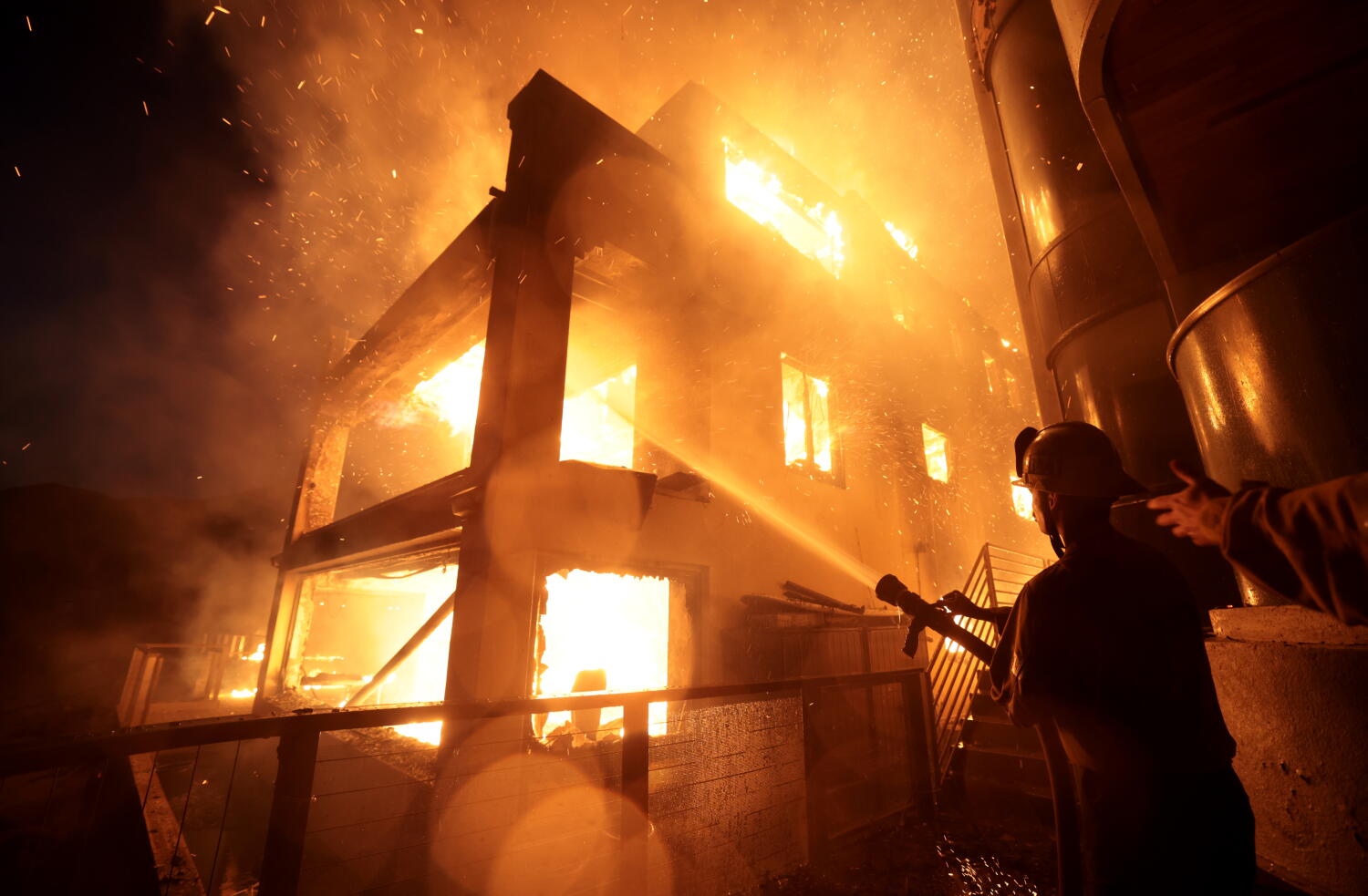
The Los Angeles Fire Department has formally accepted the findings of an independent investigation detailing how ignored warnings, absent protocols and fractured coordination allowed a smoldering brush fire to explode into the 2025 Palisades fire, killing 12 people and destroying more than 6,800 structures.
The admission represents a sharp reversal for the agency. When federal prosecutors first argued in October 2025 that the catastrophic Jan. 7 blaze was a direct rekindling of the earlier Lachman fire, LAFD officials publicly pushed back. A department spokesperson characterized such holdover fires as extremely difficult to detect. Subsequent reporting revealed that both residents and firefighters had observed active smoldering in the Lachman burn scar days before the Palisades fire ignited, yet leadership took no action.
Commissioned by Gov. Gavin Newsom and conducted by UL Research Institutes’ Fire Safety Research Institute, the probe determined the department lacked any comprehensive procedure to verify that a contained fire was fully extinguished before dangerous weather conditions returned. The Santa Ana winds, which routinely drive extreme fire behavior across Southern California each winter, were a known threat when the Lachman fire initially broke out on Jan. 1.


Once the Palisades fire erupted, operational failures compounded the initial negligence. The investigation found the LAFD could not accurately track the locations of its own personnel deployed to the fire lines. Coordination with the Los Angeles Police Department, which was forced to assist in mass evacuations amid rapidly shifting wind patterns, was similarly deficient. In large-scale wildland-urban interface fires, unified command structures between municipal fire and police agencies are standard practice under the Incident Command System, designed specifically to prevent the communication breakdowns documented in the report.
“While FSRI found that no single decision explains last January’s tragedy, that does not lessen LAFD’s responsibility for the decisions that were ours,” the department said in a statement released Friday. “The report identifies a number of areas where the LAFD must do better. They include how we confirm a fire is truly out before dangerous weather returns, how we track and direct every unit on a major fire, and how we plan and carry out evacuations with our partners. We accept those findings.”
The department’s current posture contrasts with the tenure of previous leadership. Following the disaster, Mayor Karen Bass appointed Jaime Moore as fire chief. Moore immediately committed to an outside probe into the handling of the Lachman fire, signaling a break from the defensive stance his predecessors adopted.
Under Moore, the LAFD reports it has implemented 92% of the recommendations generated by its own internal after-action review, though that internal document did not analyze the Lachman fire response in detail. To address the specific gap identified by the state-commissioned investigation, the department has established new post-containment procedures requiring drone surveillance and thermal imaging to verify extinguishment before crews demobilize from a burn area. Thermal imaging cameras, which detect residual heat signatures invisible to the naked eye, have become standard equipment for progressive wildfire agencies nationwide precisely to prevent holdover ignitions.
The operational failures documented by the FSRI now form the evidentiary backbone of extensive litigation. Numerous survivors have filed lawsuits against the City of Los Angeles and other entities, alleging that departmental missteps enabled or worsened the destruction. In August, a lead attorney for the plaintiffs announced that the city had agreed to enter settlement talks. Mediation sessions expected to begin in early October will focus exclusively on negotiating potential victim compensation rather than determining legal liability.