A Sepehran Airlines Boeing 737 carrying 127 passengers and crew members was forced to return to Mashhad Hashemi Nejad International Airport on Tuesday after experiencing a severe engine malfunction and a tire blowout during its takeoff roll. The aircraft had departed for the western city of Kermanshah.
As the plane climbed, sudden and violent vibrations shook the airframe. The force was severe enough to tear down ceiling panels and break open overhead luggage compartments, while debris fell into the passenger cabin. Passengers screamed and prayed as the emergency unfolded.
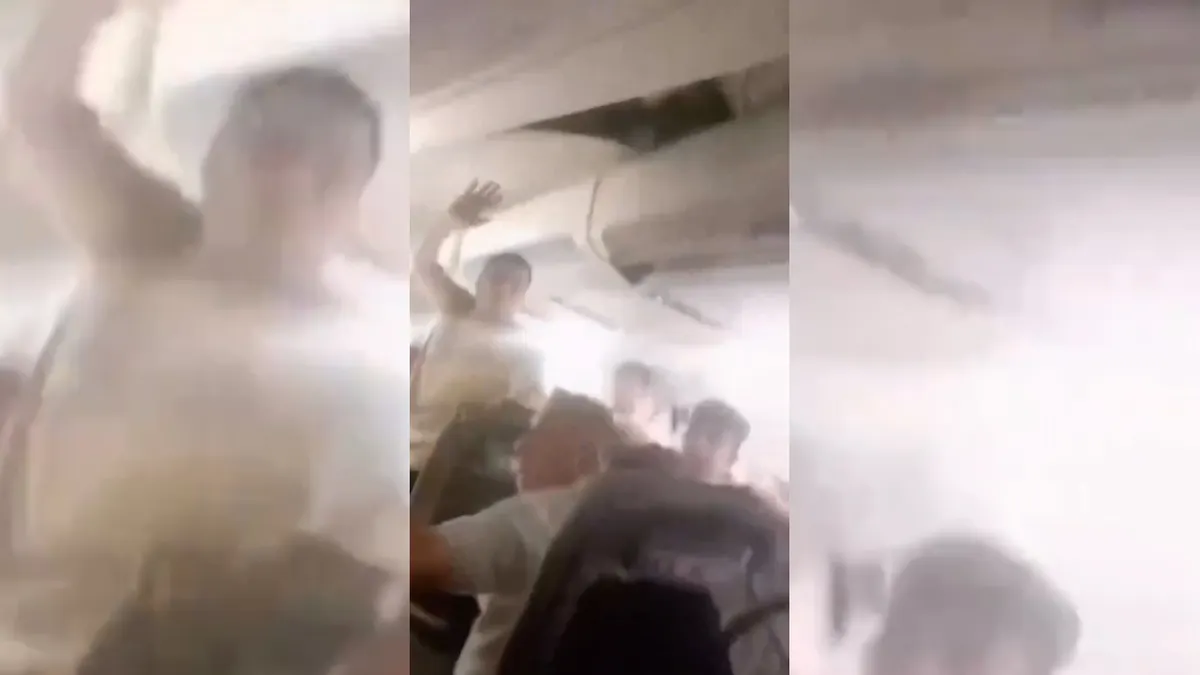
The flight crew declared an emergency and aborted the flight, maneuvering the aircraft back toward Mashhad. The pilot completed an emergency landing at Mashhad Hashemi Nejad International Airport, with no injuries reported among the passengers or crew. Airport authorities temporarily closed one of the facility’s two main runways.
Iran’s civil aviation authority began investigating the mechanical failures after the landing. Passengers were transferred to an alternative flight to complete their journey to Kermanshah.
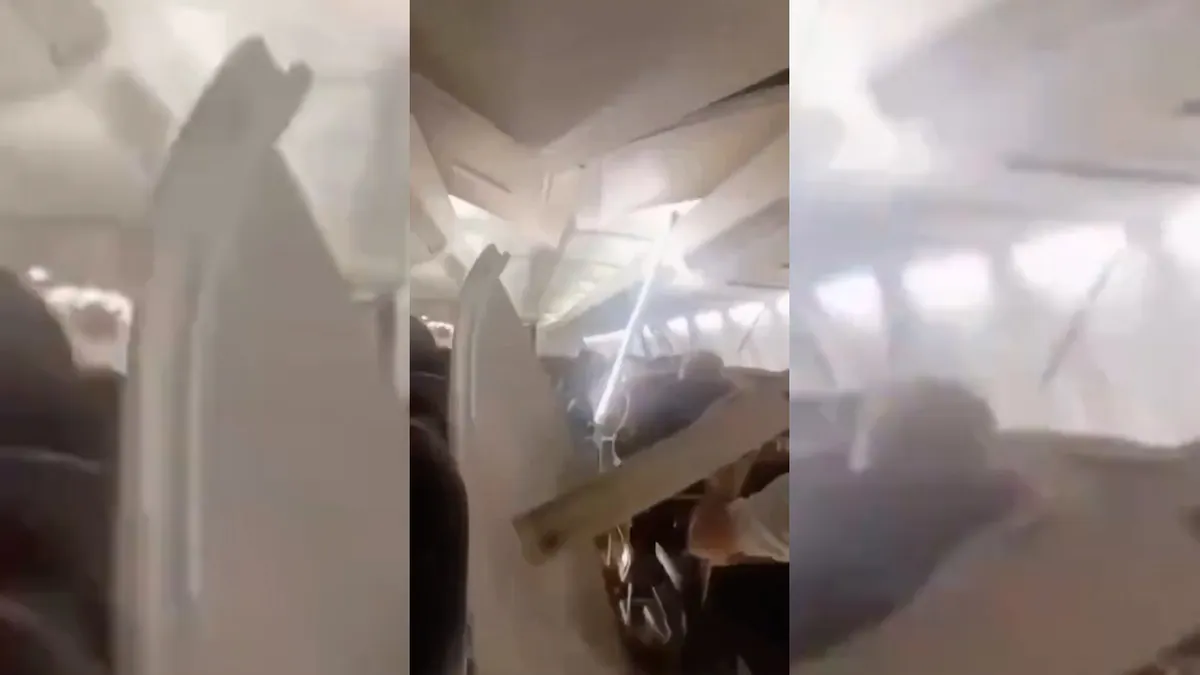
The damaged cabin lining is a visible consequence of the operational difficulties faced by Iranian commercial carriers. For more than 40 years, United States and international sanctions have barred Western aerospace manufacturers from selling new commercial aircraft or supplying official spare parts to Iranian airlines.
Those restrictions briefly eased after the 2015 Joint Comprehensive Plan of Action (JCPOA), a nuclear accord that allowed Iranian carriers to place multi-billion-dollar orders for dozens of new aircraft from Boeing, Airbus, and ATR. Following the unilateral United States withdrawal from the agreement in 2018, the Trump administration reinstated sanctions, halting almost all planned aircraft deliveries and cutting off official maintenance channels.
Iran’s active commercial fleet now has an estimated average age of more than 25 years, far older than the global industry average. Local engineers rely on localized modifications, reverse-engineered components, or parts obtained through complex third-party intermediary networks on the international black market to keep aircraft airworthy. When parts cannot be acquired, carriers are often forced to cannibalize grounded aircraft.
Established in Shiraz in 2015, Sepehran Airlines is a private carrier whose fleet consists primarily of older Boeing 737 Classic series aircraft. These planes require intense and regular maintenance to remain safe.
Mashhad Hashemi Nejad International Airport, where the emergency landing took place, is Iran’s second-busiest airport and serves as a major hub for millions of domestic travelers and regional pilgrims.