HBO’s ‘War’ Launches Anthology Series With High-Stakes London Divorce and Legal Espionage
Creator George Kay builds an eight-episode anthology around rival London law firms, corporate espionage, and the brutal mechanics of a billionaire divorce.
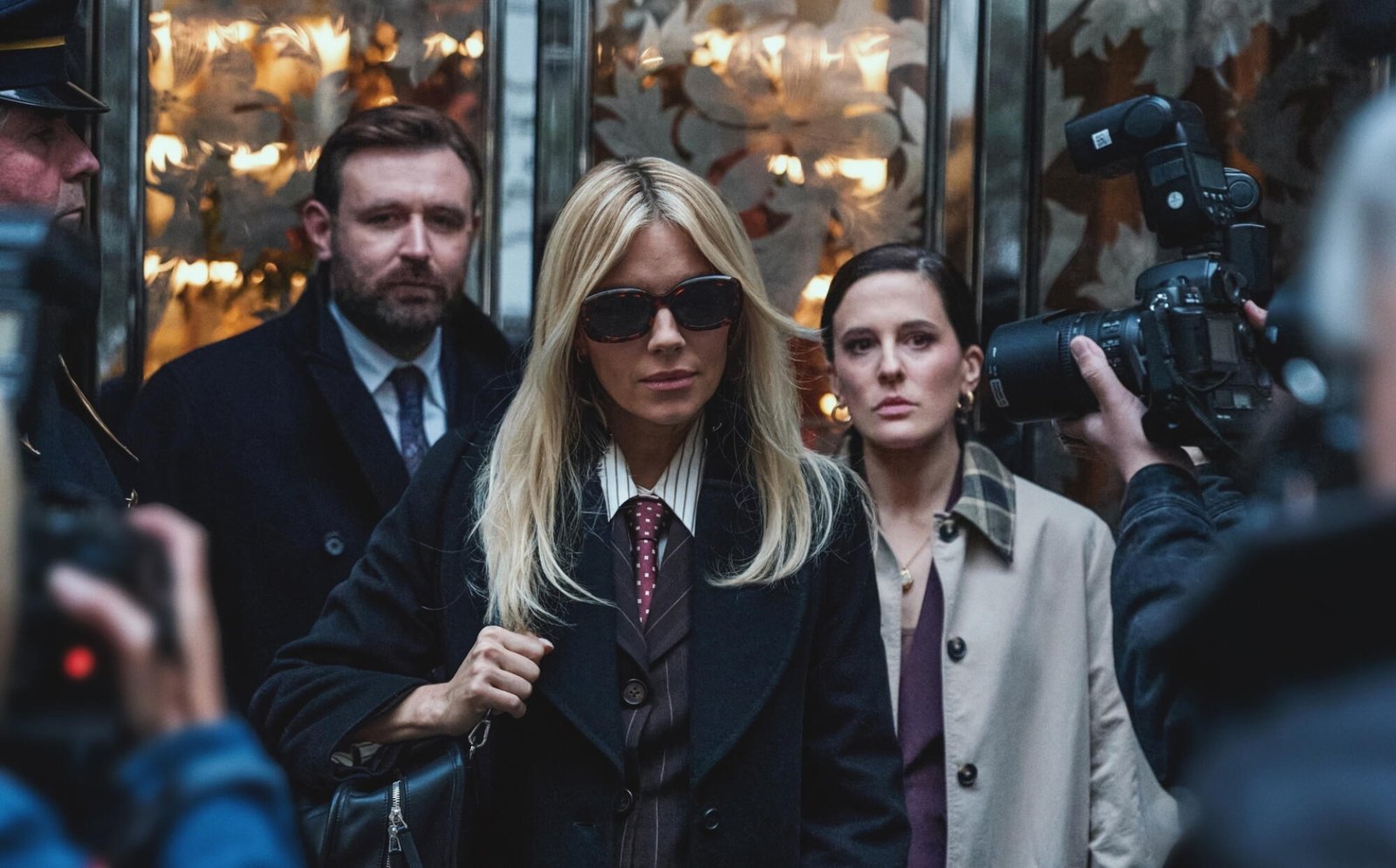
HBO premieres “War” on Thursday, launching a new anthology series built around the cutthroat mechanics of elite law firms. The eight-episode first installment centers on the dissolution of a marriage between a tech billionaire and an aging movie star, using their divorce as a framework to explore corporate espionage, professional desperation, and the moral compromises embedded in high-end litigation.
The series marks the latest project from creator George Kay, known for Netflix’s “Criminal” franchise and the thriller “Lupin.” Unlike procedural legal dramas that resolve cases within a single hour, “War” structures its narrative around the protracted lifecycle of a contested divorce, moving methodically through mediation, arbitration, and eventual courtroom confrontation. This progression mirrors real-world family law proceedings among ultra-high-net-worth individuals, where asset division frequently extends across years and multiple jurisdictions.
Dominic West plays Morgan Henderson, founder of Zephyr, a purportedly nontoxic social media platform whose public image he fiercely protects. Sienna Miller stars as his estranged wife, Carla Duval, a film actress navigating an industry increasingly hostile to women over 40. Their separation accelerates after Flora Monroe, played by Rose Williams, executes a honeytrap—a covert operation designed to manufacture compromising evidence—resulting in a Polaroid photograph used as leverage before attorneys even enter the room.


The financial stakes are enormous, though the series treats the money itself as a MacGuffin. Neither client faces material ruin regardless of the settlement. Instead, the true tension lies with the lawyers whose careers depend entirely on the outcome.
Representing Carla is Taylor & Byrne, a newly established firm led by married partners Nicholas Taylor (James McArdle) and Serena Byrne (Phoebe Fox), who are expecting their first child. Losing the case threatens to bankrupt their practice. Opposing them is Cathcarts, an entrenched, deep-pocketed legacy institution staffed by St. John Smallwood (Pip Torrens), Beatrice Ubosi (Nina Sosanya), and David Schill (Miles Jupp).
British television viewers will recognize a dense roster of veteran performers anchoring the supporting cast. Celia Imrie and Archie Panjabi appear as opposing barristers, while Nick Mohammed serves as a financial specialist at Taylor & Byrne. Younger players, including Aran Murphy as Carla’s 16-year-old son Gabriel, alongside junior staffers Molly Giordano (Emma Laird) and Saeed Masood (Shaheen Jafargholi), drive secondary plotlines that intersect heavily with the main case.
The espionage element arrives through Johnny (Archie Renaux), a young attorney struggling to secure employment—his University of Michigan degree offering little currency in London’s insular legal market. Desperate to appease his frustrated girlfriend Bella (Honor Swinton Byrne), Johnny agrees to infiltrate Taylor & Byrne as a mole for Cathcarts. His arc introduces a Shakespearean villain dynamic into what otherwise functions as a sharp workplace dramedy.
Director Ben Taylor and cinematographer Oli Russell construct a visual language defined by stark contrasts. Taylor & Byrne operates out of glass-and-light offices reflecting modern transparency, while Cathcarts occupies dark wood-paneled rooms suggesting generations of institutional power. The clients’ residences mirror this dichotomy: Carla lives in bright, high-ceilinged spaces featuring filigreed plaster moldings and tropical murals; Morgan inhabits a stark, impersonal apartment where he opens beer bottles against expensive furniture.
These production details extend to minor props and costuming, differentiating characters through choices as subtle as china espresso cups versus paper to-go containers. Composer Oli Julian provides an original score that avoids relying on pop music outside of the end credits, maintaining atmospheric control throughout.
Dialogue frequently balances naturalistic exchanges with heightened theatricality reminiscent of Aaron Sorkin or Noël Coward, though the tone leans equally toward comedy and drama. Characters routinely subvert initial impressions, shifting allegiances and moral standings as the litigation progresses.
Anthology formats focusing on professional institutions have gained traction following the success of series like FX’s “Beef” and Paramount+’s “The Good Fight.” By isolating a specific legal battle each season, “War” allows future installments to reset entirely, potentially exploring different areas of law, cities, or eras without being bound to the Henderson-Duval cast.
“War” airs Thursdays on HBO and streams on Max.