Fed Raises Rates as Trump Pushes for Cuts
A unanimous FOMC vote lifts borrowing costs as inflation data drives renewed tightening

WASHINGTON — The Federal Open Market Committee voted 12-0 Wednesday to lift the federal funds target range to 3.75%–4.00% from 3.50%–3.75%. The quarter-point increase is the Federal Reserve’s first monetary policy tightening since 2023.
The decision followed weeks of public lobbying by President Donald Trump, Vice President JD Vance, and Treasury Secretary Scott Bessent, who had demanded lower interest rates. During the fortnight before the meeting, Trump threatened to halt trade with nations running trade surpluses with the United States if central bank rates were not reduced.
Commercial banks use the federal funds rate as a baseline for setting the prime rate, which directly affects interest charges on consumer lending products, variable-rate debt, and corporate credit lines. Sen. Elizabeth Warren (D-Mass.) told CNN that the quarter-point increase would raise borrowing costs for American consumers through higher charges on credit cards, adjustable-rate mortgages, and commercial loans.

Warren said administration policies, including trade tariffs and geopolitical conflicts in the Middle East, had driven up inflation and forced the central bank’s hand. In its policy statement, the FOMC said economic activity had continued expanding at a solid pace and that job growth had kept up with the expansion of the labor force.
The policy statement also said inflation remained elevated and that renewed rate hikes were needed for a “timelier return” to the Federal Reserve’s 2% annual inflation target. August wholesale prices rose 5.4% on an annualized basis, up from 4.8% in July, according to figures highlighted by the National Association of Manufacturers. Monthly goods prices increased 1.1%, with rising energy costs accounting for more than three-quarters of that advance.
Headline consumer prices increased 3.4% annually in August, matching July’s pace, while the monthly increase accelerated to 0.4% from 0.1%. Gasoline costs generated one-third of the gain. Core CPI, excluding volatile food and energy prices, rose 0.3% on the month after increasing 0.2% in July.
Benchmark crude oil prices also moved above $100 per barrel for the first time since July amid supply fears and market fallout linked to conflict with Iran. Strong nonfarm payroll figures joined the August inflation and energy data in shifting all 12 voting members toward a rate increase.
At the July meeting, the Fed had held the federal funds rate at 3.50%–3.75% in a 9-3 vote. Three members had dissented in favor of a hike. The newer decision puts Fed Chair Kevin Warsh at odds with the administration that selected him.
Wednesday’s meeting was Warsh’s third FOMC gathering since his confirmation in May. Trump had said when nominating Warsh, who served as a Fed Governor from 2006 to 2011, that he wanted an official inclined toward lower rates while emphasizing that the Chair should operate independently.
Wall Street had already priced in the increase after the August inflation releases. The CME FedWatch Tool showed derivatives traders assigning a 93% probability to a 25-basis-point hike before Wednesday’s announcement, compared with less than 50% a month earlier. Goldman Sachs and Piper Sandler changed their forecasts from a rate hold to a quarter-point increase after the PPI and CPI reports were released.
A Wall Street Journal survey found near-unanimous agreement among major banks that additional tightening would occur before the end of the year. Barclays, Citigroup, JPMorgan Chase, Morgan Stanley, and UBS projected 50 basis points of cumulative policy tightening by year-end. Bank of America, Deutsche Bank, and RBC projected 75 basis points of total increases.
The FOMC is scheduled to review interest rate policy again on October 27–28. Its final meeting of the year will be held December 8–9, alongside an updated Summary of Economic Projections and its quarterly “dot plot,” which details individual policymakers’ projections for future interest rate paths.
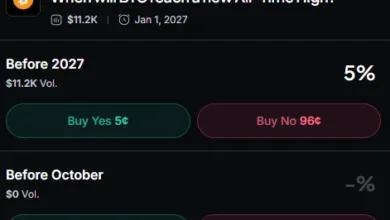
Digital assets entered Wednesday’s session under pressure after the Clarity Act, legislation intended to establish a federal regulatory framework for digital assets, failed Tuesday to obtain enough votes for a procedural cloture vote in the U.S. Senate. Bitcoin was trading near $75,200 before the Fed decision, down from its September high near $82,000.
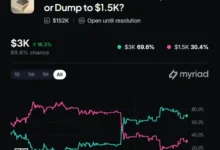
After the announcement, Bitcoin moved between $75,000 and $75,800 before briefly reaching $76,000. It then adjusted to $75,100 while remaining above technical support levels between $73,500 and $75,600. A daily close below $73,500 could lead to further declines toward $71,000 or $66,900 and would reverse the “golden cross” chart pattern that formed during Bitcoin’s summer rally.
The total cryptocurrency market capitalization fell approximately 2.18% over 24 hours. The Crypto Fear & Greed Index dropped to 51 points, placing sentiment in “Neutral” territory, compared with 69, or “Greed,” the previous day and “Extreme Greed” levels earlier in the month.