Academic Calendar Shifts Force Students into Extreme Summer Heat Without Adequate Cooling
Earlier academic calendars and rising summer temperatures expose deep infrastructure deficits across U.S. school districts.
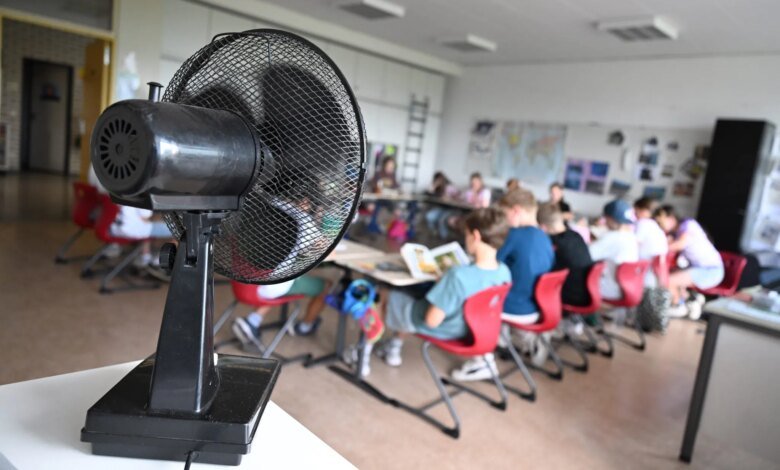
Across the United States, a widespread push to start the academic year earlier in the summer is confronting an unprecedented surge in seasonal temperatures. As districts move opening days into mid-July and August, classrooms and playgrounds are being transformed into frontline hazards during peak heatwaves.
Data highlights a stark shift in environmental conditions inside educational facilities. In 2025, 156 American school districts serving over one million students recorded at least 30 additional days exceeding 80 degrees Fahrenheit compared to 1970 baselines. Yet school infrastructure has failed to keep pace with these escalating thermal conditions, exacerbated by urban heat island effects that retain elevated temperatures well into the night.
Nationwide estimates indicate that retrofitting districts without air conditioning would require $40 billion, while updating existing, aging systems would cost more than $414 million. Currently, roughly 41 percent of U.S. school districts equipped with cooling systems need immediate upgrades or total replacements. Most cooling equipment is traditionally installed when a facility experiences 32 or more days over 80 degrees Fahrenheit, a benchmark an increasing number of regions now cross routinely.
The physical environment outside classroom walls presents equal danger. Traditional schoolyard designs heavily rely on unshaded black rubber, concrete, and aluminum materials capable of reaching extreme surface temperatures under direct sunlight. Mitigating these outdoor risks remains financially daunting for many districts, as installing large playground shade structures can easily reach tens of thousands of dollars.
Substantial regional imbalances further complicate indoor adaptations. In the Western United States, where summer temperatures frequently reach extreme highs—such as Phoenix registering 117 degrees Fahrenheit in July 2026—only 46 percent of elementary schools possess dedicated gymnasiums to move physical education indoors. In comparison, dedicated gymnasiums exist in 60 percent of Southern elementary schools, 73 percent in the Northeast, and 77 percent in the Midwest.
The physical vulnerabilities of younger populations compound these infrastructure deficits. Children struggle more than adults to regulate body temperature, often fail to recognize early signs of thermal distress, and rely entirely on supervising staff to enforce hydration and shade breaks. Consequently, emergency department visits for youth heat-related illnesses spike during the warmest summer months. High school athletic programs face severe risk; peak heat incidents occur primarily in July and August, with approximately one-third of these emergencies taking place without a school nurse or qualified medical professional present.
Elevated temperatures also directly impair academic performance. Attendance data shows K-12 student absence rates rise by 16 percent on days when temperatures cross 90 degrees Fahrenheit. Studies consistently link unmitigated indoor heat during examinations to marked drops in test scores, though adequate air conditioning fully counteracts this degradation.
Despite these risks, the structural trend toward earlier academic starts continues to accelerate. Administrators have adjusted schedules to combat summer learning loss, extend preparation windows for standardized testing, and meet staff preferences. Policy mechanisms also incentivize earlier openings: state programs, such as one in Arizona, offer a 5 percent annual funding boost to school districts that expand their academic calendars from 185 to 200 days. Additionally, charter schools—which account for roughly 60 percent of all institutions adopting earlier start dates—utilize their regulatory flexibility to lengthen or shift operational calendars.
International responses demonstrate similar pressure on legacy educational infrastructure. During recent European heatwaves, school authorities across England, Wales, and France were forced to cancel classes or truncate school days due to unbearable classroom conditions.
In response to these compounding risks, advocates and state regulators are advancing new policy frameworks. The Federation of American Scientists recently introduced a Heat Policy Agenda calling for national standards to create heat-safe learning environments. Certain state jurisdictions have mandated operational adjustments, requiring athletic practices to be altered based on temperature thresholds and enforcing classroom temperature ceilings below 82 degrees Fahrenheit. Meanwhile, programs like Arizona State University’s HeatReady initiative work with campuses to replace heat-retaining surfaces with shade canopies and tree cover, which reduce sun exposure by 84 percent and significantly boost student physical activity.