Institutional Giants Launch $15M Consortium to Protect Bitcoin From Quantum Threats
Nine financial institutions pledge $15 million for post-quantum crypto research as $450 billion in vulnerable BTC remains exposed.

Nine major financial institutions and digital asset companies have established a collective research coalition to protect the Bitcoin blockchain against future quantum computing exploits. Dubbed the Bitcoin Security Consortium, the group has committed $15 million over a three-year period to directly support open-source developers and cryptographers building quantum-resistant defenses for the network.
The founding coalition comprises heavyweights across traditional finance and crypto-native infrastructure, including BlackRock, Coinbase, Strategy, Anchorage Digital, Ark Invest, Block, Blockstream, Fidelity Digital Assets, and Galaxy. Rather than managing a central treasury, each enterprise will independently select and fund developers and researchers working on post-quantum solutions. Coordination across the initiative will be handled on a volunteer basis by Mike Schmidt, executive director of the developer-funding non-profit Brink.
Robert Mitchnick, head of digital assets at BlackRock, noted that core protocol developers perform crucial infrastructure work, emphasizing that expanded funding provides long-term security backing for the digital asset ecosystem. To ensure neutrality, consortium members stated they will not dictate protocol changes or mandate development roadmaps for the decentralized network.
While quantum machines capable of cracking modern encryption algorithms do not exist today, Bitcoin faces potential exposure due to its underlying public-key cryptography. Approximately 6.9 million BTC—representing roughly $450 billion in market value—reside in legacy addresses where public keys are exposed on-chain. If quantum hardware advances to a point where advanced algorithms can derive private keys from visible public keys, these assets could become vulnerable to theft.
Mitigating this exposure requires extensive, multi-year upgrades across node software, mining hardware, custodial setups, and user wallets within the Bitcoin open-source ecosystem. Among the technical solutions currently under evaluation is BIP 360, a proposed output standard aimed at concealing public keys until transactions are spent, alongside next-generation post-quantum signature schemes.
The financial commitment comes at a time when major asset managers and corporate treasuries hold unprecedented exposure to Bitcoin. Strategy currently holds 843,775 BTC on its balance sheet, while spot Bitcoin exchange-traded funds managed by BlackRock, Fidelity, and ARK Invest maintain tens of billions in client assets. For institutional custodians like Coinbase, strengthening protocol-level resilience acts as vital risk management for long-term holders.
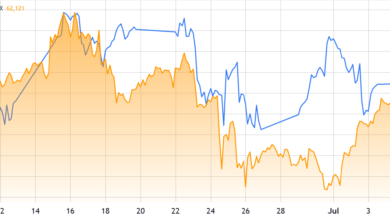
The security initiative arrives during broader market shifts and legislative friction in Washington. Bitcoin recently consolidated around $65,000 following $225 million in net daily outflows from U.S. spot ETFs, breaking a sustained streak of institutional inflows. Concurrently, broader crypto regulatory momentum faces delays as Senate Majority Leader John Thune acknowledged that the Clarity Act will likely miss its target cutoff date ahead of the August congressional recess. Meanwhile, retail payment integrations continue to expand, highlighted by MoonPay’s newly announced partnership with Discover Network to enable direct crypto purchases for millions of U.S. cardholders.