The Billionaire Philanthropy Paradox: Why the Giving Pledge is Failing While George Soros Outpaces His Peers
As critics warn that elite charity pledges remain unfulfilled, a look at the compounding of billionaire wealth reveals why actual distribution remains rare.
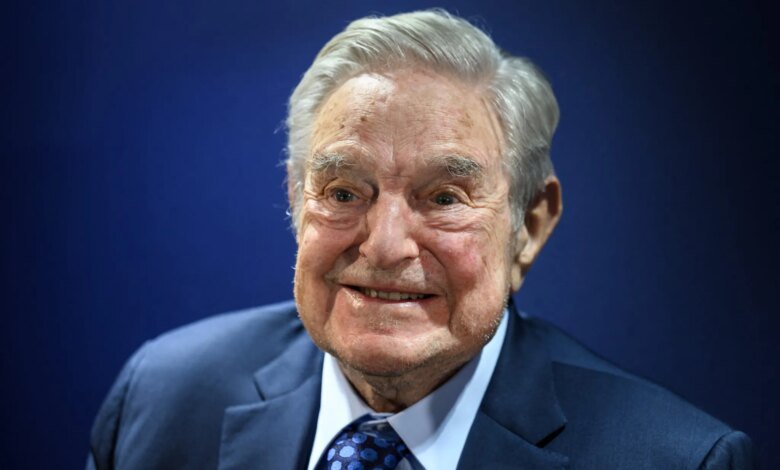
Fifteen years after its launch, the Giving Pledge—the high-profile campaign encouraging the world’s ultra-wealthy to donate the majority of their fortunes—is facing intense scrutiny over its systemic failure to distribute billionaire wealth. Even its co-founder, Melinda French Gates, has publicly questioned the commitment of its signatories. In an interview with Wired, French Gates addressed the slow pace of billionaire donations, bluntly stating that members of her economic class have not given enough.
Her criticism aligns with a broader structural critique of modern mega-philanthropy. A report by the Institute for Policy Studies (IPS) revealed that out of the original 57 living signatories who joined the pledge at its inception, only one couple—John and Laura Arnold—has successfully given away half of their wealth. The report characterized the initiative as “unfulfilled” and structurally incapable of addressing extreme wealth inequality.
The primary obstacle to fulfilling the pledge is a matter of compounding mathematics. For the 32 original U.S. signatories who remain billionaires, their collective wealth has surged by approximately 283% since they signed the commitment. Because their investment portfolios grow at a rate that far outpaces their charitable distributions, many find themselves wealthier than when they started. This phenomenon, often called the MacKenzie Scott paradox, is visible in the estate of the novelist and philanthropist. Despite her rapid and historic distribution of $26 billion, Scott’s net worth has repeatedly rebounded due to the compounding value of her Amazon stock holdings.
Furthermore, the structural destination of these donations has drawn criticism. Approximately 80% of the funds committed by Giving Pledge donors are routed into private foundations or donor-advised funds (DAFs). Unlike direct grants to operating charities, DAFs and private foundations can hold assets indefinitely, securing immediate tax write-offs for donors while delaying the actual distribution of funds to communities in need. While a spokesperson for the Giving Pledge defended the initiative to CNBC, calling the IPS findings misleading and arguing that the pledge has successfully established “new norms of generosity,” critics argue these vehicles serve more as wealth-preservation tools than active charity.
In contrast to the slow distribution rates of many Giving Pledge signatories, 95-year-old Hungarian-American investor George Soros has divested the vast majority of his fortune without ever signing the pledge. According to data tracked by Forbes, Soros has given away 76% of his net worth, making him one of the most generous philanthropists in history by percentage of wealth. While Warren Buffett has donated a larger absolute sum—exceeding $60 billion—he has distributed roughly 30% of his total net worth.
Soros, who established Soros Fund Management and the Open Society Foundations (OSF), has committed more than $32 billion to global philanthropic causes since 1984. Forbes estimates that OSF has already distributed at least $21 billion of that total to active programs supporting human rights, democratic governance, and social reform. Despite facing sustained political opposition, the foundation network continues to deploy capital aggressively. OSF recently committed $300 million over five years to bolster democratic rights and economic security within the United States.
“We are continuing our work unabated,” Laleh Ispahani, the managing director for the U.S. programs at the Open Society Foundations, told the Associated Press, emphasizing that the organization would not be deterred by political pressure or government scrutiny.
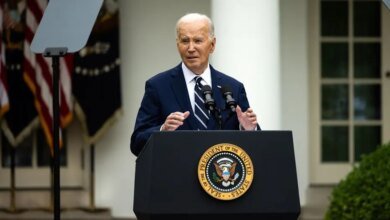
Soros’s approach to philanthropy is deeply rooted in his personal history. Born in Budapest in 1930, he survived the Nazi occupation of Hungary, during which more than 500,000 Hungarian Jews were murdered. His family survived by using forged identification papers and assisting others in doing the same. Soros has frequently cited 1944 as his formative year, noting that resisting an overwhelming evil force shaped his lifelong commitment to fostering “open societies” that protect individual liberties and resist authoritarianism. In recognition of his global philanthropic impact, then-President Joe Biden awarded Soros the Presidential Medal of Freedom in January 2025.