Hegseth Reveals U.S. War in Iran Has Cost $37.5 Billion Amid Tense Senate Grilling
The Defense Secretary faces protests and bipartisan scrutiny over a $95 billion military budget and rising casualties.
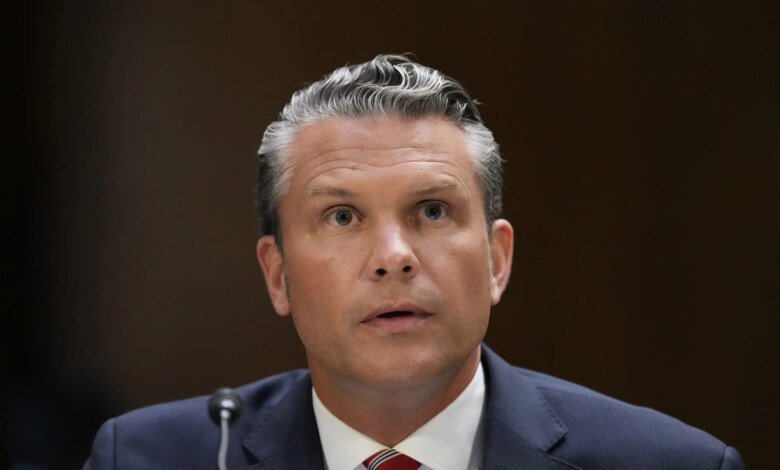
The military campaign against Iran has cost American taxpayers $37.5 billion so far, Defense Secretary Pete Hegseth revealed on Tuesday. The updated figure emerged during a highly charged Senate Appropriations Committee hearing, where Hegseth faced persistent anti-war protests and sharp questioning from lawmakers over the escalating conflict and his leadership at the Pentagon.
The hearing comes as congressional Republicans push to pass a $95 billion supplemental budget package. This legislative vehicle includes critical funding for the military, alongside $10 billion in emergency aid for domestic farmers affected by trade tariffs and $10 billion to implement voting law changes, including stricter identification requirements. Hegseth characterized the additional defense funding as an “urgent, necessary” measure to prevent critical shortfalls, framing it as a vital bridge to President Donald Trump’s proposed $1.5 trillion defense budget.
The financial disclosure follows recent Pentagon announcements confirming the deaths of three more American service members, raising the conflict’s U.S. death toll to 17. More than 100 service members have been injured since early July, bringing the total number of American casualties to nearly 450 since hostilities began.
The ongoing conflict has severely impacted global energy markets. Tensions near the Strait of Hormuz, a vital maritime transit route through which a significant portion of the world’s petroleum passes, have driven up domestic gasoline prices. Additionally, the high tempo of American missile strikes has begun to deplete U.S. munitions stockpiles, raising concerns among defense analysts about long-term military readiness.
Democratic lawmakers expressed deep skepticism over the administration’s long-term strategy. Senator Patty Murray, the committee’s top Democrat, warned that the conflict is rapidly devolving into “another forever war.” Murray criticized President Trump’s shifting rhetoric, noting that despite claiming dozens of times that a diplomatic resolution was imminent, the administration is now requesting an additional $70 billion in military funding.
The debate occurs amid a broader constitutional struggle over military authorization. Under the War Powers Resolution of 1973, Congress is designated as the sole authority to declare war, yet modern administrations have frequently utilized executive actions to conduct prolonged operations. While the House of Representatives has previously passed a war powers resolution aimed at limiting executive military action against Iran, deep partisan divisions have prevented a unified bill from reaching the president’s desk.
Beyond the war’s strategic direction, Hegseth faced intense scrutiny regarding internal Pentagon management. Committee Chair Susan Collins, a Republican, voiced concern over reports that the Department of Defense has blocked or delayed promotions for female and minority officers, warning it could damage recruitment and retention. Meanwhile, Senate Democratic Leader Chuck Schumer accused Hegseth of misplaced priorities, alleging the defense secretary spent time promoting testosterone screening initiatives for troops while delaying the public release of casualty figures.
Lawmakers also demanded the release of a classified Pentagon investigation into a deadly strike on an Iranian primary school early in the conflict, threatening to restrict Hegseth’s travel budget if the report is not delivered. To bypass Democratic opposition, Senate Republicans plan to utilize the budget reconciliation process, which allows certain spending measures to pass with a simple majority. However, House Speaker Mike Johnson faces a narrow majority and internal dissent from fiscal conservatives, such as Representative Warren Davidson, who object to adding to the national deficit without offsetting spending cuts.