Bitcoin Surges Toward $67,000 as Markets Brush Off Middle East Conflict and Tariff Threats
Crypto assets and US equities rally despite oil price spikes and new trade policy concerns.

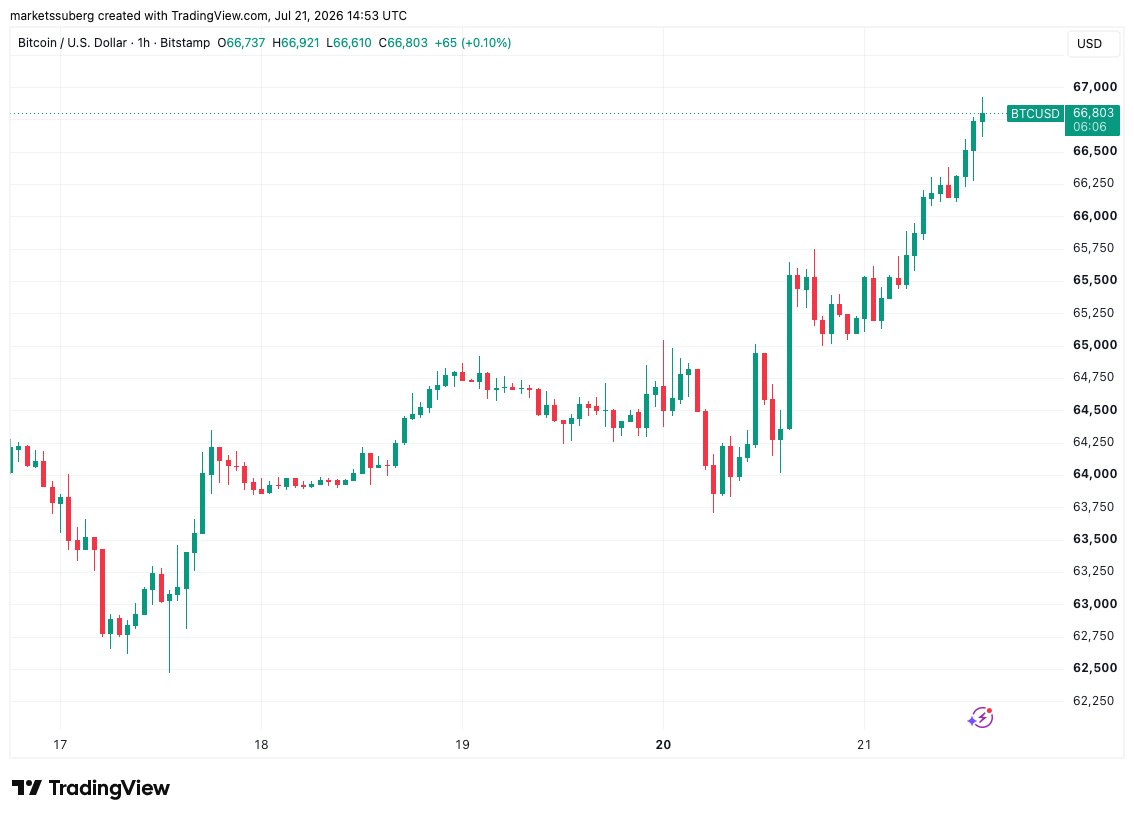
Bitcoin climbed toward $67,000 on Tuesday, hitting a seven-week high as digital assets mirrored a resilient performance in U.S. equity markets. The upward move comes at a time of significant global instability, with investors appearing to look past escalating military tensions in the Middle East and the prospect of new protectionist trade policies from Washington.
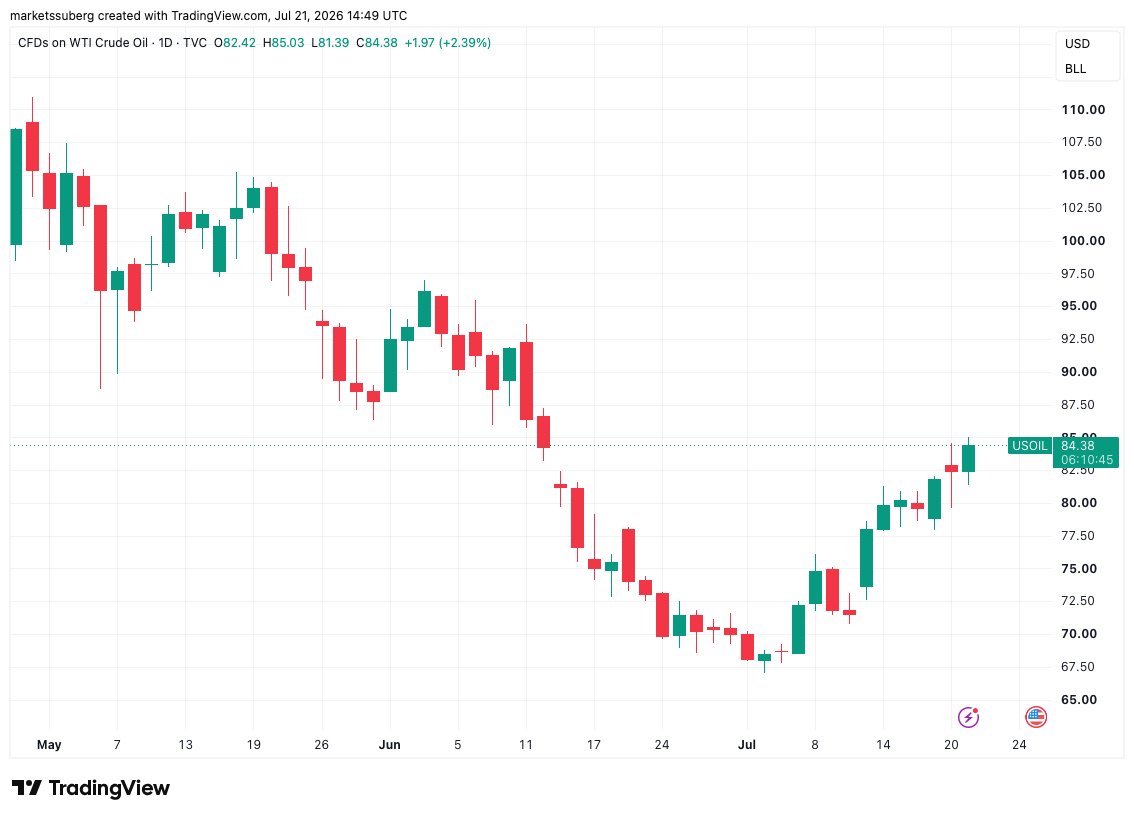
The cryptocurrency’s price action remained bullish even as geopolitical risks intensified. Reports confirmed that Iran targeted Amazon facilities in Bahrain in retaliation for U.S. strikes, while the Strait of Hormuz—a critical artery for global energy supplies—remained closed to traffic. These developments pushed West Texas Intermediate (WTI) crude oil prices to nearly $85 per barrel, their highest level in over a month.
Adding to the macroeconomic complexity, reports surfaced regarding a proposed 10% international trade tariff by the Trump administration. This follows a recent 50% tariff imposition on Canadian imports, a move that typically triggers concerns over inflation and slowed global trade. Historically, such protectionist measures can lead to currency volatility, sometimes driving investors toward decentralized assets like Bitcoin as a hedge against fiat devaluation.
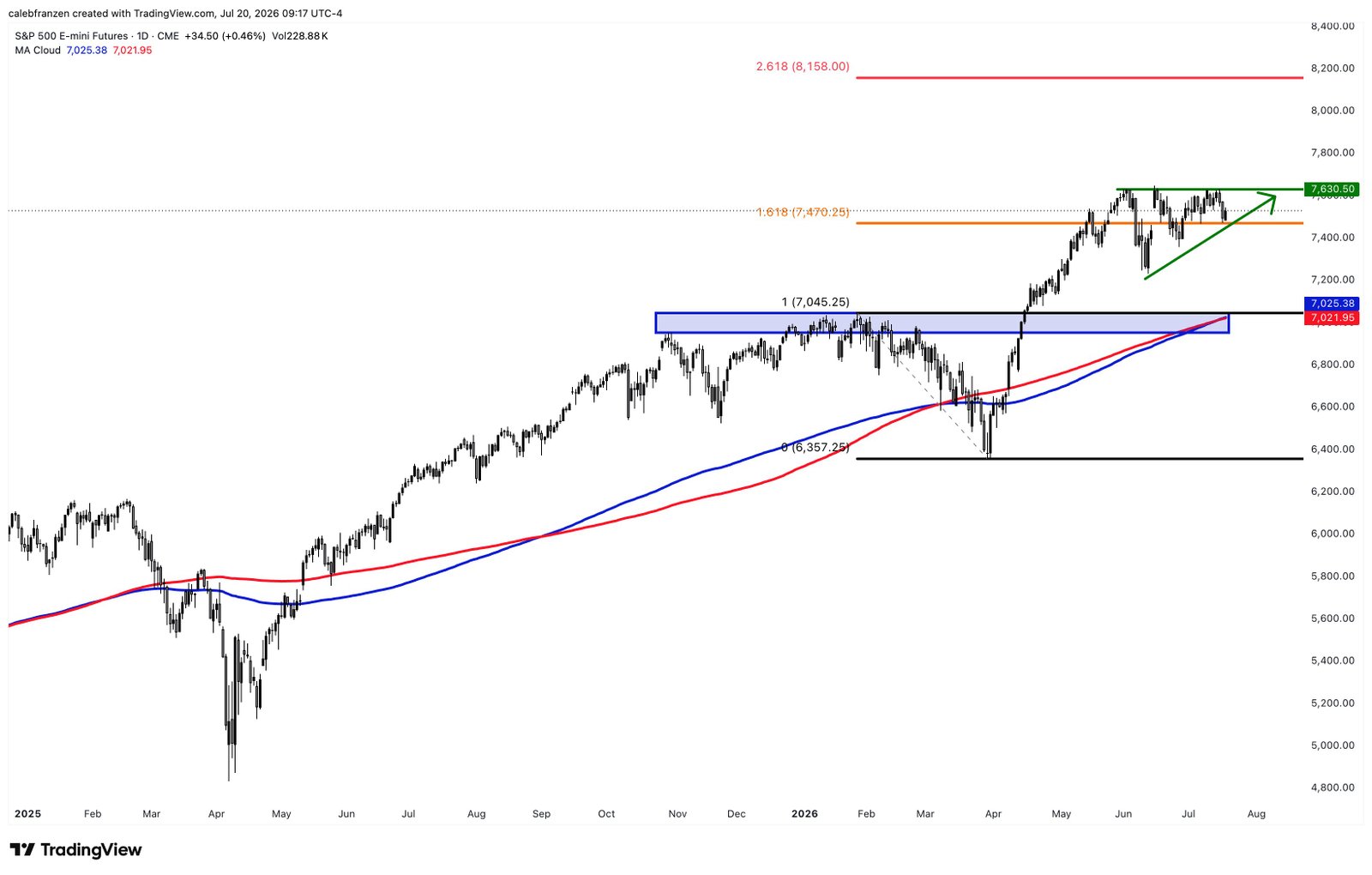
Despite these headwinds, market sentiment remains surprisingly optimistic. Analysts noted that the S&P 500 futures showed no signs of distress, suggesting that Wall Street is currently betting on a diplomatic resolution to the current crises. Caleb Franzen, founder of Cubic Analytics, expressed confidence in the equity trend, while social media commentators suggested that markets are effectively “pricing in peace” rather than a prolonged conflict.
However, not all institutional voices share this optimism. Jamie Dimon, CEO of JPMorgan Chase, has cautioned that the investing public may be underestimating the severity of current geopolitical risks. Dimon has frequently warned that the combination of fiscal deficits and geopolitical reorganization could lead to more persistent inflation than markets currently anticipate.
From a technical perspective, Bitcoin recently saw a “golden cross” on its daily chart, where the 21-day simple moving average (SMA) crossed above the 50-day SMA. While often viewed as a bullish signal, some analysts remain wary. Keith Alan, co-founder of Material Indicators, pointed out that Bitcoin still needs to reclaim its 21-week SMA, currently positioned near $69,720, to decisively end the prevailing bear market sentiment.

This $69,000 level is particularly significant as it represents the peak of the 2021 bull cycle. Until this threshold is cleared and held as support, the current rally may be viewed by some as a relief move within a larger corrective phase. For now, the path of least resistance appears to be higher, with little immediate technical overhead until the $67,250 mark.