Trump Signals Putin Ready for Peace Deal as Russia Threatens Western Troops
Moscow warns that any multinational peacekeeping force deployed after a ceasefire will be treated as military targets, even as battlefield strikes intensify.
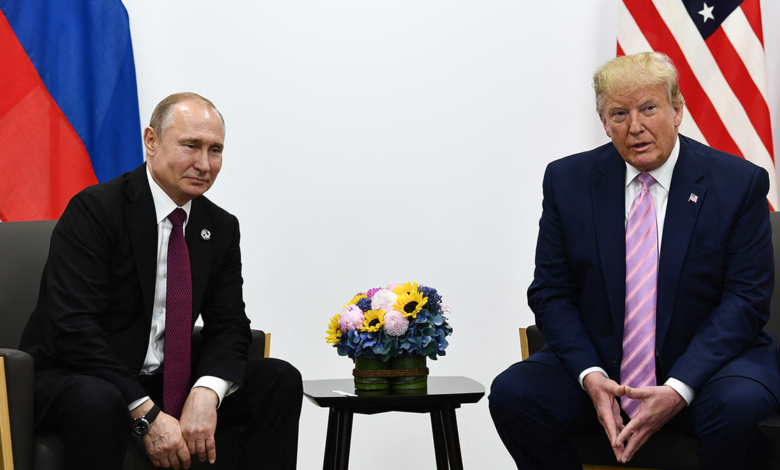
As diplomatic maneuvering intensifies over a potential end to the conflict in Ukraine, President Donald Trump has expressed confidence that Russian President Vladimir Putin is prepared to negotiate a peace agreement. However, this optimistic outlook contrasts-sharply with a stern warning from Moscow, which declared on Wednesday that any Western troops deployed to enforce a future ceasefire would be treated as legitimate military targets.
Speaking to Fox News chief foreign correspondent Trey Yingst in an interview released on Tuesday, Trump detailed his direct appeal to the Russian leader. “I say, ‘Vladimir, it’s time for you to stop. It’s time for this war to end,’” Trump said, adding that he believes Putin is “ready to make a deal” to halt the hostilities.
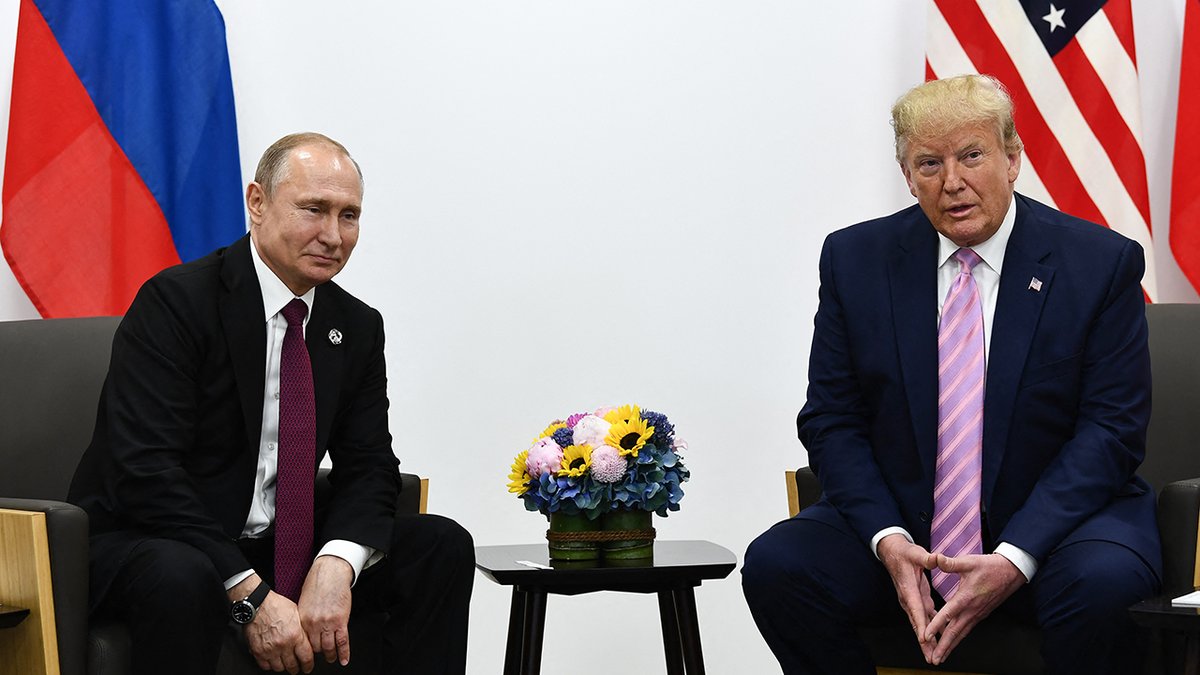
Russian President Vladimir Putin and President Donald Trump meet in 2019, before their relationship began to sour. (Brendan Smialowski/AFP via Getty Images)
The Peacekeeper Dispute
Despite Trump’s optimism, the Kremlin has drawn a hard line against any Western military presence on the ground. Russian Foreign Ministry spokeswoman Maria Zakharova stated on Wednesday that any multinational force deployed by Ukraine’s allies following a ceasefire would be entirely unacceptable to Moscow.
“We would regard such units as legitimate military targets,” Zakharova warned, according to a Reuters report published Wednesday.
This statement directly responds to plans discussed by members of a Western “coalition of the willing,” who met in Paris this week. The coalition reaffirmed its intent to deploy a multinational force after the conclusion of hostilities to reassure Ukraine and assist Kyiv in rebuilding its military infrastructure.
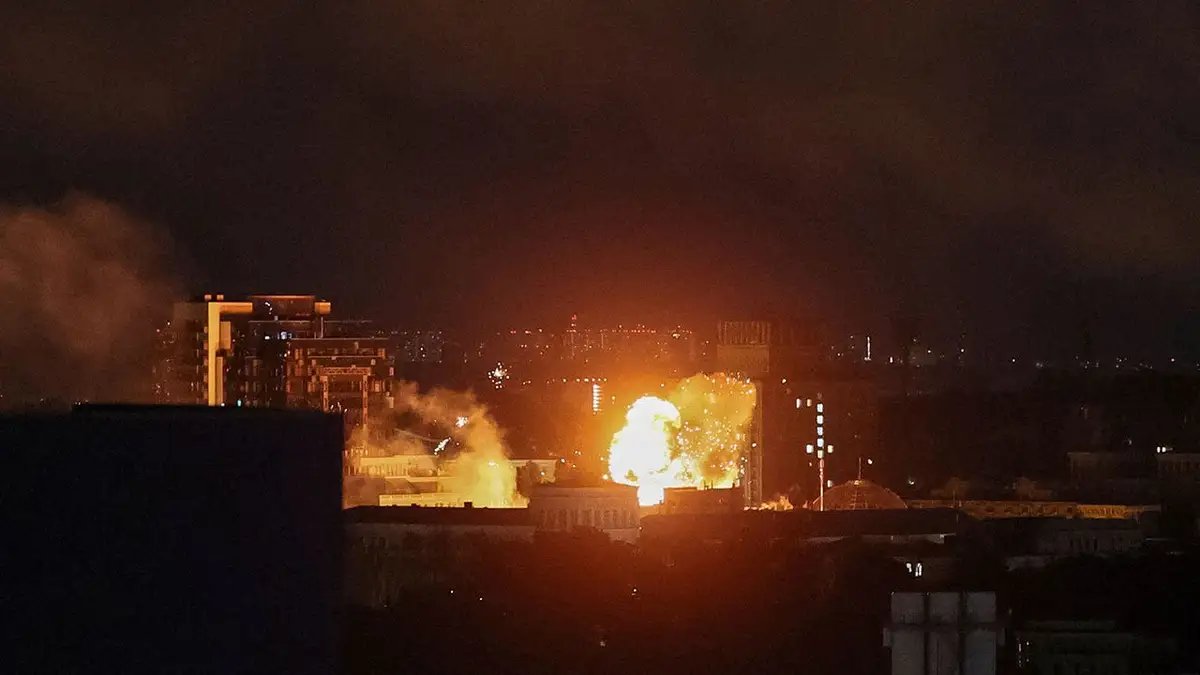
An explosion lights up the sky over the city during a Russian missile and drone strike amid Russia’s attack on Ukraine in Kyiv July 2, 2026. (Gleb Garanich/Reuters)
Escalating Strikes and Strategic Infrastructure
Meanwhile, the conflict continues to rage with devastating intensity across the front lines and occupied territories. On Wednesday, Ukraine’s military launched a successful strike against the Balaklava thermal power station in Russian-occupied Crimea. The facility is a critical piece of regional infrastructure, accounting for nearly half of the Crimean Peninsula’s electricity generation.
Simultaneously, Russia has sustained its aerial bombardment of Ukraine’s southern regions. A major drone and missile strike targeted the strategic port city of Odesa, killing three people, according to regional Governor Oleh Kiper. Kiper noted that civilian, industrial, and port infrastructure had been subjected to five consecutive days of relentless Russian attacks, highlighting Moscow’s ongoing campaign to disrupt Ukraine’s maritime export capabilities.
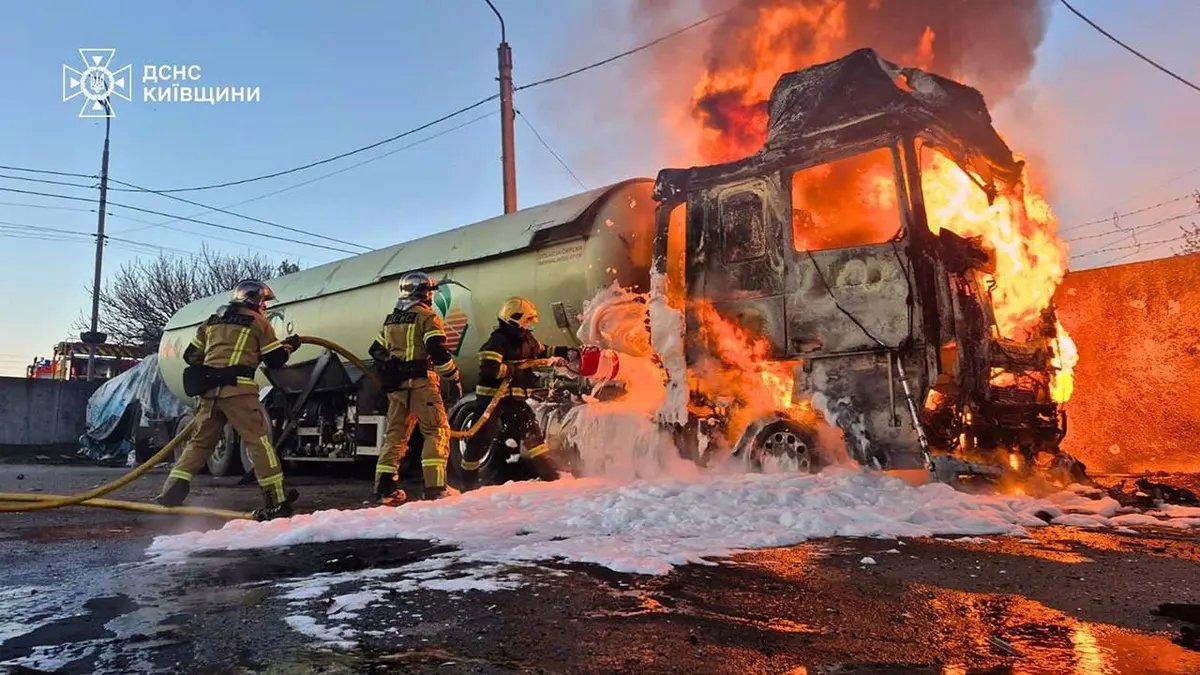
Emergency services personnel work to extinguish a vehicle fire after a Russian drone attack in the Kyiv region, Ukraine, May 5, 2026. (Ukrainian Emergency Service/AP)
The Asymmetric Drone War and Improvised Defenses
The escalating drone war has forced both sides to adapt rapidly, often resorting to historical military hardware to counter modern unmanned aerial vehicles (UAVs). In one notable example of battlefield improvisation, Russian forces have attempted to repurpose Soviet-era helicopter weaponry for ground-based air defense.
A video distributed by East2West shows a Russian soldier losing control of a Soviet-designed YakB-12.7 rotary machine gun mounted on an improvised ground platform. The high-rate-of-fire, four-barrel weapon—originally developed for use aboard the Mi-24 Hind attack helicopter—begins spinning violently, dragging the service member before throwing him several yards. Another soldier is seen ducking as the gun swings wildly in his direction.
While East2West reported that no one was injured in the incident, Fox News Digital has not independently verified the location, date, or specific circumstances of the footage.
Domestic Defense Capabilities
In a significant development for Ukraine’s long-term defense strategy, President Volodymyr Zelenskyy announced on Wednesday that Kyiv expects to establish the technical capability to manufacture missiles for U.S.-designed Patriot air-defense systems by the end of 2026.
This announcement follows a major policy shift previously outlined by Trump, who indicated that the United States would allow Ukraine to produce the highly advanced interceptor missiles domestically, a move that could drastically reduce Kyiv’s reliance on foreign military stockpiles.