SpaceX Faces $100 Billion Stock Lockup Expiration Amid Price Slide and Index Demand
Early investors and employees gain access to nearly one billion shares following a 50% decline from the stock's IPO peak.

Nearly one billion shares of SpaceX worth an estimated $100 billion will be freed from lockup restrictions on Thursday, opening the door for early employees and pre-IPO investors to sell their holdings following a sharp decline in the company’s stock price.
The impending share unlock comes after SpaceX stock dropped 9% on Wednesday, extending a summer slide that has cut its market value by half since its initial public offering. The decline followed a quarterly financial report in which Chief Executive Elon Musk told investors the company could reach a $100 billion annual revenue run rate by the end of the year, even as disclosures revealed $15 billion in quarterly artificial intelligence spending and sparked concerns over slowing growth at its Starlink satellite internet business.
The release of almost a billion shares presents a potential supply shock larger than the initial public offering itself. To absorb the influx, SpaceX and its underwriters negotiated accelerated entry into major equity indexes prior to the listing. Within 25 days of the IPO, four index providers—CRSP, FTSE Russell, MSCI, and Nasdaq—added SpaceX to their benchmarks, compelling passive index funds to acquire shares.
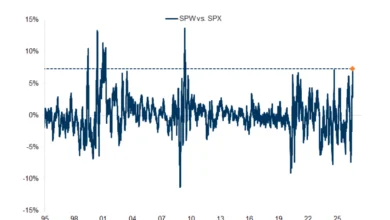
JPMorgan estimates that the Nasdaq inclusion alone directed $4 billion worth of SpaceX stock into passive accounts, helping offset insider sales. The index rebalancing trades generated approximately $3.6 billion in June for two trading teams at hedge fund Millennium.
Market analysts view the fast-tracked index additions as a crucial counterweight to insider selling. Gil Luria described the accelerated index entry as “a little bit of a bailout,” noting that without “very substantial demand from index inclusion,” the stock would have faced “the supply from lockups” at a time when “there’s a lot of supply coming.” While lockup expirations reflect the “natural course of business” as long-term employees diversify, Luria noted that early investors who sell aggressively risk being excluded from future private offerings if an investor “behaves badly.”
Despite recent stock volatility, Wall Street targets remain elevated. Morgan Stanley suggested the unlock offers an opportunity “to gain exposure to a potential generational compounder,” while JPMorgan raised its price target on the stock from $220 to $240. Calling it a “truism in the investing community,” Luria noted that “You never bet against Elon.”
The financial pressure coincides with physical operations in space, where a SpaceX rocket booster crashed into the moon at 2:00 a.m. Wednesday, creating a massive crater on the lunar surface.